Makau Mutua - Böcker
Visar alla böcker från författaren Makau Mutua. Handla med fri frakt och snabb leverans.
4 produkter
4 produkter
437 kr
Skickas inom 10-15 vardagar
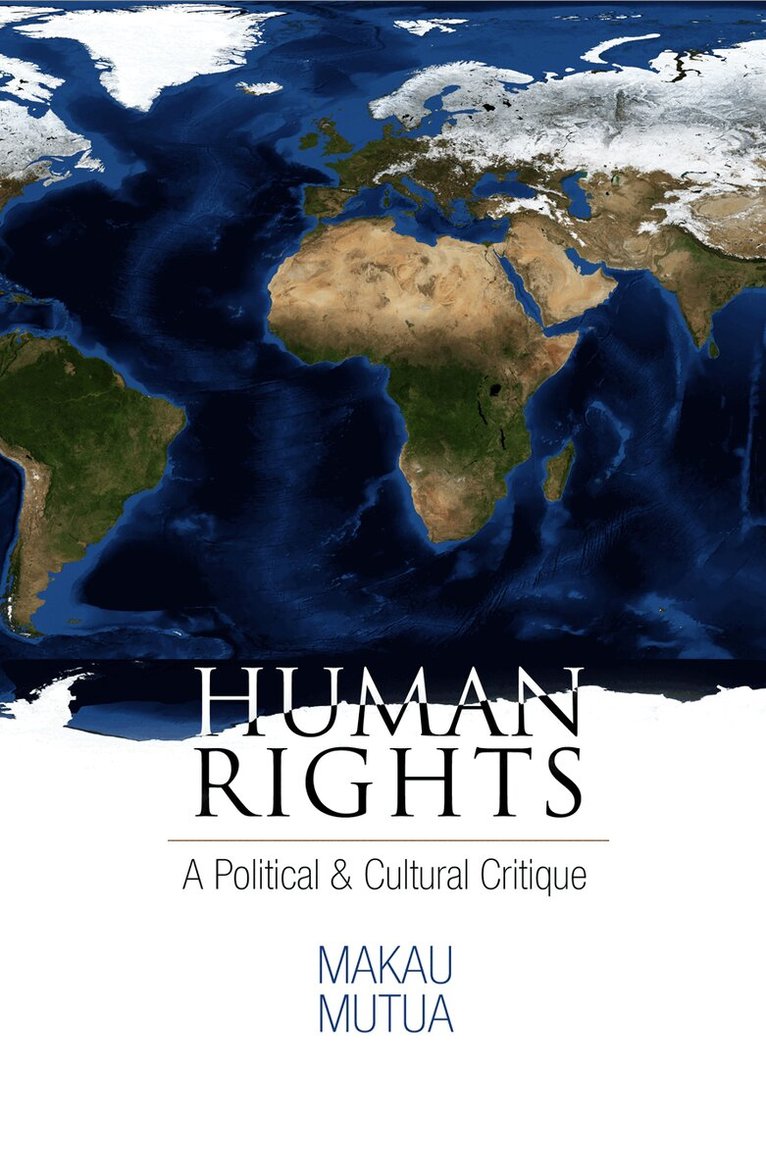
In 1948 the United Nations adopted the Universal Declaration of Human Rights, and with it a profusion of norms, processes, and institutions to define, promote, and protect human rights. Today virtually every cause seeks to cloak itself in the righteous language of rights. But even so, this universal reliance on the rights idiom has not succeeded in creating common ground and deep agreement as to the scope, content, and philosophical bases for human rights.Makau Mutua argues that the human rights enterprise inappropriately presents itself as a guarantor of eternal truths without which human civilization is impossible. Mutua contends that in fact the human rights corpus, though well meaning, is a Eurocentric construct for the reconstitution of non-Western societies and peoples with a set of culturally biased norms and practices.Mutua maintains that if the human rights movement is to succeed, it must move away from Eurocentrism as a civilizing crusade and attack on non-European peoples. Only a genuine multicultural approach to human rights can make it truly universal. Indigenous, non-European traditions of Asia, Africa, the Pacific, and the Americas must be deployed to deconstruct-and to reconstruct-a universal bundle of rights that all human societies can claim as theirs.
910 kr
Skickas inom 10-15 vardagar
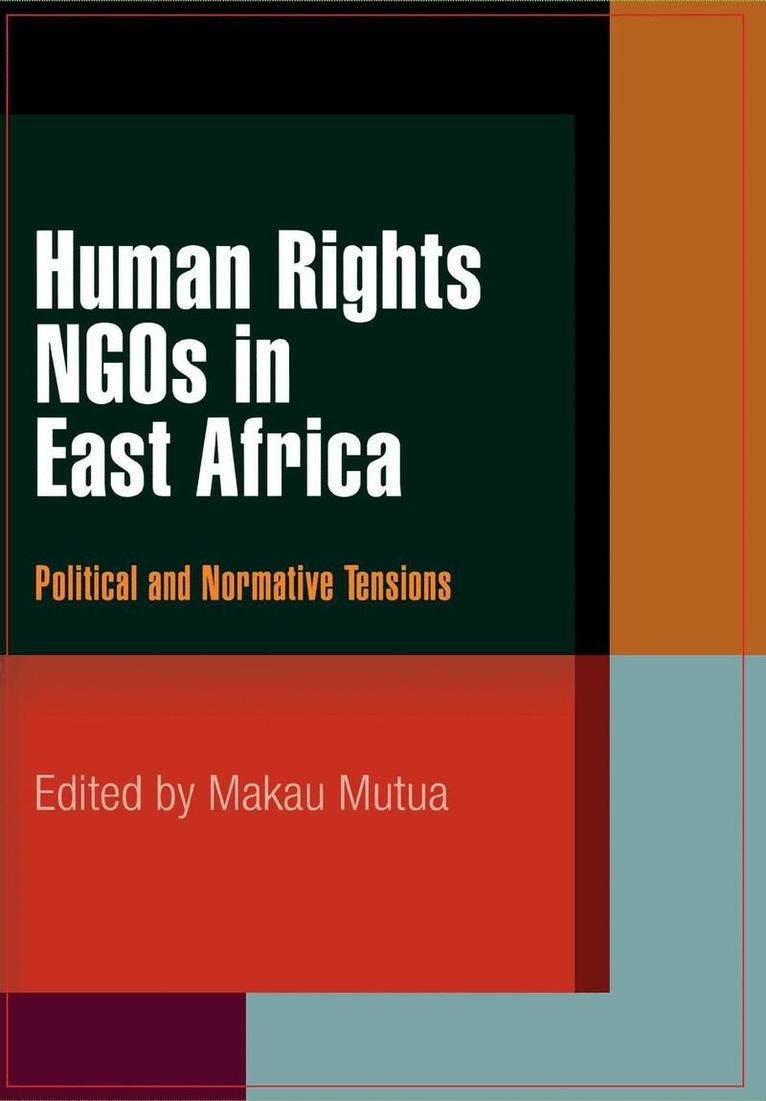
Human rights nongovernmental organizations (NGOs) are by definition not part of the state. Rather, they are an element of civil society, the strands of the fabric of organized life in countries, and crucial to the prospect of political democracy. Civil society is a very recent phenomenon in East African nations, where authoritarian regimes have prevailed and human rights watchdogs have had a critical role to play. While the state remains one of the major challenges to human rights efforts in the countries of the region, other problems that are internal to the human rights movement are also of a serious nature, and they are many: What are the social bases of the human rights enterprise in transitional societies? What mandate can human rights NGOs claim, and in whose name do they operate?Human Rights NGOs in East Africa critically explores the anatomy of the human rights movement in the East African region, examining its origins, challenges, and emergent themes in the context of political transitions. In particular, the book seeks to understand the political and normative challenges that face this young but vibrant civil society in the vortex of globalization. The book brings together the most celebrated human rights thinkers in East Africa, enriched by contributions from their colleagues in South Africa and the United States.To date, very little has been written about the struggles and accomplishments of civil society in the nations of East Africa. This book will fill that gap and prove to be an invaluable tool for understanding and teaching about human rights in this complex and vital part of the world.
911 kr
Skickas
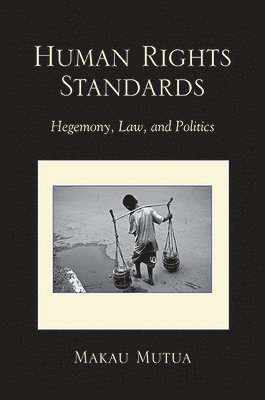
A bracing critique of human rights law and activism from the perspective of the Global South.How are human rights norms made, who makes them, and why? In Human Rights Standards, Makau Mutua traces the history of the human rights project and critically explores how the norms of the human rights movement have been created. Examining key texts and documents published since the inception of the human rights movement at the end of World War II, he crafts a bracing critique of these works from the hitherto underutilized perspective of the Global South. Attention is focused on the deficits of the international order and how that order, which is defined by multiple asymmetries, defines human rights in a manner that exhibits normative gaps and cultural biases. Mutua identifies areas of further norm development and concludes that norm-creating processes must be inclusive and participatory to garner legitimacy across various cleavages and divides. The result is the first truly comprehensive critical look at the making of human rights norms and standards and, as such, will be an invaluable resource for students, scholars, activists, and policymakers interested in this important topic.This book is freely available in an open access edition thanks to Knowledge Unlatched-an initiative that provides libraries and institutions with a centralized platform to support OA collections and from leading publishing houses and OA initiatives. Learn more at the Knowledge Unlatched website at: https://www.knowledgeunlatched.org/, and access the book online at the SUNY Open Access Repository at http://hdl.handle.net/20.500.12648/7133.
314 kr
Tillfälligt slut
A bracing critique of human rights law and activism from the perspective of the Global South.How are human rights norms made, who makes them, and why? In Human Rights Standards, Makau Mutua traces the history of the human rights project and critically explores how the norms of the human rights movement have been created. Examining key texts and documents published since the inception of the human rights movement at the end of World War II, he crafts a bracing critique of these works from the hitherto underutilized perspective of the Global South. Attention is focused on the deficits of the international order and how that order, which is defined by multiple asymmetries, defines human rights in a manner that exhibits normative gaps and cultural biases. Mutua identifies areas of further norm development and concludes that norm-creating processes must be inclusive and participatory to garner legitimacy across various cleavages and divides. The result is the first truly comprehensive critical look at the making of human rights norms and standards and, as such, will be an invaluable resource for students, scholars, activists, and policymakers interested in this important topic.This book is freely available in an open access edition thanks to Knowledge Unlatched-an initiative that provides libraries and institutions with a centralized platform to support OA collections and from leading publishing houses and OA initiatives. Learn more at the Knowledge Unlatched website at: https://www.knowledgeunlatched.org/, and access the book online at the SUNY Open Access Repository at http://hdl.handle.net/20.500.12648/7133.