Makoto Ohsaki - Böcker
Visar alla böcker från författaren Makoto Ohsaki. Handla med fri frakt och snabb leverans.
11 produkter
11 produkter
1 335 kr
Skickas inom 10-15 vardagar
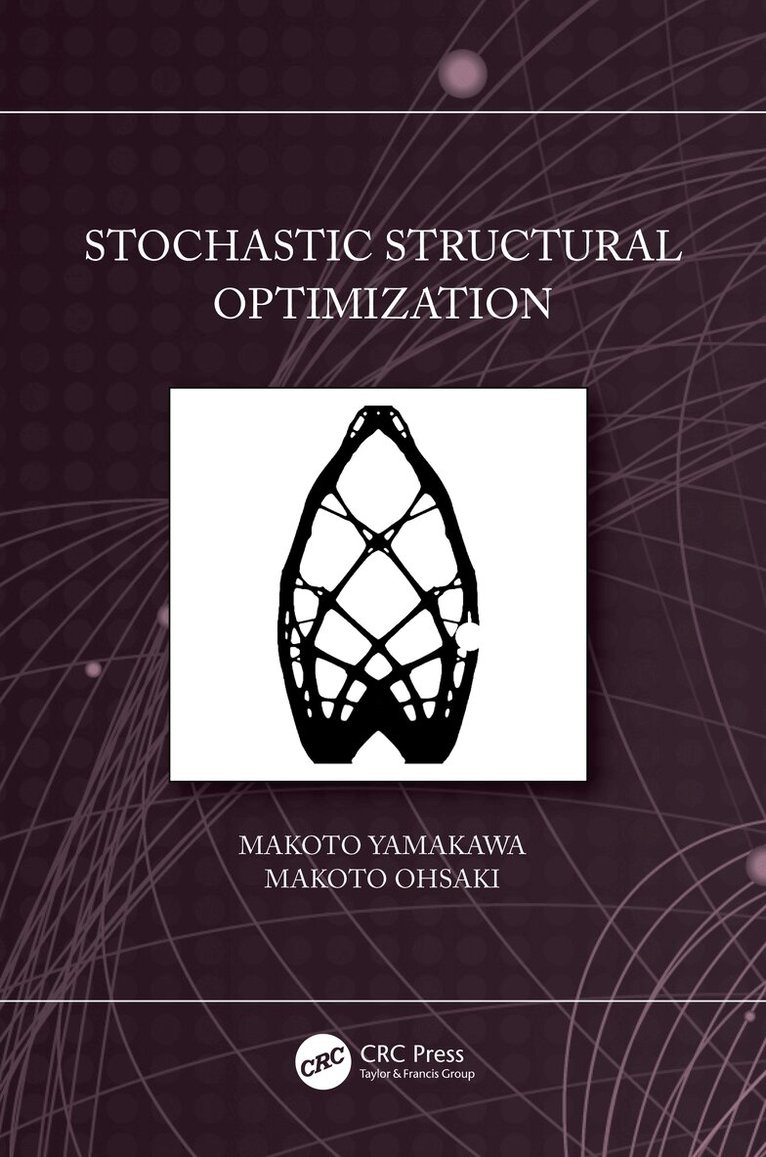
Stochastic Structural Optimization presents a comprehensive picture of robust design optimization of structures, focused on nonparametric stochastic-based methodologies. Good practical structural design accounts for uncertainty, for which reliability-based design offers a standard approach, usually incorporating assumptions on probability functions which are often unknown. By comparison, a worst-case approach with bounded support used as a robust design offers simplicity and a lower level of sensitivity. Linking structural optimization with these two approaches by a unified framework of non-parametric stochastic methodologies provides a rigorous theoretical background and high level of practicality. This text shows how to use this theoretical framework in civil and mechanical engineering practice to design a safe structure which accounts for uncertainty. Connects theory with practice in the robust design optimization of structures Advanced enough to support sound practical designsThis book provides comprehensive coverage for engineers and graduate students in civil and mechanical engineering.Makoto Yamakawa is a Professor at Tokyo University of Science, and a member of the Advisory Board of the 2020 Asian Congress of Structural and Multidisciplinary Optimization. Makoto Ohsaki is a Professor at Kyoto University, Japan, treasurer of the International Association for Shell & Spatial Structures and former President of the Asian Society for Structural and Multidisciplinary Optimization.
725 kr
Skickas inom 10-15 vardagar
Stochastic Structural Optimization presents a comprehensive picture of robust design optimization of structures, focused on nonparametric stochastic-based methodologies. Good practical structural design accounts for uncertainty, for which reliability-based design offers a standard approach, usually incorporating assumptions on probability functions which are often unknown. By comparison, a worst-case approach with bounded support used as a robust design offers simplicity and a lower level of sensitivity. Linking structural optimization with these two approaches by a unified framework of non-parametric stochastic methodologies provides a rigorous theoretical background and high level of practicality. This text shows how to use this theoretical framework in civil and mechanical engineering practice to design a safe structure which accounts for uncertainty. Connects theory with practice in the robust design optimization of structures Advanced enough to support sound practical designsThis book provides comprehensive coverage for engineers and graduate students in civil and mechanical engineering.Makoto Yamakawa is a Professor at Tokyo University of Science, and a member of the Advisory Board of the 2020 Asian Congress of Structural and Multidisciplinary Optimization. Makoto Ohsaki is a Professor at Kyoto University, Japan, treasurer of the International Association for Shell & Spatial Structures and former President of the Asian Society for Structural and Multidisciplinary Optimization.
1 578 kr
Skickas inom 10-15 vardagar
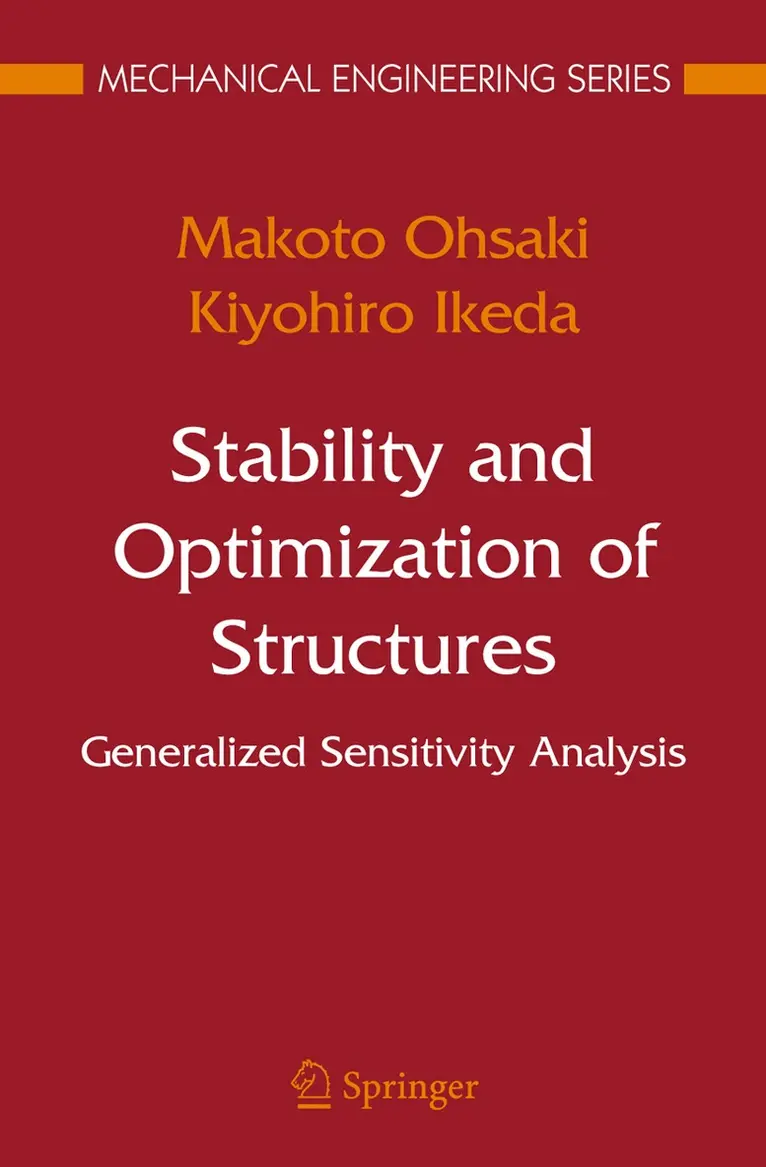
Stability and Optimization of Structures: Generalized Sensitivity Analysis is the first book to address issues of structural optimization against nonlinear buckling. Through the investigation of imperfection sensitivity, worst imperfection and random imperfection based on concrete theoretical framework, it is shown that optimization against buckling does not necessarily produce an imperfection-sensitive structure. This book offers the reader greater insight into optimization-based and computer-assisted stability design of finite-dimensional structures. Using the unified approach to parameter sensitivity analysis, it connects studies of elastic stability, computational mechanics and applied mathematics. Optimization based on stability theory is presented and explained, with 140 figures to illustrate applications in the framework of finite element analysis. This book serves as an illustrative introduction for professional structural and mechanical engineers, graduate students in engineering, as well as applied mathematicians in the field.
1 105 kr
Skickas inom 10-15 vardagar
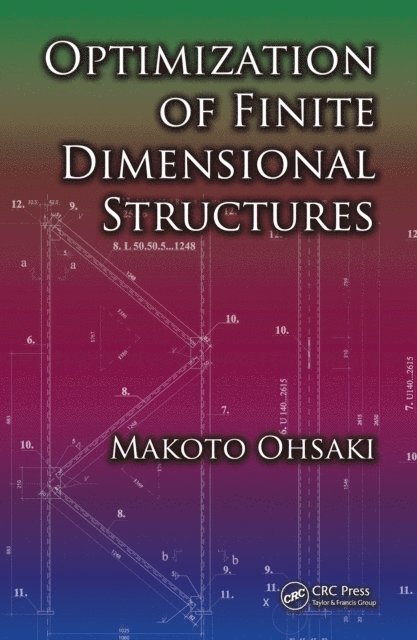
Originally developed for mechanical and aeronautical engineering, structural optimization is not so easily applied to civil and architectural engineering, as structures in these fields are not mass products, but more often unique structures planned in accordance with specific design requirements. The shape and geometry of such structures are determined by a designer or an architect in view of nonstructural performance that includes aesthetics. Until now, books in this area gave little help to engineers working in cooperation with designers, as they covered conceptual material with little consideration of civil engineering applications, or they required a solid background in applied mathematics and continuum mechanics, an area not usually studied by practicing engineers and students in civil engineering. Optimization of Finite Dimensional Structures introduces methodologies and applications that are closely related to design problems encountered in structural optimization, to serve as a bridge between the communities of structural optimization in mechanical engineering and the researchers and engineers in civil engineering. This unparalleled, self-contained work: Provides readers with the basics of optimization of frame structures, such as trusses, building frames, and long-span structures, with descriptions of various applications to real-world problemsSummarizes the historical development of methodologies and theorems on optimization of frame structuresIntroduces many recently developed highly efficient optimization techniques presented with illustrative examplesDescribes traditional problems with constraints on limit loads, member stresses, compliance, and eigenvalues of vibration, all in detailOffers a unique look at optimization results for spatial trusses and latticed domesMathematical preliminaries and methodologies are summarized in the book’s appendix, so that readers can attend to the details when needed without having to wade through tedious mathematics in the explanatory main chapters. Instead, small examples that can be solved by hand or by using a simple program are presented in these chapters, making the book readily accessible and highly useful for both classroom use and professional self-study.
2 960 kr
Skickas inom 10-15 vardagar
Originally developed for mechanical and aeronautical engineering, structural optimization is not so easily applied to civil and architectural engineering, as structures in these fields are not mass products, but more often unique structures planned in accordance with specific design requirements. The shape and geometry of such structures are determined by a designer or an architect in view of nonstructural performance that includes aesthetics. Until now, books in this area gave little help to engineers working in cooperation with designers, as they covered conceptual material with little consideration of civil engineering applications, or they required a solid background in applied mathematics and continuum mechanics, an area not usually studied by practicing engineers and students in civil engineering. Optimization of Finite Dimensional Structures introduces methodologies and applications that are closely related to design problems encountered in structural optimization, to serve as a bridge between the communities of structural optimization in mechanical engineering and the researchers and engineers in civil engineering. This unparalleled, self-contained work: Provides readers with the basics of optimization of frame structures, such as trusses, building frames, and long-span structures, with descriptions of various applications to real-world problemsSummarizes the historical development of methodologies and theorems on optimization of frame structuresIntroduces many recently developed highly efficient optimization techniques presented with illustrative examplesDescribes traditional problems with constraints on limit loads, member stresses, compliance, and eigenvalues of vibration, all in detailOffers a unique look at optimization results for spatial trusses and latticed domesMathematical preliminaries and methodologies are summarized in the book’s appendix, so that readers can attend to the details when needed without having to wade through tedious mathematics in the explanatory main chapters. Instead, small examples that can be solved by hand or by using a simple program are presented in these chapters, making the book readily accessible and highly useful for both classroom use and professional self-study.
1 578 kr
Skickas inom 10-15 vardagar
Stability and Optimization of Structures: Generalized Sensitivity Analysis is the first book to address issues of structural optimization against nonlinear buckling. Through the investigation of imperfection sensitivity, worst imperfection and random imperfection based on concrete theoretical framework, it is shown that optimization against buckling does not necessarily produce an imperfection-sensitive structure. This book offers the reader greater insight into optimization-based and computer-assisted stability design of finite-dimensional structures. Using the unified approach to parameter sensitivity analysis, it connects studies of elastic stability, computational mechanics and applied mathematics. Optimization based on stability theory is presented and explained, with 140 figures to illustrate applications in the framework of finite element analysis. This book serves as an illustrative introduction for professional structural and mechanical engineers, graduate students in engineering, as well as applied mathematicians in the field.
2 106 kr
Skickas inom 5-8 vardagar
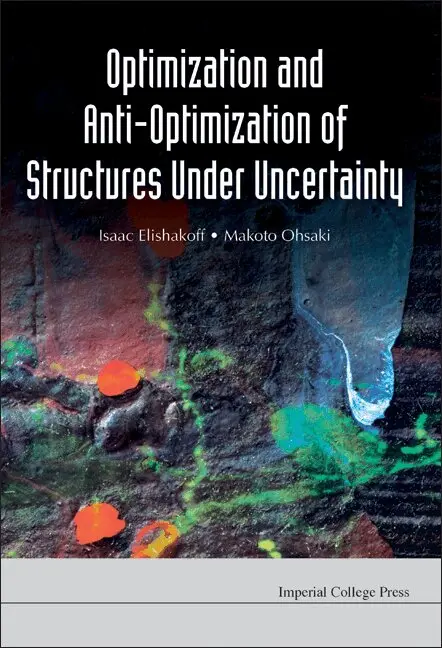
The volume presents a collaboration between internationally recognized experts on anti-optimization and structural optimization, and summarizes various novel ideas, methodologies and results studied over 20 years. The book vividly demonstrates how the concept of uncertainty should be incorporated in a rigorous manner during the process of designing real-world structures. The necessity of anti-optimization approach is first demonstrated, then the anti-optimization techniques are applied to static, dynamic and buckling problems, thus covering the broadest possible set of applications. Finally, anti-optimization is fully utilized by a combination of structural optimization to produce the optimal design considering the worst-case scenario. This is currently the only book that covers the combination of optimization and anti-optimization. It shows how various optimization techniques are used in the novel anti-optimization technique, and how the structural optimization can be exponentially enhanced by incorporating the concept of worst-case scenario, thereby increasing the safety of the structures designed in various fields of engineering.
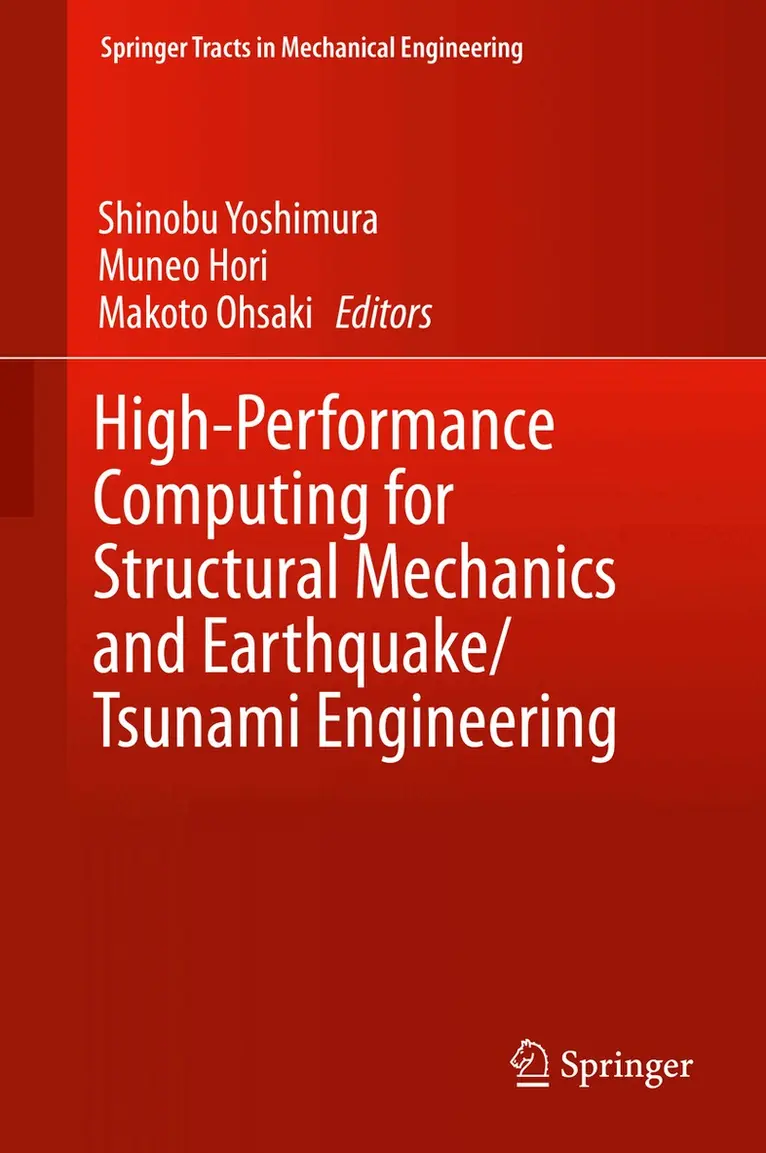
High-Performance Computing for Structural Mechanics and Earthquake/Tsunami Engineering
Inbunden, Engelska, 2015
1 064 kr
Skickas inom 10-15 vardagar
Huge earthquakes and tsunamis have caused serious damage to important structures such as civil infrastructure elements, buildings and power plants around the globe. To quantitatively evaluate such damage processes and to design effective prevention and mitigation measures, the latest high-performance computational mechanics technologies, which include telascale to petascale computers, can offer powerful tools. The phenomena covered in this book include seismic wave propagation in the crust and soil, seismic response of infrastructure elements such as tunnels considering soil-structure interactions, seismic response of high-rise buildings, seismic response of nuclear power plants, tsunami run-up over coastal towns and tsunami inundation considering fluid-structure interactions. The book provides all necessary information for addressing these phenomena, ranging from the fundamentals of high-performance computing for finite element methods, key algorithms of accurate dynamic structural analysis, fluid flows with free surfaces, and fluid-structure interactions, to practical applications with detailed simulation results. The book will offer essential insights for researchers and engineers working in the field of computational seismic/tsunami engineering.
High-Performance Computing for Structural Mechanics and Earthquake/Tsunami Engineering
Häftad, Engelska, 2016
1 064 kr
Skickas inom 10-15 vardagar
Huge earthquakes and tsunamis have caused serious damage to important structures such as civil infrastructure elements, buildings and power plants around the globe. To quantitatively evaluate such damage processes and to design effective prevention and mitigation measures, the latest high-performance computational mechanics technologies, which include telascale to petascale computers, can offer powerful tools. The phenomena covered in this book include seismic wave propagation in the crust and soil, seismic response of infrastructure elements such as tunnels considering soil-structure interactions, seismic response of high-rise buildings, seismic response of nuclear power plants, tsunami run-up over coastal towns and tsunami inundation considering fluid-structure interactions. The book provides all necessary information for addressing these phenomena, ranging from the fundamentals of high-performance computing for finite element methods, key algorithms of accurate dynamic structural analysis, fluid flows with free surfaces, and fluid-structure interactions, to practical applications with detailed simulation results. The book will offer essential insights for researchers and engineers working in the field of computational seismic/tsunami engineering.
1 892 kr
Skickas inom 10-15 vardagar
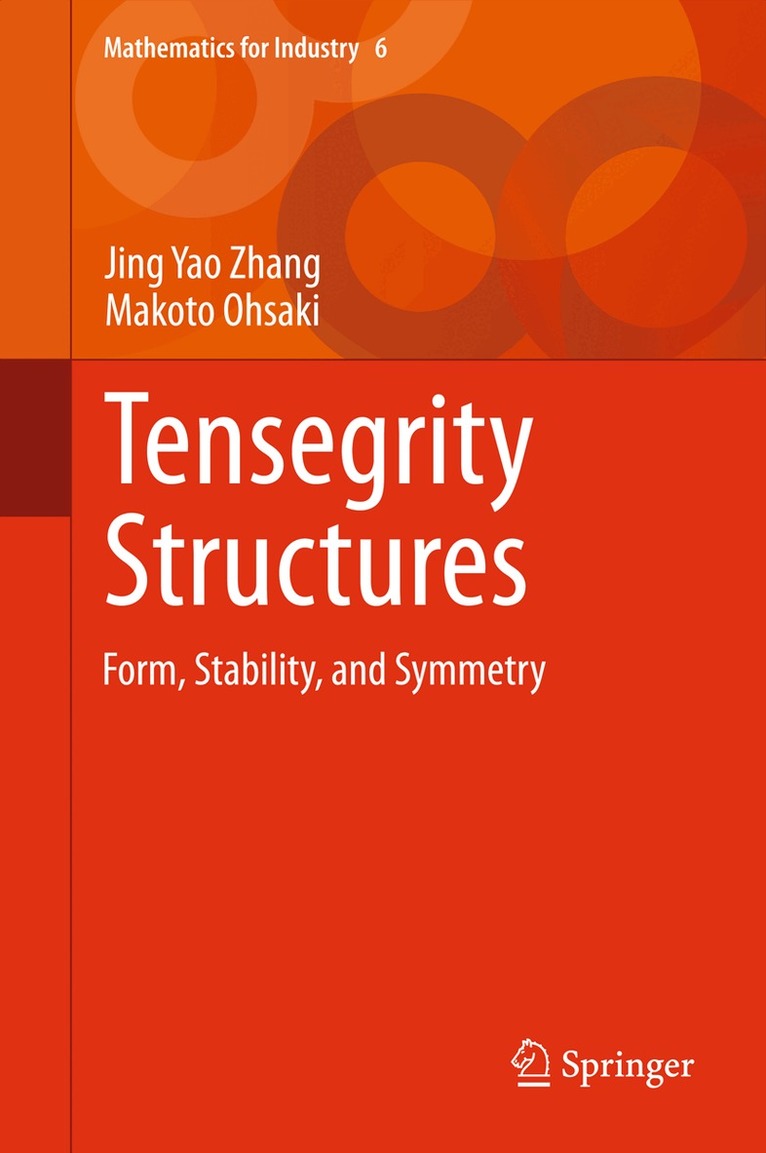
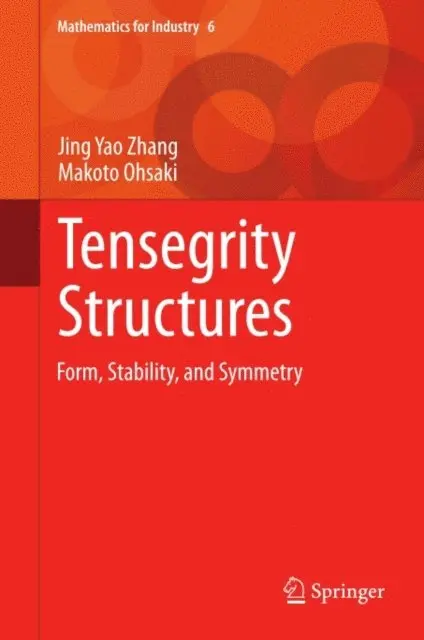
To facilitate a deeper understanding of tensegrity structures, this book focuses on their two key design problems: self-equilibrium analysis and stability investigation. In particular, high symmetry properties of the structures are extensively utilized. Conditions for self-equilibrium as well as super-stability of tensegrity structures are presented in detail. An analytical method and an efficient numerical method are given for self-equilibrium analysis of tensegrity structures: the analytical method deals with symmetric structures and the numerical method guarantees super-stability. Utilizing group representation theory, the text further provides analytical super-stability conditions for the structures that are of dihedral as well as tetrahedral symmetry. This book not only serves as a reference for engineers and scientists but is also a useful source for upper-level undergraduate and graduate students. Keeping this objective in mind, the presentation of the book is self-contained anddetailed, with an abundance of figures and examples.
1 948 kr
Skickas inom 10-15 vardagar
To facilitate a deeper understanding of tensegrity structures, this book focuses on their two key design problems: self-equilibrium analysis and stability investigation. In particular, high symmetry properties of the structures are extensively utilized. Conditions for self-equilibrium as well as super-stability of tensegrity structures are presented in detail. An analytical method and an efficient numerical method are given for self-equilibrium analysis of tensegrity structures: the analytical method deals with symmetric structures and the numerical method guarantees super-stability. Utilizing group representation theory, the text further provides analytical super-stability conditions for the structures that are of dihedral as well as tetrahedral symmetry. This book not only serves as a reference for engineers and scientists but is also a useful source for upper-level undergraduate and graduate students. Keeping this objective in mind, the presentation of the book is self-contained anddetailed, with an abundance of figures and examples.