Muneo Hori - Böcker
Visar alla böcker från författaren Muneo Hori. Handla med fri frakt och snabb leverans.
9 produkter
9 produkter
2 239 kr
Skickas inom 3-6 vardagar
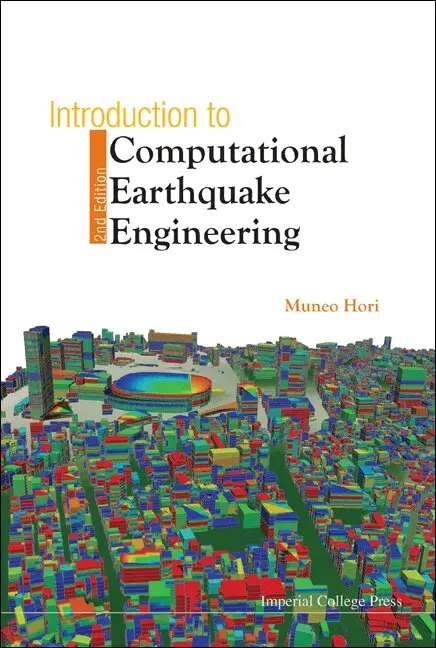
This book provides rigorous foundations of applying modern computational mechanics to earthquake engineering. The scope covers the numerical analysis of earthquake wave propagation processes and the faulting processes, and also presents the most advanced numerical simulations of earthquake hazards and disasters that can take place in an urban area.Two new chapters included are advanced topics on high performance computing and for constructing an analysis model.This is the first book in earthquake engineering that explains the application of modern numerical computation (which includes high performance computing) to various engineering seismology problems.
1 212 kr
Skickas inom 3-6 vardagar
This book provides rigorous foundations of applying modern computational mechanics to earthquake engineering. The scope covers the numerical analysis of earthquake wave propagation processes and the faulting processes, and also presents the most advanced numerical simulations of earthquake hazards and disasters that can take place in an urban area.Two new chapters included are advanced topics on high performance computing and for constructing an analysis model.This is the first book in earthquake engineering that explains the application of modern numerical computation (which includes high performance computing) to various engineering seismology problems.
2 423 kr
Skickas inom 3-6 vardagar
With the continued improvements in computing power and digital information availability, we are witnessing the increasing use of high-performance computers to enhance simulations for the forecasting of hazards, disasters, and responses. This major reference work summarizes the theories, analysis methods, and computational results of various earthquake simulations by the use of supercomputers. It covers simulations in the fields of seismology, physical geology, earthquake engineering — specifically the seismic response of structures — and the socioeconomic impact of post-earthquake recovery on cities and societies. Individual chapters address phenomena such as earthquake cycles and plate boundary behavior, tsunamis, structural response to strong ground motion, and post-disaster traffic flow and economic activity. The methods used for these simulations include finite element methods, discrete element methods, smoothed particle hydrodynamics, and multi-agent models, among others.The simulations included in this book provide an effective bird's-eye view of cutting-edge simulations enhanced with high-performance computing for earthquake occurrence, earthquake damage, and recovery from the damage, combining three of the major fields of earthquake studies: earth science, earthquake engineering, and disaster-mitigation-related social science. The book is suitable for advanced undergraduates, graduates, and researchers in these fields.
2 160 kr
Skickas inom 3-6 vardagar
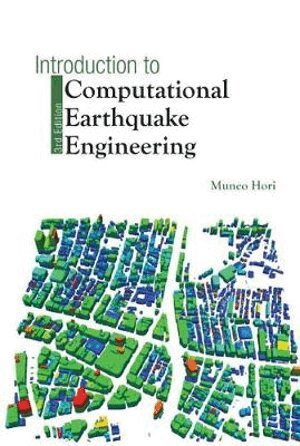
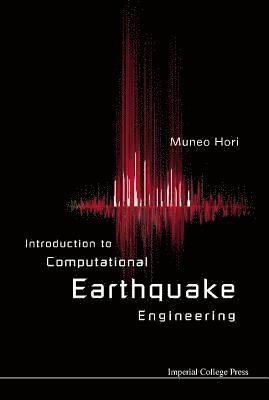
Introduction to Computational Earthquake Engineering covers solid continuum mechanics, finite element method and stochastic modeling comprehensively, with the second and third chapters explaining the numerical simulation of strong ground motion and faulting, respectively. Stochastic modeling is used for uncertain underground structures, and advanced analytical methods for linear and non-linear stochastic models are presented. The verification of these methods by comparing the simulation results with observed data is then presented, and examples of numerical simulations which apply these methods to practical problems are generously provided. Furthermore three advanced topics of computational earthquake engineering are covered, detailing examples of applying computational science technology to earthquake engineering problems.
1 037 kr
Skickas inom 5-8 vardagar
Introduction to Computational Earthquake Engineering covers solid continuum mechanics, finite element method and stochastic modeling comprehensively, with the second and third chapters explaining the numerical simulation of strong ground motion and faulting, respectively. Stochastic modeling is used for uncertain underground structures, and advanced analytical methods for linear and non-linear stochastic models are presented. The verification of these methods by comparing the simulation results with observed data is then presented, and examples of numerical simulations which apply these methods to practical problems are generously provided. Furthermore three advanced topics of computational earthquake engineering are covered, detailing examples of applying computational science technology to earthquake engineering problems.
1 417 kr
Tillfälligt slut
This book introduces new research topics in earthquake engineering through the application of computational mechanics and computer science. The topics covered discuss the evaluation of earthquake hazards such as strong ground motion and faulting through applying advanced numerical analysis methods, useful for estimating earthquake disasters.These methods, based on recent progress in solid continuum mechanics and computational mechanics, are summarized comprehensively for graduate students and researchers in earthquake engineering. The coverage includes stochastic modeling as well as several advanced computational earthquake engineering topics.
858 kr
Tillfälligt slut
This book introduces new research topics in earthquake engineering through the application of computational mechanics and computer science. The topics covered discuss the evaluation of earthquake hazards such as strong ground motion and faulting through applying advanced numerical analysis methods, useful for estimating earthquake disasters.These methods, based on recent progress in solid continuum mechanics and computational mechanics, are summarized comprehensively for graduate students and researchers in earthquake engineering. The coverage includes stochastic modeling as well as several advanced computational earthquake engineering topics.
High-Performance Computing for Structural Mechanics and Earthquake/Tsunami Engineering
Inbunden, Engelska, 2015
1 064 kr
Skickas inom 10-15 vardagar
Huge earthquakes and tsunamis have caused serious damage to important structures such as civil infrastructure elements, buildings and power plants around the globe. To quantitatively evaluate such damage processes and to design effective prevention and mitigation measures, the latest high-performance computational mechanics technologies, which include telascale to petascale computers, can offer powerful tools. The phenomena covered in this book include seismic wave propagation in the crust and soil, seismic response of infrastructure elements such as tunnels considering soil-structure interactions, seismic response of high-rise buildings, seismic response of nuclear power plants, tsunami run-up over coastal towns and tsunami inundation considering fluid-structure interactions. The book provides all necessary information for addressing these phenomena, ranging from the fundamentals of high-performance computing for finite element methods, key algorithms of accurate dynamic structural analysis, fluid flows with free surfaces, and fluid-structure interactions, to practical applications with detailed simulation results. The book will offer essential insights for researchers and engineers working in the field of computational seismic/tsunami engineering.
High-Performance Computing for Structural Mechanics and Earthquake/Tsunami Engineering
Häftad, Engelska, 2016
1 064 kr
Skickas inom 10-15 vardagar
Huge earthquakes and tsunamis have caused serious damage to important structures such as civil infrastructure elements, buildings and power plants around the globe. To quantitatively evaluate such damage processes and to design effective prevention and mitigation measures, the latest high-performance computational mechanics technologies, which include telascale to petascale computers, can offer powerful tools. The phenomena covered in this book include seismic wave propagation in the crust and soil, seismic response of infrastructure elements such as tunnels considering soil-structure interactions, seismic response of high-rise buildings, seismic response of nuclear power plants, tsunami run-up over coastal towns and tsunami inundation considering fluid-structure interactions. The book provides all necessary information for addressing these phenomena, ranging from the fundamentals of high-performance computing for finite element methods, key algorithms of accurate dynamic structural analysis, fluid flows with free surfaces, and fluid-structure interactions, to practical applications with detailed simulation results. The book will offer essential insights for researchers and engineers working in the field of computational seismic/tsunami engineering.