Maks A. Akivis - Böcker
Visar alla böcker från författaren Maks A. Akivis. Handla med fri frakt och snabb leverans.
5 produkter
5 produkter
536 kr
Skickas inom 10-15 vardagar
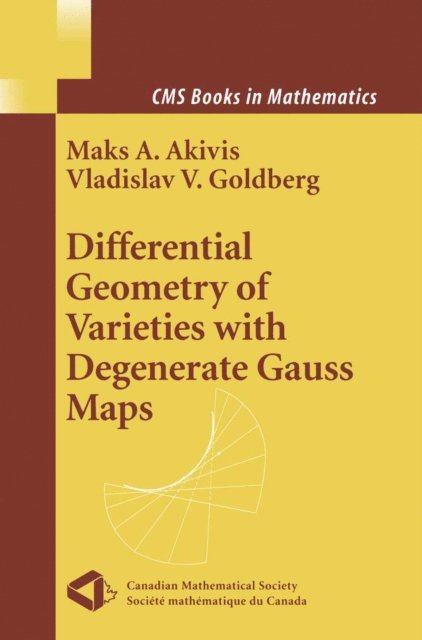
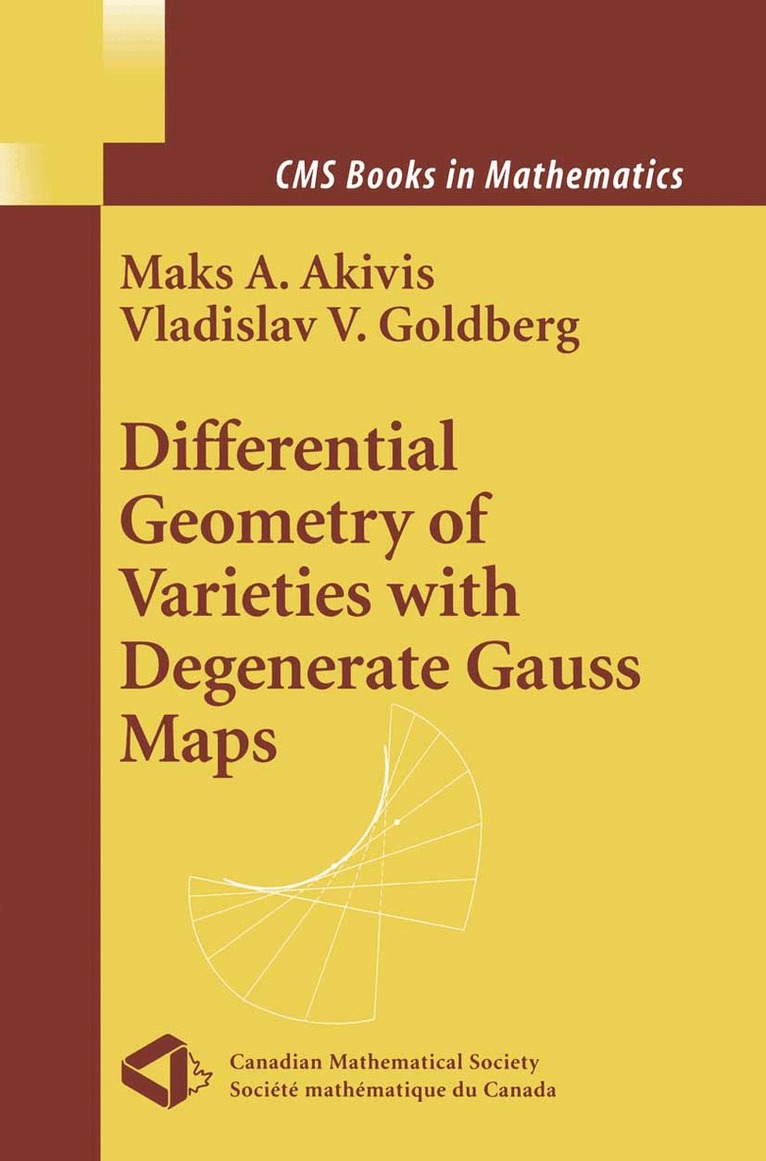
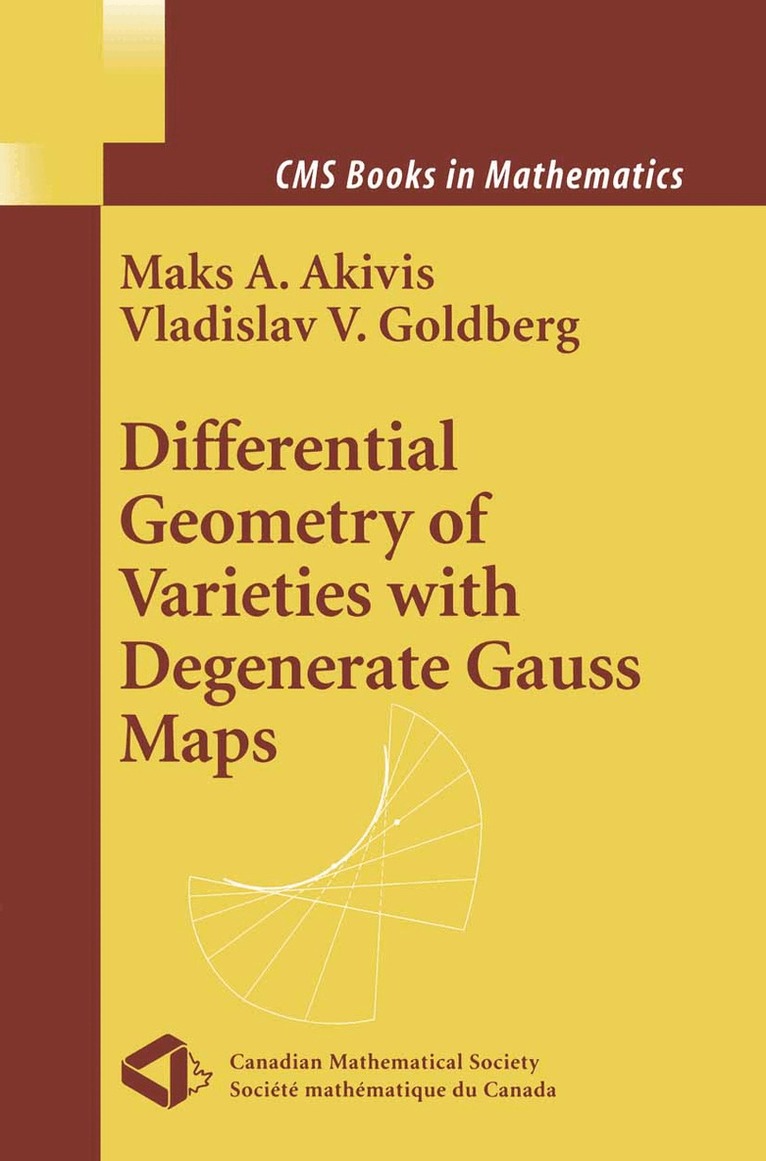
In this book the authors study the differential geometry of varieties with degenerate Gauss maps. They use the main methods of differential geometry, namely, the methods of moving frames and exterior differential forms as well as tensor methods. By means of these methods, the authors discover the structure of varieties with degenerate Gauss maps, determine the singular points and singular varieties, find focal images and construct a classification of the varieties with degenerate Gauss maps.The authors introduce the above mentioned methods and apply them to a series of concrete problems arising in the theory of varieties with degenerate Gauss maps. What makes this book unique is the authors� use of a systematic application of methods of projective differential geometry along with methods of the classical algebraic geometry for studying varieties with degenerate Gauss maps.This book is intended for researchers and graduate students interested in projective differential geometry and algebraic geometry and their applications. It can be used as a text for advanced undergraduate and graduate students.Each author has published over 100 papers and they have each written a number of books, including Conformal Differential Geometry and Its Generalizations (Wiley 1996), Projective Differential Geometry of Submanifolds (North-Holland 1993), and Introductory Linear Algebra (Prentice-Hall 1972), which were written by them jointly.
Del 28 - Pure and Applied Mathematics: A Wiley Series of Texts, Monographs and Tracts
Conformal Differential Geometry and Its Generalizations
Inbunden, Engelska, 1996
2 486 kr
Skickas inom 7-10 vardagar
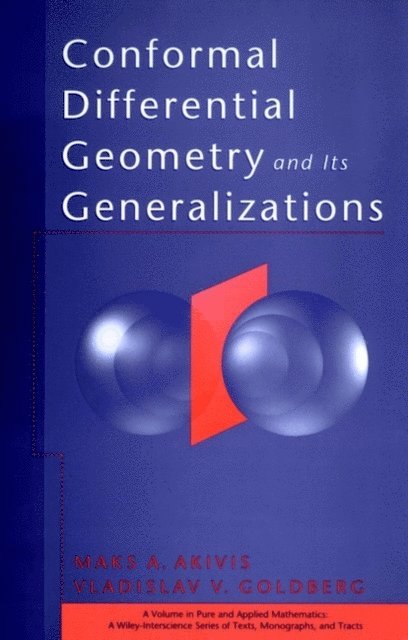
Comprehensive coverage of the foundations, applications, recent developments, and future of conformal differential geometry Conformal Differential Geometry and Its Generalizations is the first and only text that systematically presents the foundations and manifestations of conformal differential geometry. It offers the first unified presentation of the subject, which was established more than a century ago. The text is divided into seven chapters, each containing figures, formulas, and historical and bibliographical notes, while numerous examples elucidate the necessary theory. Clear, focused, and expertly synthesized, Conformal Differential Geometry and Its Generalizations* Develops the theory of hypersurfaces and submanifolds of any dimension of conformal and pseudoconformal spaces.* Investigates conformal and pseudoconformal structures on a manifold of arbitrary dimension, derives their structure equations, and explores their tensor of conformal curvature.* Analyzes the real theory of four-dimensional conformal structures of all possible signatures.* Considers the analytic and differential geometry of Grassmann and almost Grassmann structures.* Draws connections between almost Grassmann structures and web theory. Conformal differential geometry, a part of classical differential geometry, was founded at the turn of the century and gave rise to the study of conformal and almost Grassmann structures in later years. Until now, no book has offered a systematic presentation of the multidimensional conformal differential geometry and the conformal and almost Grassmann structures. After years of intense research at their respective universities and at the Soviet School of Differential Geometry, Maks A. Akivis and Vladislav V. Goldberg have written this well-conceived, expertly executed volume to fill a void in the literature. Dr. Akivis and Dr. Goldberg supply a deep foundation, applications, numerous examples, and recent developments in the field. Many of the findings that fill these pages are published here for the first time, and previously published results are reexamined in a unified context. The geometry and theory of conformal and pseudoconformal spaces of arbitrary dimension, as well as the theory of Grassmann and almost Grassmann structures, are discussed and analyzed in detail. The topics covered not only advance the subject itself, but pose important questions for future investigations. This exhaustive, groundbreaking text combines the classical results and recent developments and findings. This volume is intended for graduate students and researchers of differential geometry. It can be especially useful to those students and researchers who are interested in conformal and Grassmann differential geometry and their applications to theoretical physics.
536 kr
Skickas inom 10-15 vardagar
In this book the authors study the differential geometry of varieties with degenerate Gauss maps. They use the main methods of differential geometry, namely, the methods of moving frames and exterior differential forms as well as tensor methods. By means of these methods, the authors discover the structure of varieties with degenerate Gauss maps, determine the singular points and singular varieties, find focal images and construct a classification of the varieties with degenerate Gauss maps.The authors introduce the above mentioned methods and apply them to a series of concrete problems arising in the theory of varieties with degenerate Gauss maps. What makes this book unique is the authors’ use of a systematic application of methods of projective differential geometry along with methods of the classical algebraic geometry for studying varieties with degenerate Gauss maps.This book is intended for researchers and graduate students interested in projective differential geometry and algebraic geometry and their applications. It can be used as a text for advanced undergraduate and graduate students.Each author has published over 100 papers and they have each written a number of books, including Conformal Differential Geometry and Its Generalizations (Wiley 1996), Projective Differential Geometry of Submanifolds (North-Holland 1993), and Introductory Linear Algebra (Prentice-Hall 1972), which were written by them jointly.
1 945 kr
Tillfälligt slut
This textbook presents the foundations of tensor calculus and the elements of tensor analysis. In addition, the authors consider numerous applications of tensors to geometry, mechanics and physics.While developing tensor calculus, the authors emphasize its relationship with linear algebra. Necessary notions and theorems of linear algebra are introduced and proved in connection with the construction of the apparatus of tensor calculus; prior knowledge is not assumed. For simplicity and to enable the reader to visualize concepts more clearly, all exposition is conducted in three-dimensional space. The principal feature of the book is that the authors use mainly orthogonal tensors, since such tensors are important in applications to physics and engineering.With regard to applications, the authors construct the general theory of second-degree surfaces, study the inertia tensor as well as the stress and strain tensors, and consider some problems of crystallophysics. The last chapter introduces the elements of tensor analysis.All notions introduced in the book, and also the obtained results, are illustrated with numerous examples discussed in the text. Each section of the book presents problems (a total over 300 problems are given). Examples and problems are intended to illustrate, reinforce and deepen the presented material. There are answers to most of the problems, as well as hints and solutions to selected problems at the end of the book.
875 kr
Tillfälligt slut
This textbook presents the foundations of tensor calculus and the elements of tensor analysis. In addition, the authors consider numerous applications of tensors to geometry, mechanics and physics.While developing tensor calculus, the authors emphasize its relationship with linear algebra. Necessary notions and theorems of linear algebra are introduced and proved in connection with the construction of the apparatus of tensor calculus; prior knowledge is not assumed. For simplicity and to enable the reader to visualize concepts more clearly, all exposition is conducted in three-dimensional space. The principal feature of the book is that the authors use mainly orthogonal tensors, since such tensors are important in applications to physics and engineering.With regard to applications, the authors construct the general theory of second-degree surfaces, study the inertia tensor as well as the stress and strain tensors, and consider some problems of crystallophysics. The last chapter introduces the elements of tensor analysis.All notions introduced in the book, and also the obtained results, are illustrated with numerous examples discussed in the text. Each section of the book presents problems (a total over 300 problems are given). Examples and problems are intended to illustrate, reinforce and deepen the presented material. There are answers to most of the problems, as well as hints and solutions to selected problems at the end of the book.