Manabendra Bhuyan – författare
Visar alla böcker från författaren . Handla med fri frakt och snabb leverans.
7 produkter
7 produkter
Inbunden, Engelska, 2006
4 725 kr
Skickas inom 5-8 vardagar
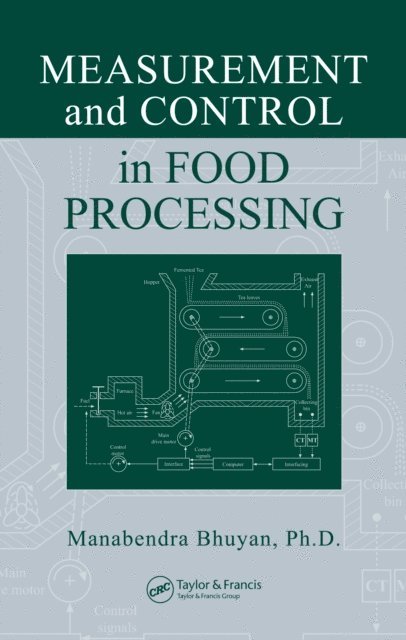
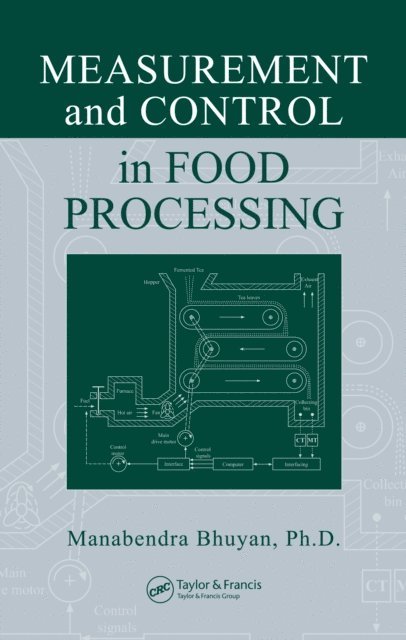
The industrial world consumes millions of kilos of processed food per day. Consistency of taste and texture, standards of raw materials, adherence to health codes, and uniform weights, are established industry specifications. Failure to meet any one of these can result in tons of food destroyed and billions of dollars lost. By the end of the 20th century the growing reliance on computers had shifted food quality and safety activities from human inspection to automated, statistically driven monitoring systems.Measurement and Control in Food Processing is designed to raise awareness of the current techniques of computerized measurement and process control, aid in the design of instruments and control schemes, explain the applicability of these tools to enhance quality and productivity, and educate students preparing to enter the food industry. Beginning with an illustrated introduction, followed by a detailed background in basic principles the author lays a solid foundation for understanding the role of transducers and controllers, demonstrating the need for current practices with specific problems from his experience in the tea industry.Divided into five major chapters, the book covers the most recent developments and applications in measurement techniques, and non-traditional methods such as electronic nose, biosensors, and fuzzy logic control. Addressing a major issue of today, the author investigates microcomputer-based monitoring by discussing the devices, standards, procedures, and suitable examples for process-computer interaction.Bridging the gap between the food-processing engineer who may not know how to design a controller unit and the instrumentation engineer who may not understand the complex flavor components involved, Measurement and Control in Food Processing ensures that together they can consistently make a decent cup of tea.
E-bok
Engelska, 20064 527 kr
Läs direkt efter köp
Designed to raise awareness of the current techniques of measurement and control, this book will aid in the design of instruments and control schemes, explain the applicability of these tools to enhance quality and productivity, and educate students preparing to enter the food industry. Divided into five major chapters, the book lays a solid foundation for understanding the role of transducers and controllers, covers the most recent developments and applications in measurement techniques, and explains non-traditional methods such as electronic noses, biosensors, fuzzy logic control, and microcomputer-based monitoring.
E-bok
Engelska, 20101 429 kr
Läs direkt efter köp
With the advent of microprocessors and digital-processing technologies as catalyst, classical sensors capable of simple signal conditioning operations have evolved rapidly to take on higher and more specialized functions including validation, compensation, and classification. This new category of sensor expands the scope of incorporating intelligen
Häftad, Engelska, 2017
1 192 kr
Skickas inom 10-15 vardagar
With the advent of microprocessors and digital-processing technologies as catalyst, classical sensors capable of simple signal conditioning operations have evolved rapidly to take on higher and more specialized functions including validation, compensation, and classification. This new category of sensor expands the scope of incorporating intelligence into instrumentation systems, yet with such rapid changes, there has developed no universal standard for design, definition, or requirement with which to unify intelligent instrumentation.Explaining the underlying design methodologies of intelligent instrumentation, Intelligent Instrumentation: Principles and Applications provides a comprehensive and authoritative resource on the scientific foundations from which to coordinate and advance the field. Employing a textbook-like language, this book translates methodologies to more than 80 numerical examples, and provides applications in 14 case studies for a complete and working understanding of the material.Beginning with a brief introduction to the basic concepts of process, process parameters, sensors and transducers, and classification of transducers, the book describes the performance characteristics of instrumentation and measurement systems and discusses static and dynamic characteristics, various types of sensor signals, and the concepts of signal representations, various transforms, and their operations in both static and dynamic conditions. It describes smart sensors, cogent sensors, soft sensors, self-validating sensors, VLSI sensors, temperature-compensating sensors, microcontrollers and ANN-based sensors, and indirect measurement sensors.The author examines intelligent sensor signal conditioning such as calibration, linearization, and compensation, along with a wide variety of calibration and linearization techniques using circuits, analog-to-digital converters (ADCs), microcontrollers, ANNs, and software. The final chapters highlight ANN techniques for pattern classification, recognition, prognostic diagnosis, fault detection, linearization, and calibration as well as important interfacing protocols in the wireless networking platform.
Inbunden, Engelska, 2010
3 282 kr
Skickas inom 10-15 vardagar
With the advent of microprocessors and digital-processing technologies as catalyst, classical sensors capable of simple signal conditioning operations have evolved rapidly to take on higher and more specialized functions including validation, compensation, and classification. This new category of sensor expands the scope of incorporating intelligence into instrumentation systems, yet with such rapid changes, there has developed no universal standard for design, definition, or requirement with which to unify intelligent instrumentation.Explaining the underlying design methodologies of intelligent instrumentation, Intelligent Instrumentation: Principles and Applications provides a comprehensive and authoritative resource on the scientific foundations from which to coordinate and advance the field. Employing a textbook-like language, this book translates methodologies to more than 80 numerical examples, and provides applications in 14 case studies for a complete and working understanding of the material.Beginning with a brief introduction to the basic concepts of process, process parameters, sensors and transducers, and classification of transducers, the book describes the performance characteristics of instrumentation and measurement systems and discusses static and dynamic characteristics, various types of sensor signals, and the concepts of signal representations, various transforms, and their operations in both static and dynamic conditions. It describes smart sensors, cogent sensors, soft sensors, self-validating sensors, VLSI sensors, temperature-compensating sensors, microcontrollers and ANN-based sensors, and indirect measurement sensors.The author examines intelligent sensor signal conditioning such as calibration, linearization, and compensation, along with a wide variety of calibration and linearization techniques using circuits, analog-to-digital converters (ADCs), microcontrollers, ANNs, and software. The final chapters highlight ANN techniques for pattern classification, recognition, prognostic diagnosis, fault detection, linearization, and calibration as well as important interfacing protocols in the wireless networking platform.
E-bok
PDF, Engelska, 20101 429 kr
Läs direkt efter köp
With the advent of microprocessors and digital-processing technologies as catalyst, classical sensors capable of simple signal conditioning operations have evolved rapidly to take on higher and more specialized functions including validation, compensation, and classification. This new category of sensor expands the scope of incorporating intelligen
E-bok
Engelska, 20061 451 kr
Läs direkt efter köp
Designed to raise awareness of the current techniques of measurement and control, this book will aid in the design of instruments and control schemes, explain the applicability of these tools to enhance quality and productivity, and educate students preparing to enter the food industry. Divided into five major chapters, the book lays a solid foundation for understanding the role of transducers and controllers, covers the most recent developments and applications in measurement techniques, and explains non-traditional methods such as electronic noses, biosensors, fuzzy logic control, and microcomputer-based monitoring.