Mandyam Srinivasan - Böcker
1 025 kr
Skickas inom 3-6 vardagar
Publisher's Note: Products purchased from Third Party sellers are not guaranteed by the publisher for quality, authenticity, or access to any online entitlements included with the product.
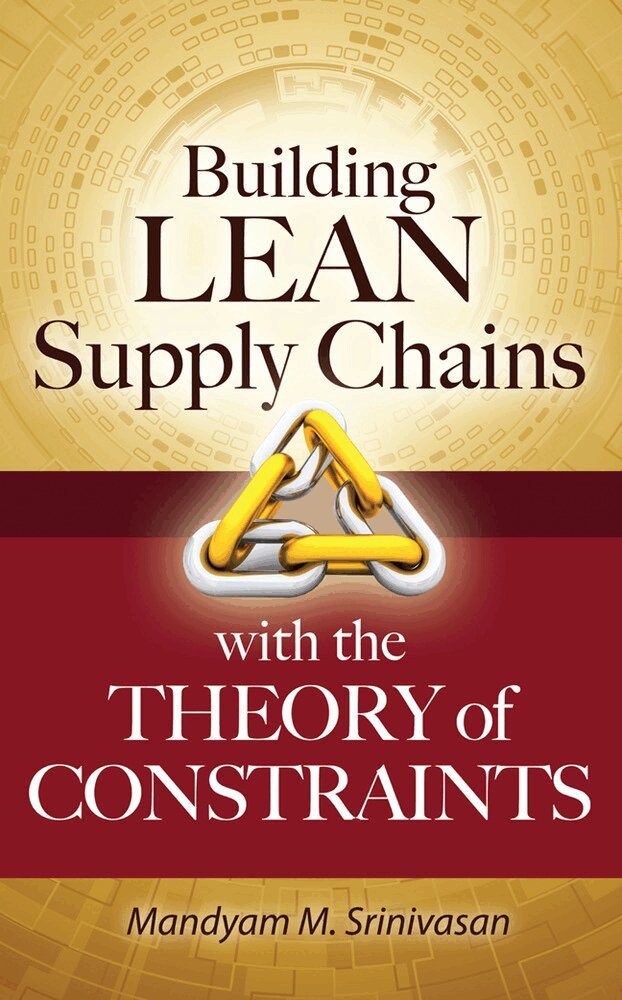
Innovative strategies for building and managing the supply chain using Lean and the Theory of Constraints (TOC)
With an emphasis on systems thinking, Building Lean Supply Chains with the Theory of Constraints uniquely integrates TOC with Lean, illustrating how these two philosophies complement and reinforce each other to create the smooth flow of goods and services through the supply chain. The majority of the chapters draw on the tools and techniques of TOC, including throughput accounting, drum-buffer-rope, TOC in distribution and replenishment, the thinking process, and critical chain project management. All of these topics are presented in the context of building and managing a lean supply chain to achieve true bottom line results.
Coverage includes:
The lean supply chain roadmapEnvisioning the lean supply chain: systems thinkingAdopting a throughput world perspectiveDesigning products and processes to fulfill customer needsBuilding a competitive operations strategyPartnering in the lean supply chainStreamlining the value streamCreating flow through the supply chainManaging projects the TOC way: critical chain project management715 kr
Skickas inom 3-6 vardagar
Publisher's Note: Products purchased from Third Party sellers are not guaranteed by the publisher for quality, authenticity, or access to any online entitlements included with the product.
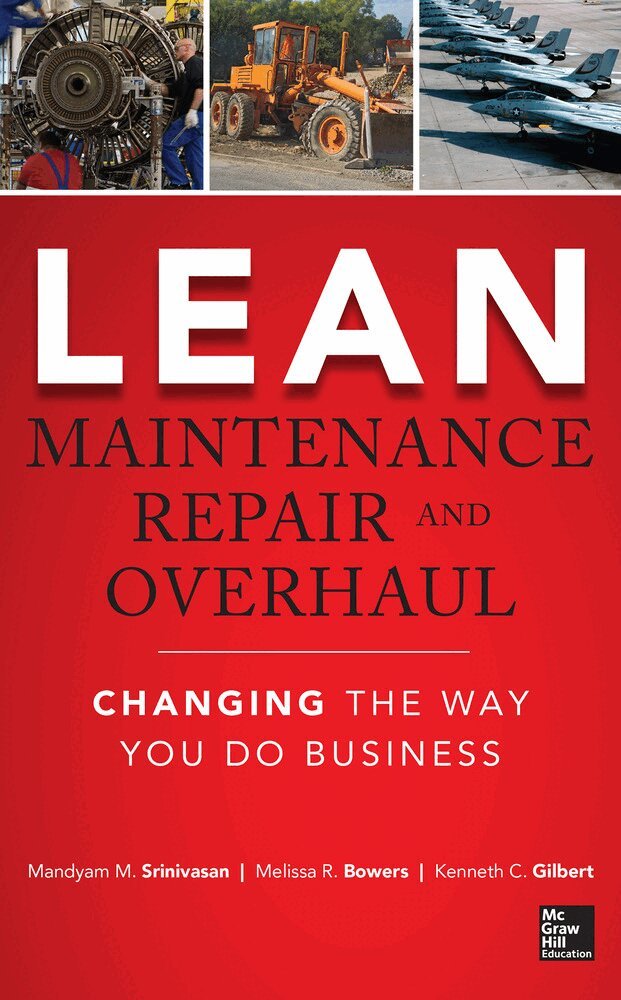
BOOST PROFITS AND REDUCE COSTS BY EFFICIENTLY DELIVERING SUPERIOR MRO SERVICES
Lean Maintenance Repair and Overhaul describes how MRO organizations can achieve significant improvement in financial performance by applying the Theory of Constraints (TOC) to guide the implementation of Lean manufacturing tools. This Lean/TOC approach facilitates a growth strategy by providing customer value, such as faster turnaround times, that the competition cannot match. Lean/TOC creates the capacity for this growth by eliminating waste.
This practical guide shows how Lean/TOC also provides the improvement strategy for dealing with the variation that distinguishes MRO from high-volume, repetitive manufacturing. The methodology expands the improvement efforts beyond the manufacturing floor to make the organizational changes needed to facilitate growth and toempower the workforce to be enthusiastic participants in the improvement processes. You will learn how these concepts have been applied to MRO organizations in the commercial and defense sectors.
COMPREHENSIVE COVERAGE INCLUDES:
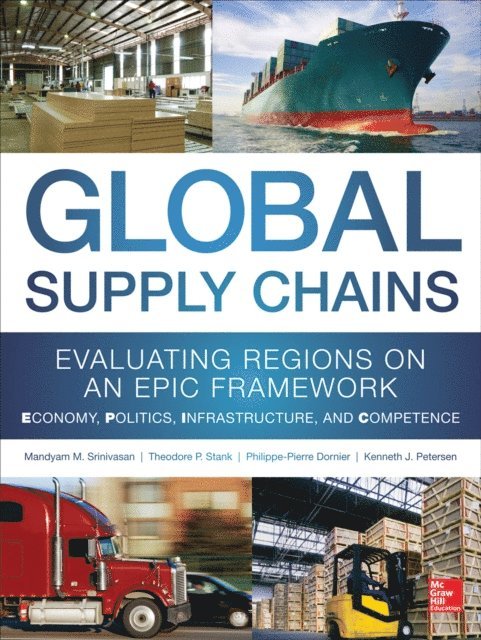
The MRO business opportunityThe goal of Lean and how Lean for MRO is differentAchieving sustained growth in the MRO businessManaging the MRO processEnabling flow in an MRO environmentThe Lean MRO toolkitManaging the back-shopsCreating a visual culture for the implementation of Lean/TOCGlobal Supply Chains: Evaluating Regions on an EPIC Framework – Economy, Politics, Infrastructure, and Competence
1 343 kr
Skickas inom 3-6 vardagar
Publisher's Note: Products purchased from Third Party sellers are not guaranteed by the publisher for quality, authenticity, or access to any online entitlements included with the product.
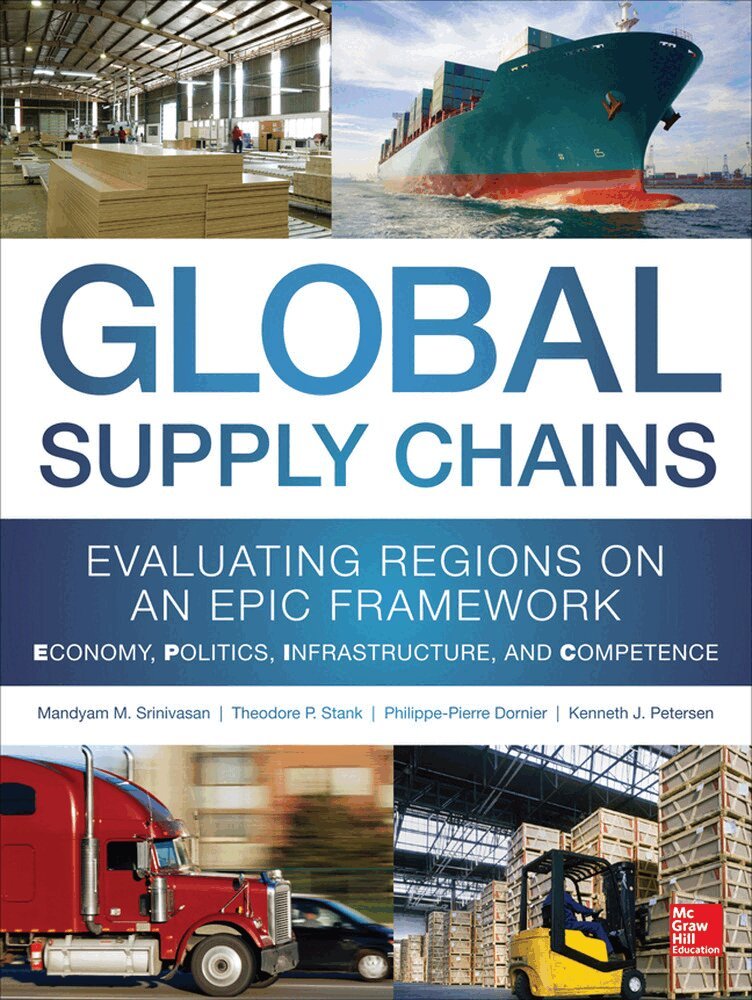
A proven framework for measuring the supply chainpotential of geographic regions
Managing a complex global supply chain requires astrategic assessment of the various factors that can affect decisions on procurement, manufacturing,warehousing, logistics, distribution, and sales. Co-written by renowned experts in global supply chain management, this book presents a systematic, structured approach to evaluating ten global regions with respect to their supply chain activities.
The maturity level for each region is assessed usingthe EPIC framework--Economy, Politics, Infrastructure,and Competence. Managers of supply chains can use this framework and the exclusive data in this practical, timely resource to identify the strengths, weaknesses, opportunities, and threats of the different global regions and determine their supply chain strategies accordingly.
Global Supply Chains analyzes ten regions:
East AsiaSouth AsiaSoutheast AsiaAustraliaThe Middle East and North Africa (MENA)Sub-Saharan Africa (SSA)Western EuropeCentral and Eastern EuropeNorth and Central AmericaSouth America