Manfred Baumgartner – författare
507 kr
Skickas inom 3-6 vardagar
838 kr
Skickas inom 10-15 vardagar
1 022 kr
Läs direkt efter köp
This book is written by testers for testers. In ten chapters, the authors provide answers to key questions in agile projects. They deal with cultural change processes for agile testing, with questions regarding the approach and organization of software testing, with the use of methods, techniques and tools, especially test automation, and with the redefined role of the tester in agile projects.
The first chapter describes the cultural change brought about by agile development. In the second chapter, which addresses agile process models such as Scrum and Kanban, the authors focus on the role of quality assurance in agile development projects. The third chapter deals with the agile test organization and the positioning of testing in an agile team. Chapter 4 discusses the question of whether an agile tester should be a generalist or a specialist. In Chapter 5, the authors turn to the methods and techniques of agile testing, emphasizing the differences from traditional, phase-oriented testing. In Chapter 6, they describe which documents testers still need to create in an agile project. Next, Chapter 7 explains the efficient use of test automation, which is particularly important in agile development, as it is the main instrument for project acceleration and is necessary to support state-of-the-art DevOps approaches and Continuous Integration. Chapter 8 then adds examples from test tool practice extending test automation to include test management functionality. Chapter 9 is dedicated to training and its importance, emphasizing the role of employee training in getting started with agile development. Finally, Chapter 10 summarizes the results of the agile journey in general with a special focus on testing.
To make the aspects described even more tangible, the specific topics of this book are accompanied by the description of experiences from concrete software development projects of various organizations. The examples demonstrate that different approaches can lead to solutions that meet the specific challenges of agile projects.
856 kr
Skickas inom 3-6 vardagar
647 kr
Skickas inom 3-6 vardagar
457 kr
Skickas inom 3-6 vardagar
360 kr
Läs direkt efter köp
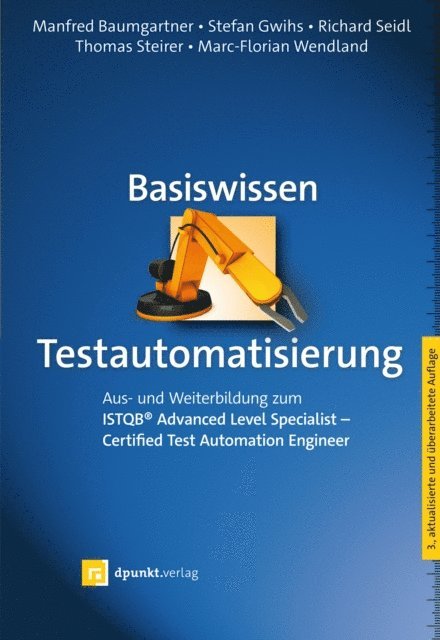
Testautomatisierung ist ein mächtiges Werkzeug, um Tests wiederholbar zu machen und effizienter zu gestalten. Dieses Buch erklärt, wie Testautomatisierung mit Fokus auf den funktionalen Systemtest konzipiert und in bestehende Projekte und die Organisation eingegliedert wird. Dabei werden sowohl fachliche als auch technische Konzepte vorgestellt. Beispiele aus verschiedenen Einsatzgebieten (z.B. Webapplikationen, Data-Warehouse-Systeme) und Projektarten (z.B. Scrum, V-Modell) erläutern die methodischen Grundlagen. Auch auf Werkzeuge sowie Qualitätsgewinne und Einsparpotenziale durch Testautomatisierung wird eingegangen.
Aus dem Inhalt:
- Testprozess und Entwicklungsvorgehen- Testfallspezifikation und -durchführung- Konzeption eines Automatisierungsframeworks- Einsatzgebiete nach System-, Test- und Projektart- Testdurchführungswerkzeuge- Integration in die Organisation
Im Anhang finden sich Beispiele zur Erstellung von daten- und schlüsselwortgetriebenen Testfällen sowie beispielhaft ein Kriterienkatalog zur Auswahl eines Testwerkzeugs aus der Praxis.
360 kr
Läs direkt efter köp
Testautomatisierung ist ein mächtiges Werkzeug, um Tests wiederholbar zu machen und effizienter zu gestalten. Dieses Buch erklärt, wie Testautomatisierung mit Fokus auf den funktionalen Systemtest konzipiert und in bestehende Projekte und die Organisation eingegliedert wird. Dabei werden sowohl fachliche als auch technische Konzepte vorgestellt. Beispiele aus verschiedenen Einsatzgebieten (z.B. Webapplikationen, Data-Warehouse-Systeme) und Projektarten (z.B. Scrum, V-Modell) erläutern die methodischen Grundlagen. Auch auf Werkzeuge sowie Qualitätsgewinne und Einsparpotenziale durch Testautomatisierung wird eingegangen.
Aus dem Inhalt:
- Testprozess und Entwicklungsvorgehen- Testfallspezifikation und -durchführung- Konzeption eines Automatisierungsframeworks- Einsatzgebiete nach System-, Test- und Projektart- Testdurchführungswerkzeuge- Integration in die Organisation
Im Anhang finden sich Beispiele zur Erstellung von daten- und schlüsselwortgetriebenen Testfällen sowie beispielhaft ein Kriterienkatalog zur Auswahl eines Testwerkzeugs aus der Praxis.
362 kr
Läs direkt efter köp
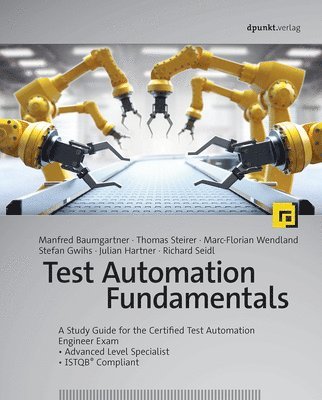
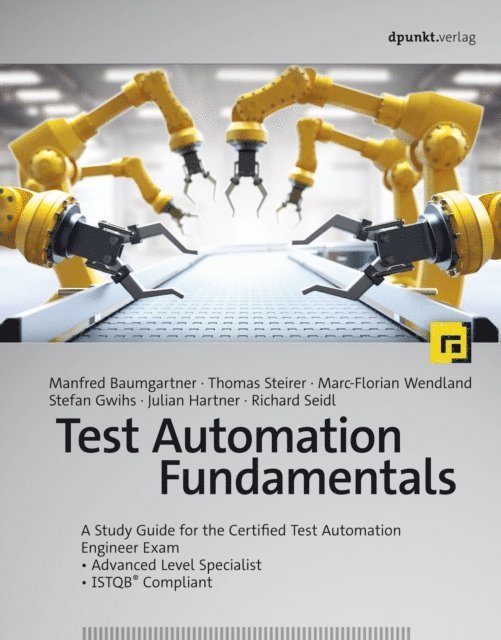
Concepts, methods, and techniques—supported with practical, real-world examples
The first book to cover the ISTQB® Certified Test Automation Engineer syllabusWith real-world project examples– Suitable as a textbook, as a reference book for ISTQB® training courses, and for self-studyThis book provides a complete overview of how to design test automation processes and integrate them into your organization or existing projects. It describes functional and technical strategies and goes into detail on the relevant concepts and best practices. The book''s main focus is on functional system testing. Important new aspects of test automation, such as automated testing for mobile applications and service virtualization, are also addressed as prerequisites for creating complex but stable test processes. The text also covers the increase in quality and potential savings that test automation delivers.
The book is fully compliant with the ISTQB® syllabus and, with its many explanatory examples, is equally suitable for preparation for certification, as a concise reference book for anyone who wants to acquire this essential skill, or for university-level study.
362 kr
Läs direkt efter köp
Concepts, methods, and techniques—supported with practical, real-world examples
The first book to cover the ISTQB® Certified Test Automation Engineer syllabusWith real-world project examples– Suitable as a textbook, as a reference book for ISTQB® training courses, and for self-studyThis book provides a complete overview of how to design test automation processes and integrate them into your organization or existing projects. It describes functional and technical strategies and goes into detail on the relevant concepts and best practices. The book''s main focus is on functional system testing. Important new aspects of test automation, such as automated testing for mobile applications and service virtualization, are also addressed as prerequisites for creating complex but stable test processes. The text also covers the increase in quality and potential savings that test automation delivers.
The book is fully compliant with the ISTQB® syllabus and, with its many explanatory examples, is equally suitable for preparation for certification, as a concise reference book for anyone who wants to acquire this essential skill, or for university-level study.