Manfred Kircher – författare
Visar alla böcker från författaren Manfred Kircher. Handla med fri frakt och snabb leverans.
15 produkter
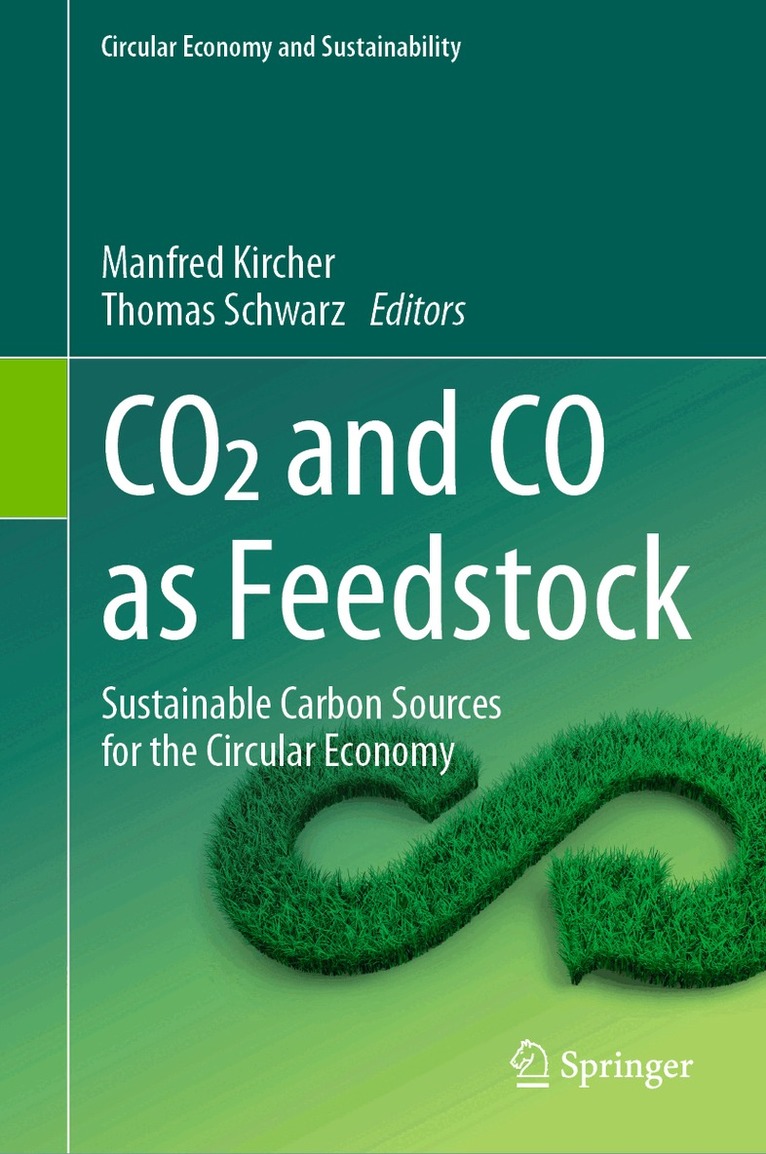
CO2 and CO as Feedstock
Sustainable Carbon Sources for the Circular Economy
Av Manfred Kircher, Thomas Schwarz
Inbunden, 2024
1534 kr
Lägg i varukorg
Climate protection and raw material change require new, sustainable carbon sources for the chemical and fuel industries. In fact, processes that recycle carbon-containing emission and gas streams industrially are reaching industrial practice. They will make an important contribution to reducing …
CO2 and CO as Feedstock
Sustainable Carbon Sources for the Circular Economy
Av Thomas Schwarz, Manfred Kircher
E-bok, 2024
1459 kr
Lägg i varukorg
Climate protection and raw material change require new, sustainable carbon sources for the chemical and fuel industries. In fact, processes that recycle carbon-containing emission and gas streams industrially are reaching industrial practice. They will make an important contribution to reducing …
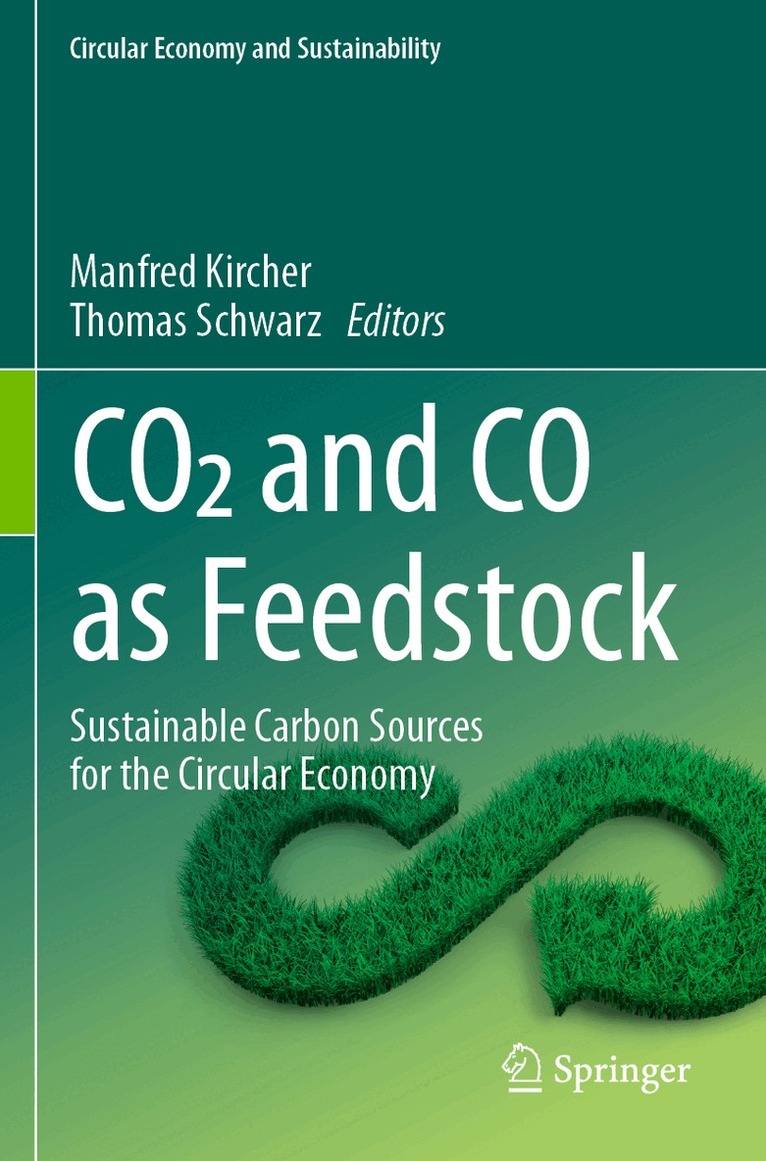
CO2 and CO as Feedstock
Sustainable Carbon Sources for the Circular Economy
Av Manfred Kircher, Thomas Schwarz
Häftad, 2025
1098 kr
Lägg i varukorg
Climate protection and raw material change require new, sustainable carbon sources for the chemical and fuel industries. In fact, processes that recycle carbon-containing emission and gas streams industrially are reaching industrial practice. They will make an important contribution to reducing …
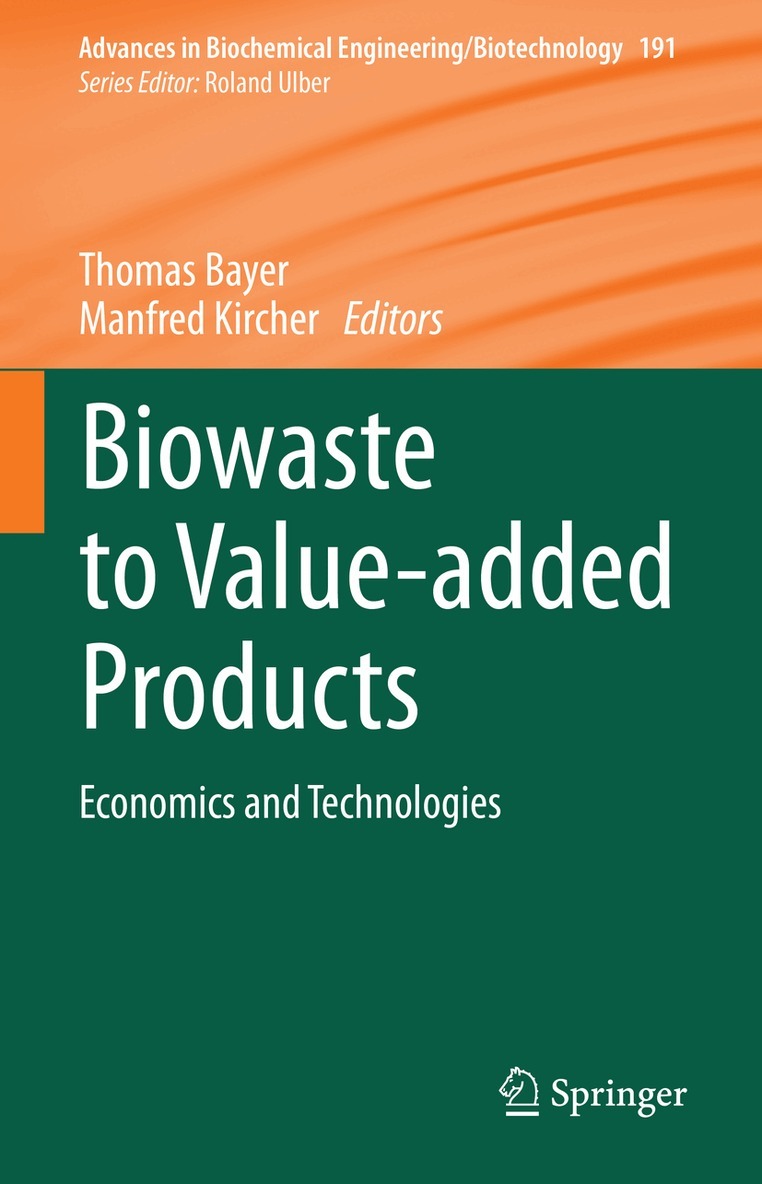
Biowaste to Value-added Products
Economics and Technologies
Av Thomas Bayer, Manfred Kircher
Inbunden, 2025
3279 kr
Lägg i varukorg
This book reviews the diversity of biowaste and the potential uses for bulk, fine and special chemicals. It describes technologies already established as well as those under development, and also focuses on economic and environmental sustainability. Expert contributions explore the key aspects of …
Biowaste to Value-added Products
Economics and Technologies
Av Manfred Kircher, Thomas Bayer
E-bok, 2025
3978 kr
Lägg i varukorg
This book reviews the diversity of biowaste and the potential uses for bulk, fine and special chemicals. It describes technologies already established as well as those under development, and also focuses on economic and environmental sustainability. Expert contributions explore the key aspects of …
Zirkuläre Bioökonomie
Für eine nachhaltige Wirtschaft
2023
344 kr
Lägg i varukorg
Für Lebensmittel, Kleidung, Medizin, Papier, Chemieprodukte sind und bleiben wir auf kohlenstoffhaltige Rohstoffe angewiesen. Um fossile Rohstoffe abzulösen, muss die Industrie auf nachhaltige Kohlenstoffquellen umsteigen. Infrage kommt Biomasse aus der Land- und Forstwirtschaft, die aber selbst …
Anteil DL
Für eine nachhaltige Wirtschaft
2023
385 kr
Lägg i varukorg
Für Lebensmittel, Kleidung, Medizin, Papier, Chemieprodukte sind und bleiben wir auf kohlenstoffhaltige Rohstoffe angewiesen. Um fossile Rohstoffe abzulösen, muss die Industrie auf nachhaltige Kohlenstoffquellen umsteigen. Infrage kommt Biomasse aus der Land- und Forstwirtschaft, die aber selbst …
CO2 und CO – Nachhaltige Kohlenstoffquellen für die Kreislaufwirtschaft
Av Manfred Kircher, Thomas Schwarz
Inbunden, 2020
771 kr
Lägg i varukorg
Klimaschutz und Rohstoffwandel erfordern für die Chemie- und Treibstoffindustrie neue, nachhaltige Kohlenstoffquellen. Tatsächlich erreichen Verfahren, die kohlenstoffhaltige Emissions- und Gasströme industriell verwerten, die industrielle Praxis. Sie werden auch in Europa einen wichtigen Beitrag …
CO2 und CO – Nachhaltige Kohlenstoffquellen für die Kreislaufwirtschaft
Av Thomas Schwarz, Manfred Kircher
E-bok, 2020
782 kr
Lägg i varukorg
Klimaschutz und Rohstoffwandel erfordern für die Chemie- und Treibstoffindustrie neue, nachhaltige Kohlenstoffquellen. Tatsächlich erreichen Verfahren, die kohlenstoffhaltige Emissions- und Gasströme industriell verwerten, die industrielle Praxis. Sie werden auch in Europa einen wichtigen Beitrag …
Bioökonomie im Selbststudium: Wertschöpfungsketten und Innovationspotenzial
Häftad, 2020
532 kr
Lägg i varukorg
Dieser Band diskutiert die an den Wertschöpfungsketten der Bioökonomie vom Rohstoff bis zum Endprodukt beteiligten Wirtschaftssektoren. Angesprochen werden die Biomasse produzierenden Branchen und das vielfältige produzierende Gewerbe einschließlich der Abfallwirtschaft. Darauf folgt eine Analyse, …
Bioökonomie im Selbststudium: Wertschöpfungsketten und Innovationspotenzial
E-bok, 2020
537 kr
Lägg i varukorg
Dieser Band diskutiert die an den Wertschöpfungsketten der Bioökonomie vom Rohstoff bis zum Endprodukt beteiligten Wirtschaftssektoren. Angesprochen werden die Biomasse produzierenden Branchen und das vielfältige produzierende Gewerbe einschließlich der Abfallwirtschaft. Darauf folgt eine Analyse, …
Bioökonomie im Selbststudium: Unternehmensstrategie und Wirtschaftlichkeit
Häftad, 2020
532 kr
Lägg i varukorg
Dieser Band geht auf die Wettbewerbsfähigkeit in den Märkten der Ernährung, bio-basierter Materialien und von Bio-Energie ein. Besonders angesprochen werden die Wettbewerbsfaktoren der Qualität, der Nachhaltigkeit und der Kosten bio-basierter Produkte. Auch auf die politischen Rahmenbedingungen …
Bioökonomie im Selbststudium: Unternehmensstrategie und Wirtschaftlichkeit
E-bok, 2020
537 kr
Lägg i varukorg
Dieser Band geht auf die Wettbewerbsfähigkeit in den Märkten der Ernährung, bio-basierter Materialien und von Bio-Energie ein. Besonders angesprochen werden die Wettbewerbsfaktoren der Qualität, der Nachhaltigkeit und der Kosten bio-basierter Produkte. Auch auf die politischen Rahmenbedingungen …
Weg vom Öl
Potenzial und Grenzen der Bioökonomie
Inbunden, 2020
249 kr
Lägg i varukorg
Wir alle wissen, dass die Wirtschaft von fossilen auf nachwachsende Rohstoffe umsteigen muss. Um diese gewaltige und komplexe Aufgabe zu bewältigen, sollen zukünftig Energie, Treibstoffe, Kunststoffe und Chemieprodukte durch Methoden der Bioökonomie produziert werden. n vielen Fällen ist eine …
Weg vom Öl
Potenzial und Grenzen der Bioökonomie
E-bok, 2020
235 kr
Lägg i varukorg
Wir alle wissen, dass die Wirtschaft von fossilen auf nachwachsende Rohstoffe umsteigen muss. Um diese gewaltige und komplexe Aufgabe zu bewältigen, sollen zukünftig Energie, Treibstoffe, Kunststoffe und Chemieprodukte durch Methoden der Bioökonomie produziert werden. n vielen Fällen ist eine …