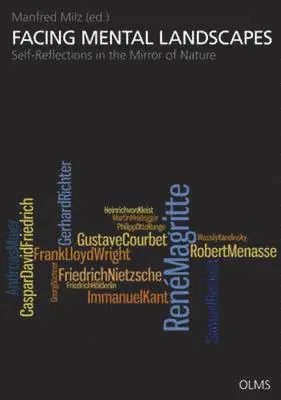
The first decade of the 21st century offers the possibility of a cartography of the 20th century from a short but increasingly clear distance. Central to such an undertaking, however, is the question of its predetermining structural origins in the 18th and 19th centuries; this collection of critical texts and essays is concerned with these origins. The title "Facing Mental Landscapes" and subtitle "Self-Reflections in the Mirror of Nature" programmatically refer to an individual reflecting the surrounding physical universe as a mere projection of the mind: around both 1800 and 1900, major paradigm shifts emerged from an intellectual crisis within just over two decades. In literature, fine arts and music, these radical innovations - primarily philosophically motivated - went through transformative stages in the course of the 20th century. One of the main goals of this volume therefore is to contribute to a reconstruction of these iconographic or iconoclastic formations of discourse between and within the two eras of Idealism or Romanticism and Modernism. With contributions by Jale N Erzen, László F Földényi, Ursula Franke, Christiane Heibach, Karl Hepfer, Klaus Herding, James Knowlson, Klaus Lankheit, Anett Lütteken, Manfred Milz, Tanehisa Otabe, Ulrich Pfarr, Wieland Schmied, Jörg Traeger and Christopher S Wilson.
Del 4 - Studies in Mysticism, Idealism, and Phenomenology
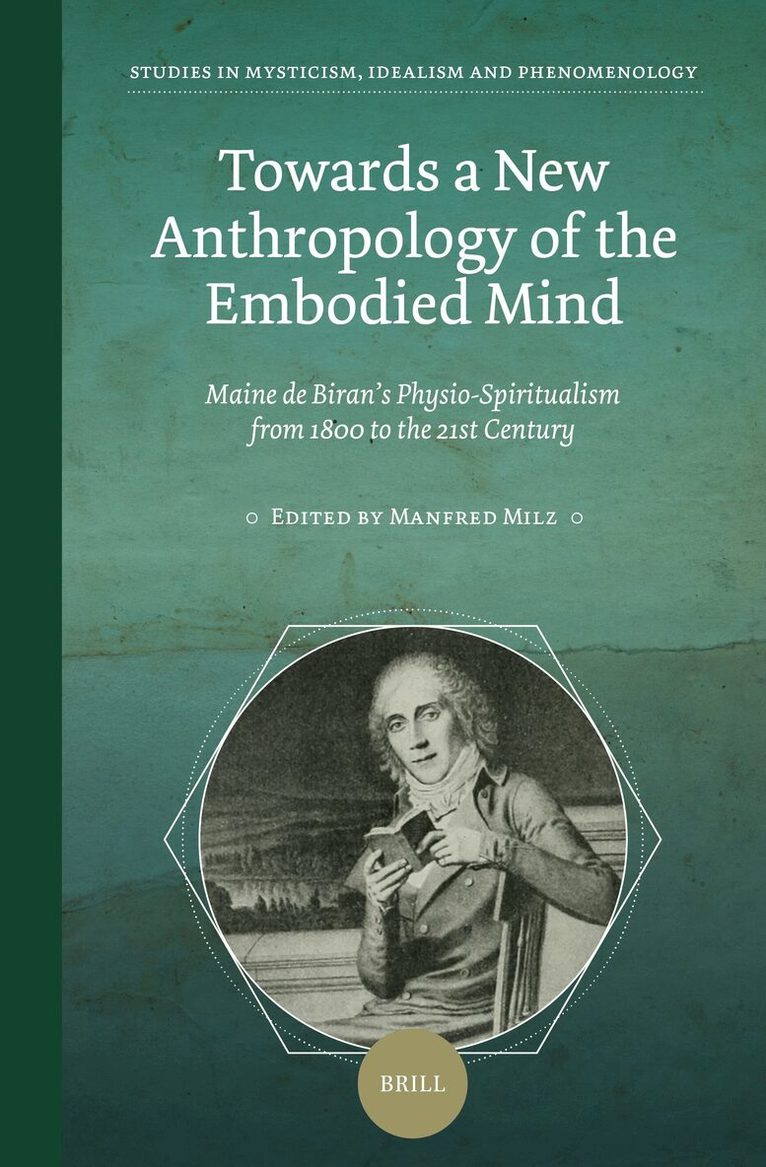
This exploration in the history of ideas examines the groundbreaking notion of the embodied mind in its analysis by the French philosopher and politician Maine de Biran (1766–1824) and in its afterlife: consciousness is generated through frequent interaction between the voluntary and the spiritual. The conscious, active self is constituted in its sovereign autonomy, as free and undivided, by an inner act of willful resistance, a physical effort towards its own body and the world. For the first time, a multidisciplinary group of senior and junior researchers from Japan, USA and Europe investigate origins and discursive cross-fertilization of this concept around 1800, an intermediary stage between 1870 and 1945, and its influence upon existentialism, phenomenology, and deconstructivism during the postwar-period and beyond, from 1943 to 2010.
The first decade of the 21st century offers the possibility of a cartography of the 20th century from a short but increasingly clear distance. Central to such an undertaking, however, is the question of its predetermining structural origins in the 18th and 19th centuries; this collection of critical texts and essays is concerned with these origins. The title "Facing Mental Landscapes" and subtitle "Self-Reflections in the Mirror of Nature" programmatically refer to an individual reflecting the surrounding physical universe as a mere projection of the mind: around both 1800 and 1900, major paradigm shifts emerged from an intellectual crisis within just over two decades. In literature, fine arts and music, these radical innovations - primarily philosophically motivated - went through transformative stages in the course of the 20th century. One of the main goals of this volume therefore is to contribute to a reconstruction of these iconographic or iconoclastic formations of discourse between and within the two eras of Idealism or Romanticism and Modernism. With contributions by Jale N Erzen, László F Földényi, Ursula Franke, Christiane Heibach, Karl Hepfer, Klaus Herding, James Knowlson, Klaus Lankheit, Anett Lütteken, Manfred Milz, Tanehisa Otabe, Ulrich Pfarr, Wieland Schmied, Jörg Traeger and Christopher S Wilson.
Del 4 - Studies in Mysticism, Idealism, and Phenomenology
This exploration in the history of ideas examines the groundbreaking notion of the embodied mind in its analysis by the French philosopher and politician Maine de Biran (1766–1824) and in its afterlife: consciousness is generated through frequent interaction between the voluntary and the spiritual. The conscious, active self is constituted in its sovereign autonomy, as free and undivided, by an inner act of willful resistance, a physical effort towards its own body and the world. For the first time, a multidisciplinary group of senior and junior researchers from Japan, USA and Europe investigate origins and discursive cross-fertilization of this concept around 1800, an intermediary stage between 1870 and 1945, and its influence upon existentialism, phenomenology, and deconstructivism during the postwar-period and beyond, from 1943 to 2010.