Manfred Wilke – författare
Visar alla böcker från författaren Manfred Wilke. Handla med fri frakt och snabb leverans.
6 produkter
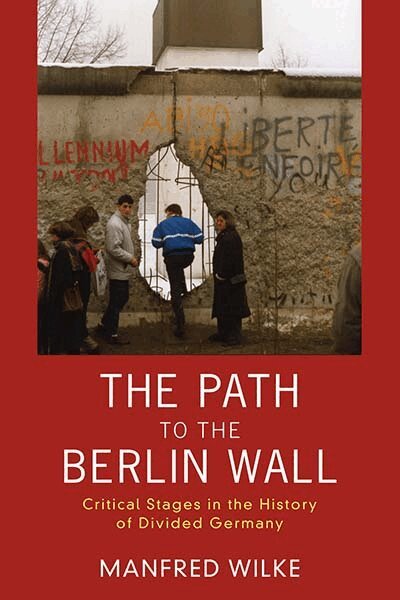
Path to the Berlin Wall
Critical Stages in the History of Divided Germany
Inbunden, 2014
2186 kr
Lägg i varukorg
The long path to the Berlin Wall began in 1945, when Josef Stalin instructed the Communist Party to take power in the Soviet occupation zone while the three Western allies secured their areas of influence. When Germany was split into separate states in 1949, Berlin remained divided into four …
Path to the Berlin Wall
Critical Stages in the History of Divided Germany
E-bok, 2014
302 kr
Lägg i varukorg
The long path to the Berlin Wall began in 1945, when Josef Stalin instructed the Communist Party to take power in the Soviet occupation zone while the three Western allies secured their areas of influence. When Germany was split into separate states in 1949, Berlin remained divided into four …
Anatomie Der Partei Zentrale
Av Wilke, Manfred Wilke
Inbunden, 1998
1859 kr
Lägg i varukorg
Die Beiträge des vorliegenden Sammelbandes sind im wesentlichen im Rahmen des von der Volkswagenstiftung geförderten und noch laufenden Projektes „Die Parteiführung der SED und ihr zentraler Apparat. Zur Struktur, Funktion und Entwicklung der politischen Machtzentrale in der SBZ/DDR" entstanden. …
Satelliten Nach Stalins Tod
Der Neue Kurs. 17. Juni 1953 in Der Ddr. Ungarische Revolution 1956
Av András B Hegedüs, Manfred Wilke
Inbunden, 2000
816 kr
Lägg i varukorg
Nach dem Tod Stalins im März 1953 war seinen Erben bewußt: Um die Kontinuität der kommunistischen Parteiherrschaft zu sichern, mußten umgehend Reformen durchgeführt werden, deren wichtigste die Beendigung des willkürlichen Massenterrors war. Hinzu kam eine Wirtschaftskrise, die ökonomische und …
Satelliten nach Stalins Tod
Der "Neue Kurs". 17. Juni 1953 in der DDR. Ungarische Revolution 1956
Av Manfred Wilke, Andras B. Hegedus
E-bok, 2009
920 kr
Lägg i varukorg
Nach dem Tod Stalins im März 1953 war seinen Erben bewußt: Um die Kontinuität der kommunistischen Parteiherrschaft zu sichern, mußten umgehend Reformen durchgeführt werden, deren wichtigste die Beendigung des willkürlichen Massenterrors war. Hinzu kam eine Wirtschaftskrise, die ökonomische und …
Ein deutscher Kommunist
Rückblicke und Perspektiven aus der Isolation
Av Robert Havemann, Manfred Wilke
E-bok, 2018
170 kr
Lägg i varukorg
«Seit jenen Novembertagen 1976 lebe ich nun mit meiner Familie hier draußen in Grünheide unter den sehr merkwürdigen Bedingungen, die sich ein krankhaftes Gehirn ausgedacht haben mag. Der Zweck dieser Übung ist sicherlich nicht, irgendwelche Ermittlungen gegen mich durchzuführen, denn was über mich …