Manisha Pal – författare
Visar alla böcker från författaren Manisha Pal. Handla med fri frakt och snabb leverans.
7 produkter
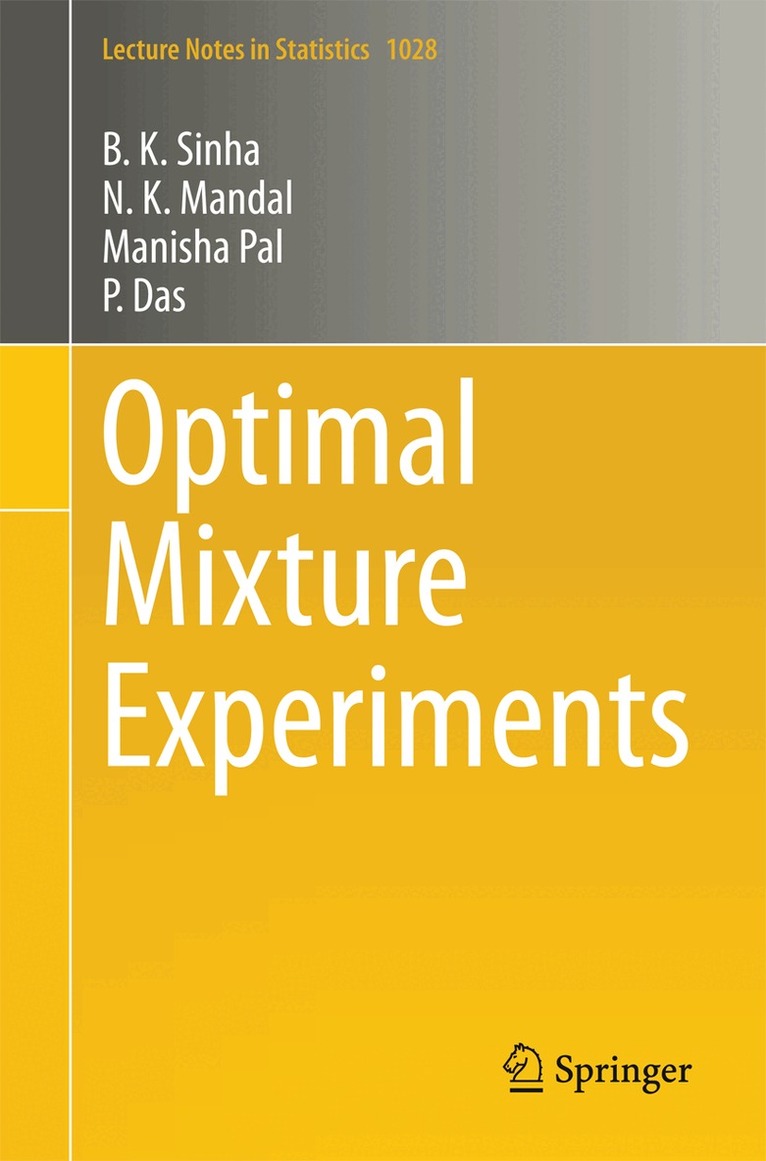
Optimal Mixture Experiments
Av B.K. Sinha, N.K. Mandal m. fl.
Häftad, 2014
1095 kr
Lägg i varukorg
The book dwells mainly on the optimality aspects of mixture designs. As mixture models are a special case of regression models, a general discussion on regression designs has been presented, which includes topics like continuous designs, de la Garza phenomenon, Loewner order domination, …
Optimal Mixture Experiments
Av P. Das, Manisha Pal m. fl.
E-bok, 2014
1459 kr
Lägg i varukorg
The book dwells mainly on the optimality aspects of mixture designs. As mixture models are a special case of regression models, a general discussion on regression designs has been presented, which includes topics like continuous designs, de la Garza phenomenon, Loewner order domination, …
Ausgewählte Themen der statistischen Inferenz
Theorie und Anwendungen
Inbunden, 2026
617 kr
Lägg i varukorg
Dieses Buch konzentriert sich ausschließlich auf den Bereich der parametrischen Inferenz – und das aus der Perspektive der Lesenden, d. h. es behandelt ausschließlich die Punktschätzung von Parameter(n). Es werden jene Themen der parametrischen Inferenz behandelt, die einer klaren und …
Ausgewahlte Themen der statistischen Inferenz
Theorie und Anwendungen
E-bok, 2026
631 kr
Lägg i varukorg
Dieses Buch konzentriert sich ausschließlich auf den Bereich der parametrischen Inferenz – und das aus der Perspektive der Lesenden, d. h. es behandelt ausschließlich die Punktschätzung von Parameter(n). Es werden jene Themen der parametrischen Inferenz behandelt, die einer klaren und …
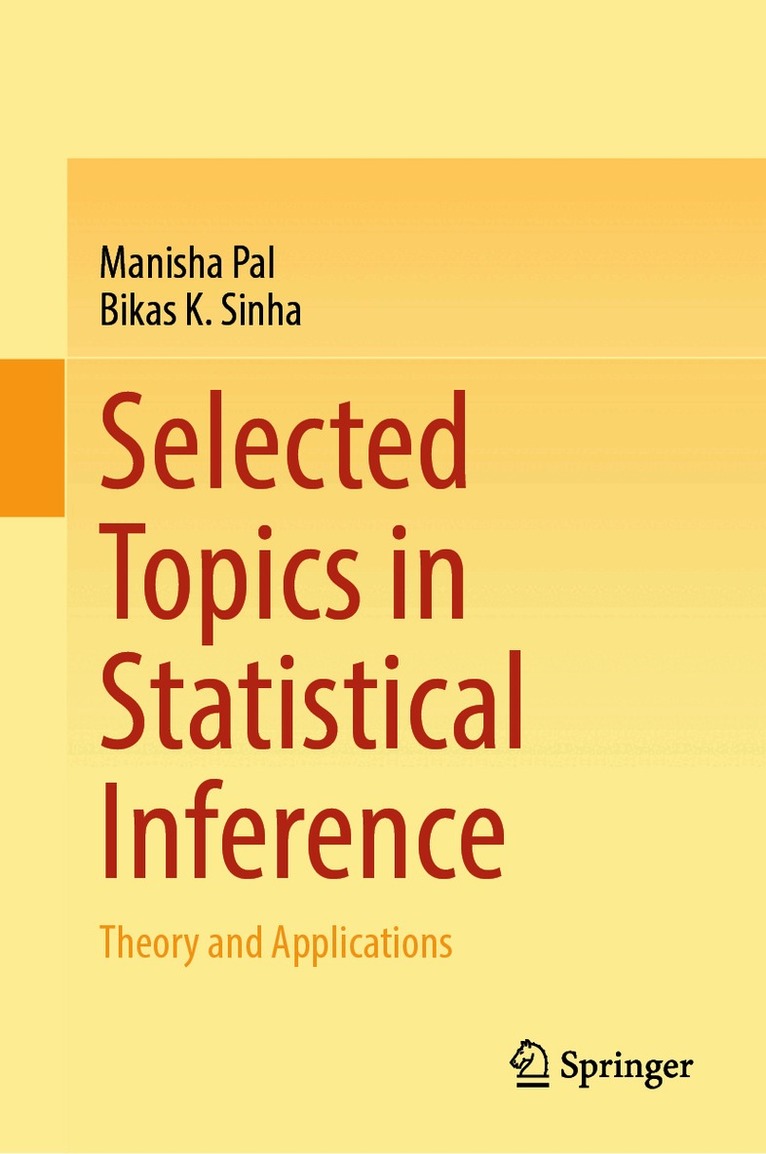
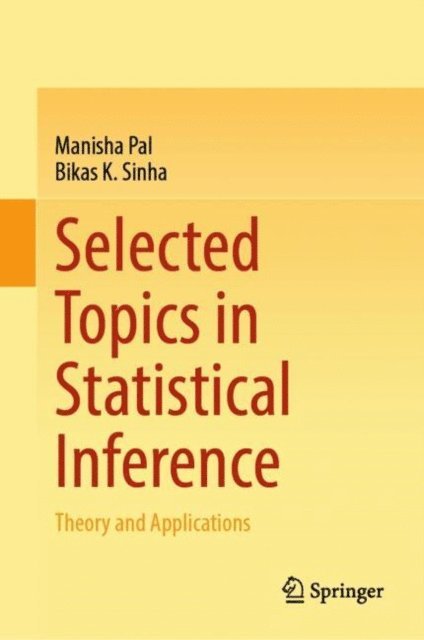
Selected Topics in Statistical Inference
Theory and Applications
Av Manisha Pal, Bikas K. Sinha
Inbunden, 2024
1204 kr
Lägg i varukorg
This book focuses exclusively on the domain of parametric inference and that, too, from a reader’s perspective, i.e., covering only point estimation of parameter(s). It covers those topics in parametric inference which need clarity of exposure to students, researchers, and teachers alike; mere …
Selected Topics in Statistical Inference
Theory and Applications
Av Bikas K. Sinha, Manisha Pal
E-bok, 2024
1141 kr
Lägg i varukorg
This book focuses exclusively on the domain of parametric inference and that, too, from a reader’s perspective, i.e., covering only point estimation of parameter(s). It covers those topics in parametric inference which need clarity of exposure to students, researchers, and teachers alike; mere …
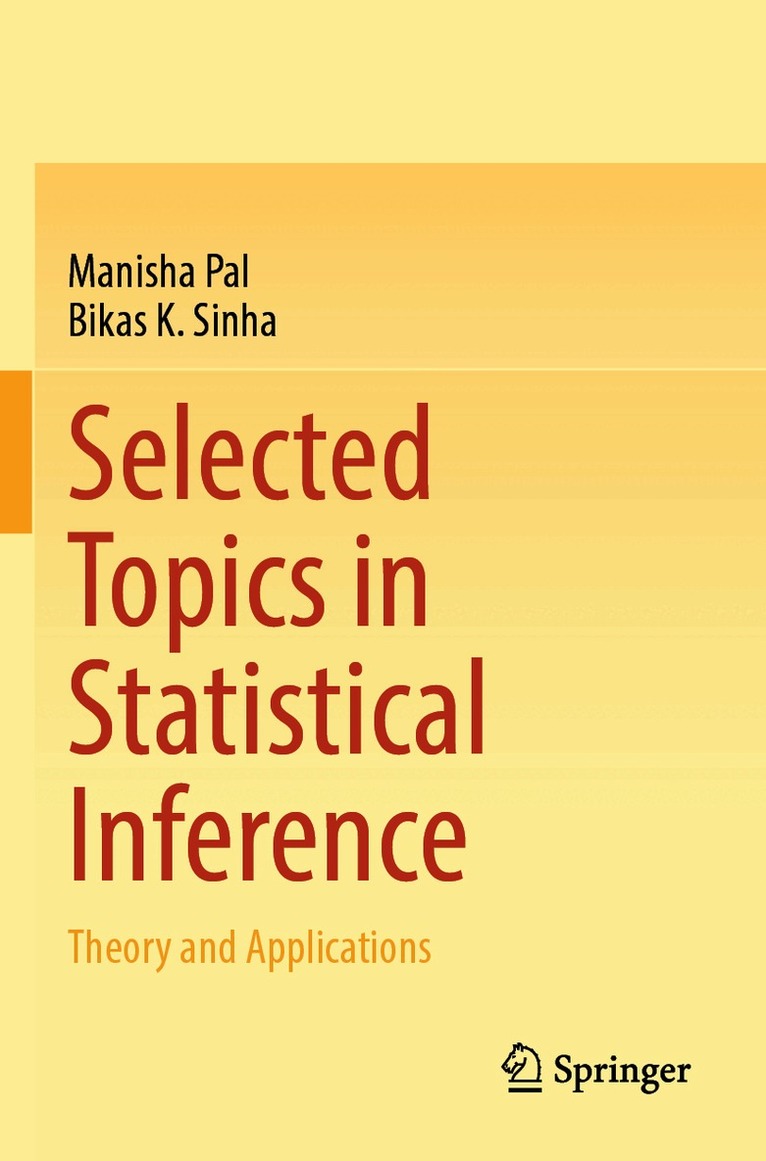
Selected Topics in Statistical Inference
Theory and Applications
Av Manisha Pal, Bikas K. Sinha
Häftad, 2025
878 kr
Lägg i varukorg
This book focuses exclusively on the domain of parametric inference and that, too, from a reader’s perspective, i.e., covering only point estimation of parameter(s). It covers those topics in parametric inference which need clarity of exposure to students, researchers, and teachers alike; mere …