Manja Herrmann – författare
Visar alla böcker från författaren Manja Herrmann. Handla med fri frakt och snabb leverans.
6 produkter
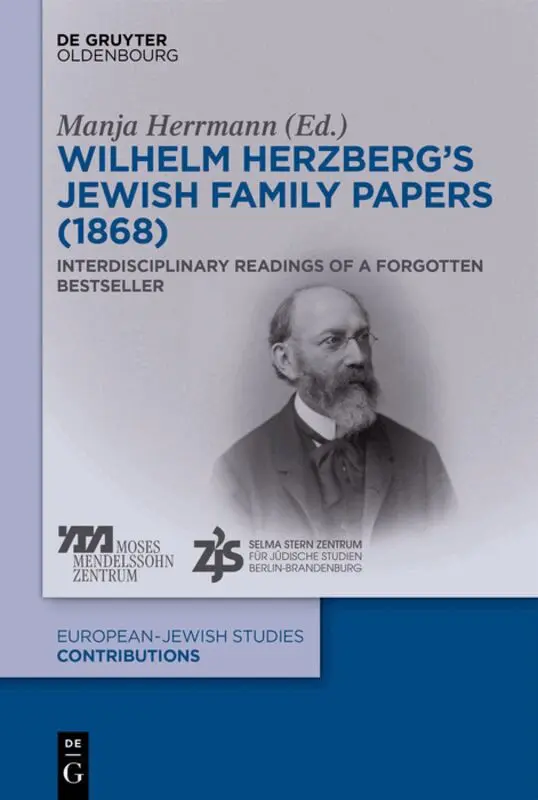
Wilhelm Herzberg’s Jewish Family Papers (1868)
Interdisciplinary Readings of a Forgotten Bestseller
Inbunden, 2021
1701 kr
Lägg i varukorg
Wilhelm Herzberg’s novel Jewish Family Papers, which was first published under a pseudonym in 1868, was one of the bestselling German-Jewish books of the nineteenth century. Its numerous editions, reviews, and translations – into Dutch, English, and Hebrew – are ample proof of its impact. …
Wilhelm Herzberg's Jewish Family Papers (1868)
Interdisciplinary Readings of a Forgotten Bestseller
E-bok, 2021
1719 kr
Lägg i varukorg
Wilhelm Herzberg’s novel Jewish Family Papers , which was first published under a pseudonym in 1868, was one of the bestselling German-Jewish books of the nineteenth century. Its numerous editions, reviews, and translations – into Dutch, English, and Hebrew – are ample proof of its impact. …
Wilhelm Herzberg's Jewish Family Papers (1868)
Interdisciplinary Readings of a Forgotten Bestseller
E-bok, 2021
1681 kr
Lägg i varukorg
Wilhelm Herzberg’s novel Jewish Family Papers , which was first published under a pseudonym in 1868, was one of the bestselling German-Jewish books of the nineteenth century. Its numerous editions, reviews, and translations – into Dutch, English, and Hebrew – are ample proof of its impact. …
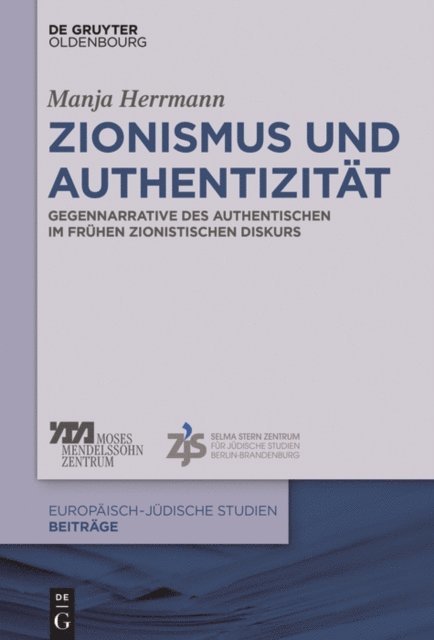
Zionismus und Authentizität
Gegennarrative des Authentischen im frühen zionistischen Diskurs
E-bok, 2018
1772 kr
Lägg i varukorg
Das Konzept der Authentizität ist eines der zentralsten der Neuzeit. Die kulturhistorische Studie untersucht die Vorstellungen von einem „authentischen jüdischen Selbst“ und einem „authentischen Judentum“ im frühen deutschen zionistischen Diskurs. Entgegen der konventionellen Sicht, authentisch …
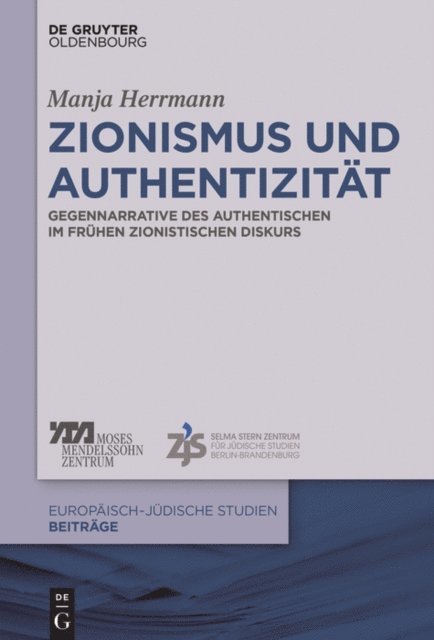
Zionismus und Authentizität
Gegennarrative des Authentischen im frühen zionistischen Diskurs
E-bok, 2018
1811 kr
Lägg i varukorg
Das Konzept der Authentizität ist eines der zentralsten der Neuzeit. Die kulturhistorische Studie untersucht die Vorstellungen von einem „authentischen jüdischen Selbst“ und einem „authentischen Judentum“ im frühen deutschen zionistischen Diskurs. Entgegen der konventionellen Sicht, authentisch …