Manuel Arias-Maldonado - Böcker
Visar alla böcker från författaren Manuel Arias-Maldonado. Handla med fri frakt och snabb leverans.
5 produkter
5 produkter
494 kr
Skickas inom 10-15 vardagar
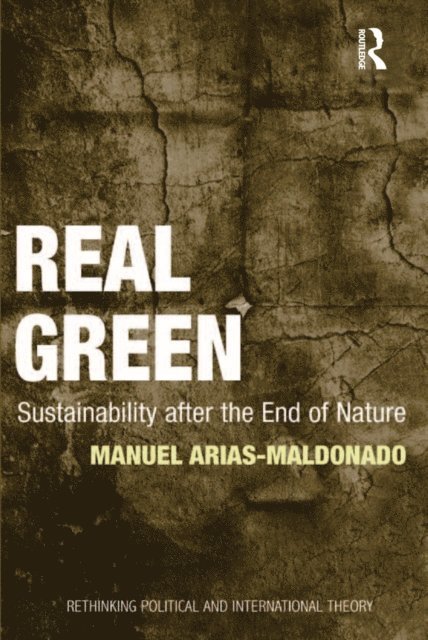
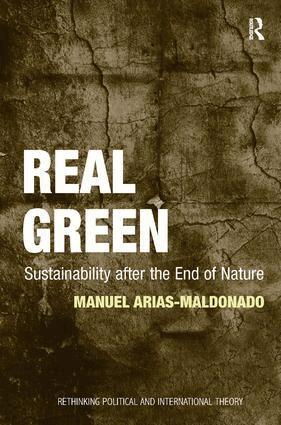
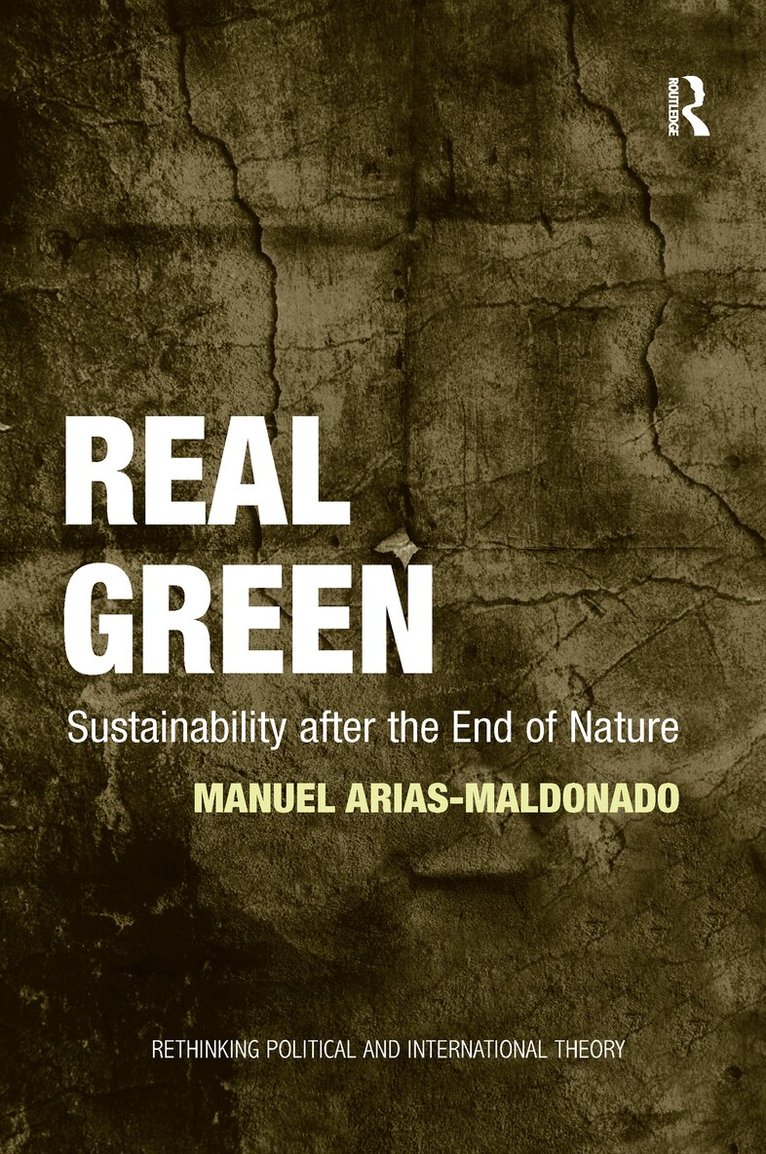
What would a sustainable society look like? How could it be achieved? By challenging conventional wisdom about the ecological crisis and reframing the traditional values of green politics "Real Green; Sustainability after the End of Nature" offers new answers to the key questions of the environmental debate. In this ground-breaking and challenging work Manuel Arias-Maldonado convincingly argues that, since nature has now been transformed into a part of the human environment, it can be seen to no longer exist. Ecological problems thus become an inevitable and normal feature of our relationship with nature. Hence a post-natural environmentalism, realistic and liberal while remaining green, is advocated. In this framework, sustainability, democracy and liberalism become mutually reinforcing elements rather than conflicting ones. Only by combining them can a green society be realised.
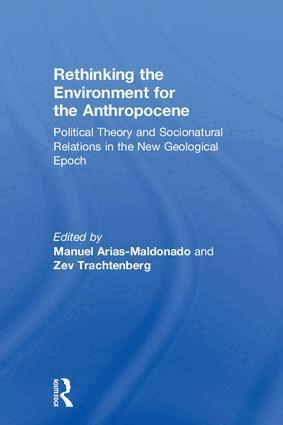
Rethinking the Environment for the Anthropocene
Political Theory and Socionatural Relations in the New Geological Epoch
Inbunden, Engelska, 2018
2 103 kr
Skickas inom 10-15 vardagar
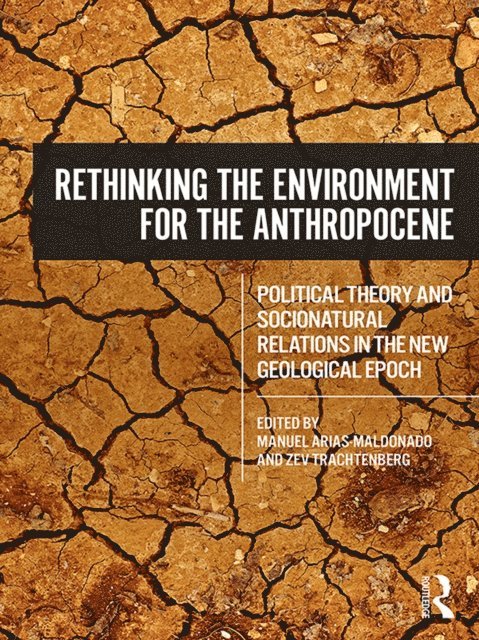
This book brings together the most current thinking about the Anthropocene in the field of Environmental Political Theory ('EPT'). It displays the distinctive contribution EPT makes to the task of thinking through what 'the environment' means in this time of pervasive human influence over natural systems. Across its chapters the book helps develop the idea of 'socionatural relations'—an idea that frames the environment in the Anthropocene in terms of the interconnected relationship between human beings and their surroundings. Coming from both well-established and newer voices in the field, the chapters in the book show the diversity of points of view theorists take toward the Anthropocene idea, and socionatural relations more generally. However, all the chapters exemplify a characteristic of work in EPT: the self-conscious effort to provide normative interpretations that are responsive to scientific accounts. The Introduction explains the complicated interaction between science and EPT, showing how it positions EPT to consider the Anthropocene. And the Afterword, by a pioneer in the field, relates all the chapters to a perspective that has been deeply influential in EPT.This book will be of interest to scholars already engaged in EPT. But it will also serve as an introduction to the field for students of Political Theory, Philosophy, Environmental Studies, and related disciplines, who will learn about the EPT approach from the Introduction, and then see it applied to the pressing question of the Anthropocene in the ensuing chapters. The book will also help readers interested in the Anthropocene from any disciplinary perspective develop a critical understanding of its political meanings.
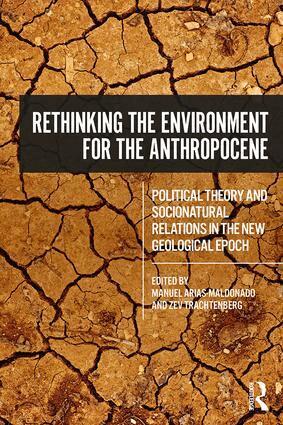
Rethinking the Environment for the Anthropocene
Political Theory and Socionatural Relations in the New Geological Epoch
Häftad, Engelska, 2019
575 kr
Skickas inom 10-15 vardagar
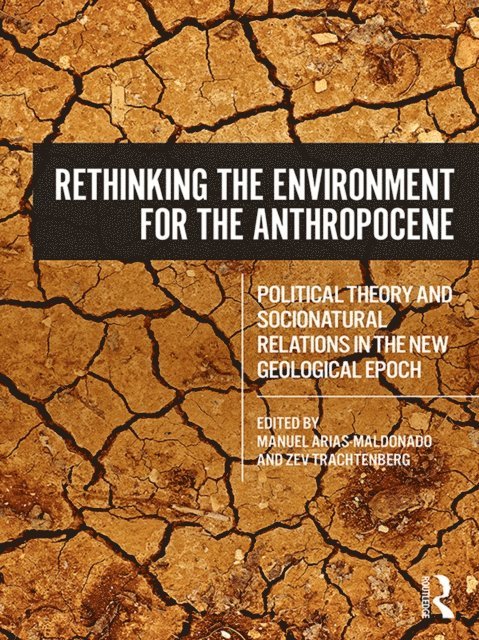
This book brings together the most current thinking about the Anthropocene in the field of Environmental Political Theory ('EPT'). It displays the distinctive contribution EPT makes to the task of thinking through what 'the environment' means in this time of pervasive human influence over natural systems. Across its chapters the book helps develop the idea of 'socionatural relations'—an idea that frames the environment in the Anthropocene in terms of the interconnected relationship between human beings and their surroundings. Coming from both well-established and newer voices in the field, the chapters in the book show the diversity of points of view theorists take toward the Anthropocene idea, and socionatural relations more generally. However, all the chapters exemplify a characteristic of work in EPT: the self-conscious effort to provide normative interpretations that are responsive to scientific accounts. The Introduction explains the complicated interaction between science and EPT, showing how it positions EPT to consider the Anthropocene. And the Afterword, by a pioneer in the field, relates all the chapters to a perspective that has been deeply influential in EPT.This book will be of interest to scholars already engaged in EPT. But it will also serve as an introduction to the field for students of Political Theory, Philosophy, Environmental Studies, and related disciplines, who will learn about the EPT approach from the Introduction, and then see it applied to the pressing question of the Anthropocene in the ensuing chapters. The book will also help readers interested in the Anthropocene from any disciplinary perspective develop a critical understanding of its political meanings.
1 359 kr
Skickas inom 10-15 vardagar
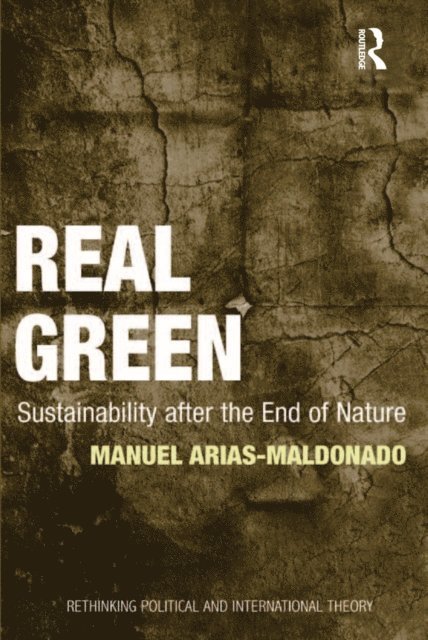
What would a sustainable society look like? How could it be achieved? By challenging conventional wisdom about the ecological crisis and reframing the traditional values of green politics "Real Green; Sustainability after the End of Nature" offers new answers to the key questions of the environmental debate. In this ground-breaking and challenging work Manuel Arias-Maldonado convincingly argues that, since nature has now been transformed into a part of the human environment, it can be seen to no longer exist. Ecological problems thus become an inevitable and normal feature of our relationship with nature. Hence a post-natural environmentalism, realistic and liberal while remaining green, is advocated. In this framework, sustainability, democracy and liberalism become mutually reinforcing elements rather than conflicting ones. Only by combining them can a green society be realised.
536 kr
Skickas inom 10-15 vardagar
This short book sets out to explore the concept of nature in the context of a changing reality, in which the extent of our transformation of the environment has become evident: What is nature and to what extent has humanity transformed it? How do nature and society relate to one another? What does the idea of a sustainable society entail and how can nature be understood as a political subject? What is the Anthropocene and how does it affect nature as both an idea and a material entity? Has nature perhaps “ended?” In addressing these questions, the author delivers a concise but meaningful study of contemporary understandings of nature, one that goes beyond the limits posed by a single discipline. Adopting a truly comprehensive perspective, the work incorporates classical disciplines such as philosophy, evolutionary theory and the history of ideas; new and mixed approaches ranging from environmental sociology to neurobiology and ecological economics and the emerging area of the environmental humanities and represents a growing branch of political thought that views nature as a new political subject.