
Manuel GarcA-a-Carpintero – författare
Visar alla böcker från författaren Manuel GarcA-a-Carpintero. Handla med fri frakt och snabb leverans.
4 produkter
4 produkter
E-bok
PDF, Engelska, 20161 082 kr
Läs direkt efter köp
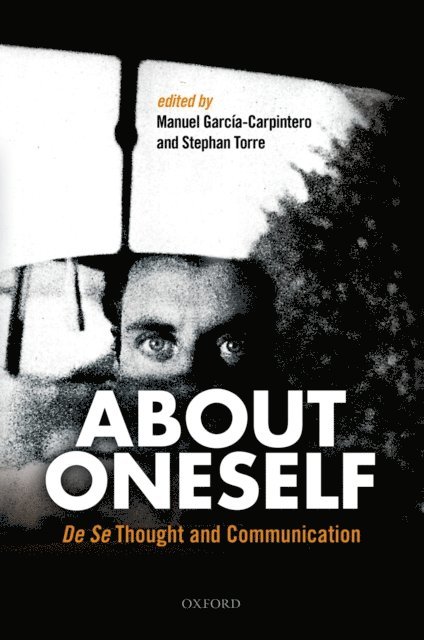
This volume addresses foundational issues concerning the nature of first-personal, or de se, thought and how such thoughts are communicated. One of the questions addressed is whether there is anything distinctive about first-person thought or whether it can be subsumed under broader phenomena. Many have held that first-person thought motivates a revision of traditional accounts of content or motivates positing special ways of accessing such contents. GottlobFrege famously held that first-person thoughts involve a subject being ''presented to himself in a particular and primitive way, in which he is presented to no-one else.'' However, as Frege also noted, this raises many puzzling questions when we consider how we are able to communicate such thoughts. Is thereindeed something special about first-person thought such that it requires a primitive mode of presentation that cannot be grasped by others? If there really is something special about first-person thought, what happens when I communicate this thought to you? Do you come to believe the very thing that I believe? Or is my first-person belief only entertained by me? If it is only entertained by me, how does it relate to what you come to believe? It is these questions that the volume addresses andseeks to answer.
E-bok
Engelska, 2014979 kr
Läs direkt efter köp
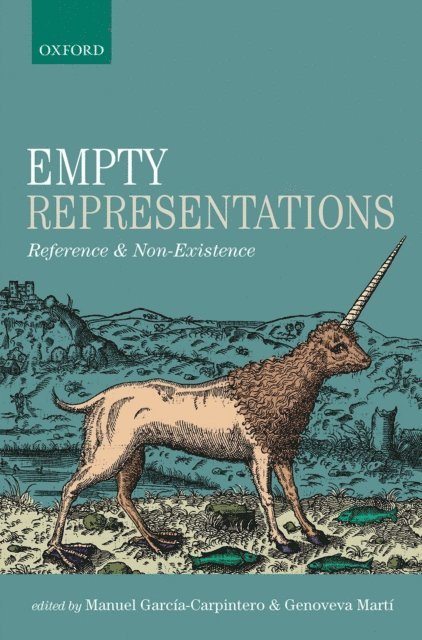
It is the linguistic job of singular terms to pick out the objects that we think or talk about. But what about singular terms that seem to fail to designate anything, because the objects they refer to don''t exist? We can employ these terms in meaningful thought and talk, which suggests that they are succeeding in fulfilling their representational task. A team of leading experts presents new essays on the much-debated problem of empty reference and thought. In the 1960s and 1970s Keith Donnellan, David Kaplan, Saul Kripke and Hilary Putnam initiated a revolution in the then standard conception of reference--a concept at the core of philosophical inquiry. The repercussions of the revolution, particularly felt in metaphysics and epistemology, were soon refined by other influential writers such as Tyler Burge, Gareth Evans, and John Perry. They argued that some linguistic and mental representations have contents individuated by what they are about--by ordinary referents of expressions such as proper names, indexicals, definite descriptions and common nouns, i.e. by planets, people or natural kinds. The view was at odds with a central philosophical presumption at that time: that cognitive and linguistic access to objective reality is indirect and accidental, mediated by general descriptive characterizations, the only constitutive semantic feature of the expressions; hence its ontological and epistemological repercussions. A turning-point in the debate about how linguistic and mental representation reach external contents concerned the nature of empty mental and linguistic representations, framed by means of the very same expressions crucially invoked in the Donnellan-Kaplan-Kripke-Putnam arguments. The papers in this volume address different aspects of reference and thought about the (apparently) non-existent.

E-bok
PDF, Engelska, 20231 323 kr
Läs direkt efter köp
Recent debates on phenomenal consciousness have shown renewed interest for the idea that experience generally includes an experience of the self--a self-experience--whatever else it may present the self with. When a subject has an ordinary experience (as of a bouncing red ball, for example), the thought goes, she is not just phenomenally aware of the world as being presented in a certain way (a bouncy, reddish, roundish way in this case); she is also phenomenally aware of the fact that it is presented to her. This supposed phenomenal dimension has been variously called mineness, for-me-ness, pre-reflective self-awareness and subjective character, among others.This view, associated with historical figures such as William James, Husserl, Merleau-Ponty, and Sartre, is attracting a new surge of attention at the crossroads of phenomenology, analytic philosophy of mind, and the philosophy of cognitive science, but also intense controversy.This book explores some of the questions running through the ongoing debate on the putative subjective dimension of experience: Does it exist?, the existence question; What is it?, the essence question; What is it for?, the function question; and What else does it explain?, the explanation question. The volume also surveys various domains of human experience, both normal and pathological, where a ''sense of self'' might be at play, including agency, bodily awareness, introspection, memory, emotions, and values, and offers insights into the possible relations between the notions of subjective awareness involved.The first part of the book is devoted to more sceptical or deflationary views about self-experience, and the second, to more robust ones.

E-bok
Engelska, 20231 323 kr
Läs direkt efter köp
Recent debates on phenomenal consciousness have shown renewed interest for the idea that experience generally includes an experience of the self--a self-experience--whatever else it may present the self with. When a subject has an ordinary experience (as of a bouncing red ball, for example), the thought goes, she is not just phenomenally aware of the world as being presented in a certain way (a bouncy, reddish, roundish way in this case); she is also phenomenally aware of the fact that it is presented to her. This supposed phenomenal dimension has been variously called mineness, for-me-ness, pre-reflective self-awareness and subjective character, among others.This view, associated with historical figures such as William James, Husserl, Merleau-Ponty, and Sartre, is attracting a new surge of attention at the crossroads of phenomenology, analytic philosophy of mind, and the philosophy of cognitive science, but also intense controversy.This book explores some of the questions running through the ongoing debate on the putative subjective dimension of experience: Does it exist?, the existence question; What is it?, the essence question; What is it for?, the function question; and What else does it explain?, the explanation question. The volume also surveys various domains of human experience, both normal and pathological, where a ''sense of self'' might be at play, including agency, bodily awareness, introspection, memory, emotions, and values, and offers insights into the possible relations between the notions of subjective awareness involved.The first part of the book is devoted to more sceptical or deflationary views about self-experience, and the second, to more robust ones.