Manuela Antonelli – författare
Visar alla böcker från författaren Manuela Antonelli. Handla med fri frakt och snabb leverans.
2 produkter
2 produkter
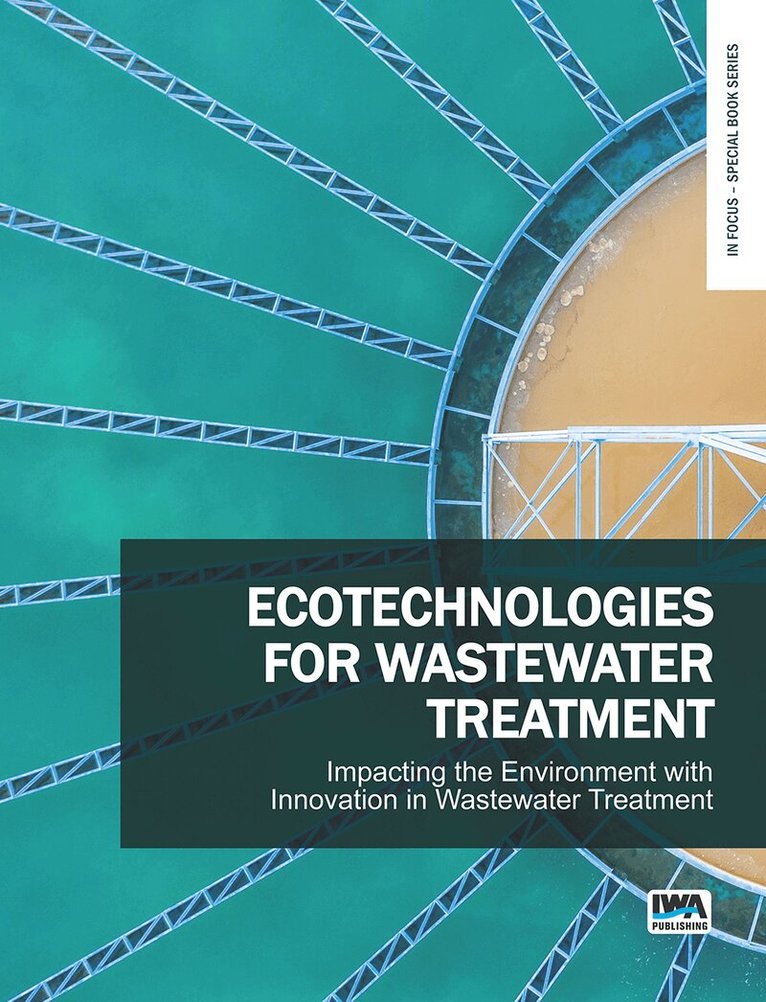
Ecotechnologies for Wastewater Treatment - Impacting the Environment with Innovation in Wastewater Treatment
Häftad, Engelska, 2023
1 384 kr
Tillfälligt slut
Acknowledging that resource efficiency as well as ecosystem protection are crucial goals to tackle has led to a deep rethinking in the way wastewater has been dealt with up to the 20th century. Indeed, pollution reduction to harmless levels has been the main focus of conventional wastewater treatment plants which have deployed effective and reliable solutions to get rid of suspended and dissolved pollutants. Nowadays, those same wastewaters are looked at as a mine of valuable resources that are to be harvested from the sewage through efficient technologies operated within water and resource recovery facilities (formerly known as wastewater treatment plants).Rethinking the way we deal with wastewater has become the new challenge and a key tool to implement the Circular Economy Action Plan, to address numerous UN Sustainable Development Goals, as well as to provide support tools to improve resilience to environmental and global threats, including climate change, water and food security, epidemic outbreaks and political instability.To tackle these challenging goals, new technologies as well as multidisciplinary tools are needed to pave the way toward a new water-economy, including: innovative technologies, integrated and risk-based approaches, and adequate regulatory and economic guidelines to promote technological uptake and societal acceptance.In Focus – a book series that showcases the latest accomplishments in water research. Each book focuses on a specialist area with papers from top experts in the field. It aims to be a vehicle for in-depth understanding and inspire further conversations in the sector.
Civil and Environmental Engineering for the Sustainable Development Goals
Emerging Issues
Häftad, Engelska, 2022
326 kr
Skickas inom 10-15 vardagar
This open access volume collects emerging issues in Environmental and Civil Engineering, originating from outstanding doctoral dissertations discussed at Politecnico di Milano in 2021. The advanced innovative insights provided are presented with reference to the relevant sustainable development goals (SDGs), hoping that scientists, technicians and decision makers will find them as a valid support to face future sustainability challenges.Indeed, the fast evolution of our society often falls short in properly taking into consideration its relationship with the environment, which is not only the primary source of any resource and the sink of all the wastes we generate throughout our activities, but also the cause of most of the loading and constraints applied to structures and infrastructures. The lack of a proper consideration of the relationship between the needs of both the society and the environment may lead to strong disequilibria, generating a large amount of threats for arobust, resilient and continuous development. In this perspective, the SDGs set by the United Nations represent the criteria to revise our development model, towards the ability to conjugate different needs to build a safe relation between anthropic activities and the environment. Civil and Environmental Engineering plays a relevant role in providing methods, approaches, risk and impact assessments, as well as technologies, to fulfil the SDGs. Research in these fields may in fact provide technical knowledge and tools to support decision makers and technicians in: (i) planning mitigation and adaptation actions to climate change, extreme weather, earthquakes, drought, flooding and other natural disasters; (ii) designing efficient and sustainable strategies for resources exploitation, minimizing the impact and the unequal distributions; (iii) increasing the safety of structures and infrastructures under exceptional loadings and against the deterioration due to their lifecycle; (iv) adopting a holistic risk management approach and appropriate technologies to reduce pollution and environment deterioration, which increase vulnerability; (v) providing a safe drinking water and sanitation system to protect human health.