María Blume - Böcker
Visar alla böcker från författaren María Blume. Handla med fri frakt och snabb leverans.
2 produkter
2 produkter
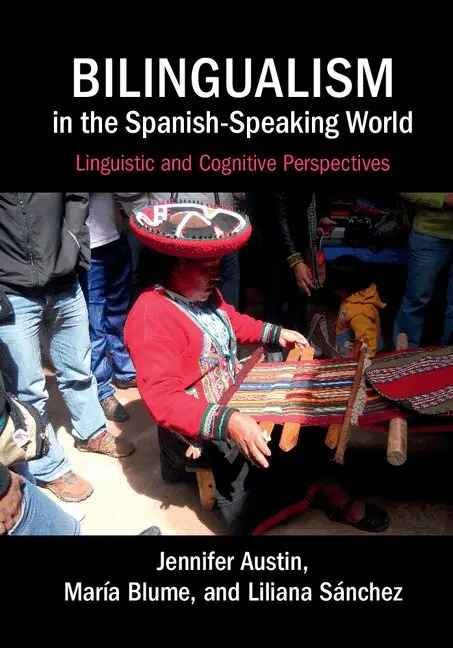
Bilingualism in the Spanish-Speaking World
Linguistic and Cognitive Perspectives
Inbunden, Engelska, 2015
1 038 kr
Skickas inom 7-10 vardagar
Bilingualism has given rise to significant changes in Spanish-speaking countries. In the US, the increasing importance of Spanish has engendered an English-only movement; in Peru, contact between Spanish and Quechua has brought about language change; and in Iberia, speakers of Basque, Galician and Catalan have made their languages a compulsory part of school curricula and local government. This book provides an introduction to bilingualism in the Spanish-speaking world, looking at topics such as language contact, bilingual societies, bilingualism in schools, code-switching, language transfer, the emergence of new varieties of Spanish, and language choice - and how all of these phenomena affect the linguistic and cognitive development of the speaker. Using examples and case studies drawn primarily from Spanish/English bilinguals in the US, Spanish/Quechua bilinguals in Peru and Spanish/Basque bilinguals in Spain, it provides diverse perspectives on the experience of being bilingual in distinct cultural, political and socioeconomic contexts.
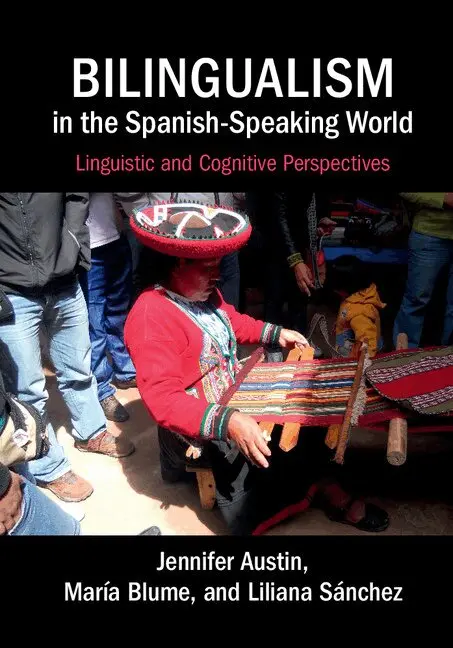
Bilingualism in the Spanish-Speaking World
Linguistic and Cognitive Perspectives
Häftad, Engelska, 2015
461 kr
Tillfälligt slut
Bilingualism has given rise to significant changes in Spanish-speaking countries. In the US, the increasing importance of Spanish has engendered an English-only movement; in Peru, contact between Spanish and Quechua has brought about language change; and in Iberia, speakers of Basque, Galician and Catalan have made their languages a compulsory part of school curricula and local government. This book provides an introduction to bilingualism in the Spanish-speaking world, looking at topics such as language contact, bilingual societies, bilingualism in schools, code-switching, language transfer, the emergence of new varieties of Spanish, and language choice - and how all of these phenomena affect the linguistic and cognitive development of the speaker. Using examples and case studies drawn primarily from Spanish/English bilinguals in the US, Spanish/Quechua bilinguals in Peru and Spanish/Basque bilinguals in Spain, it provides diverse perspectives on the experience of being bilingual in distinct cultural, political and socioeconomic contexts.