Marc Aerts - Böcker
Visar alla böcker från författaren Marc Aerts. Handla med fri frakt och snabb leverans.
4 produkter
4 produkter
927 kr
Skickas inom 10-15 vardagar
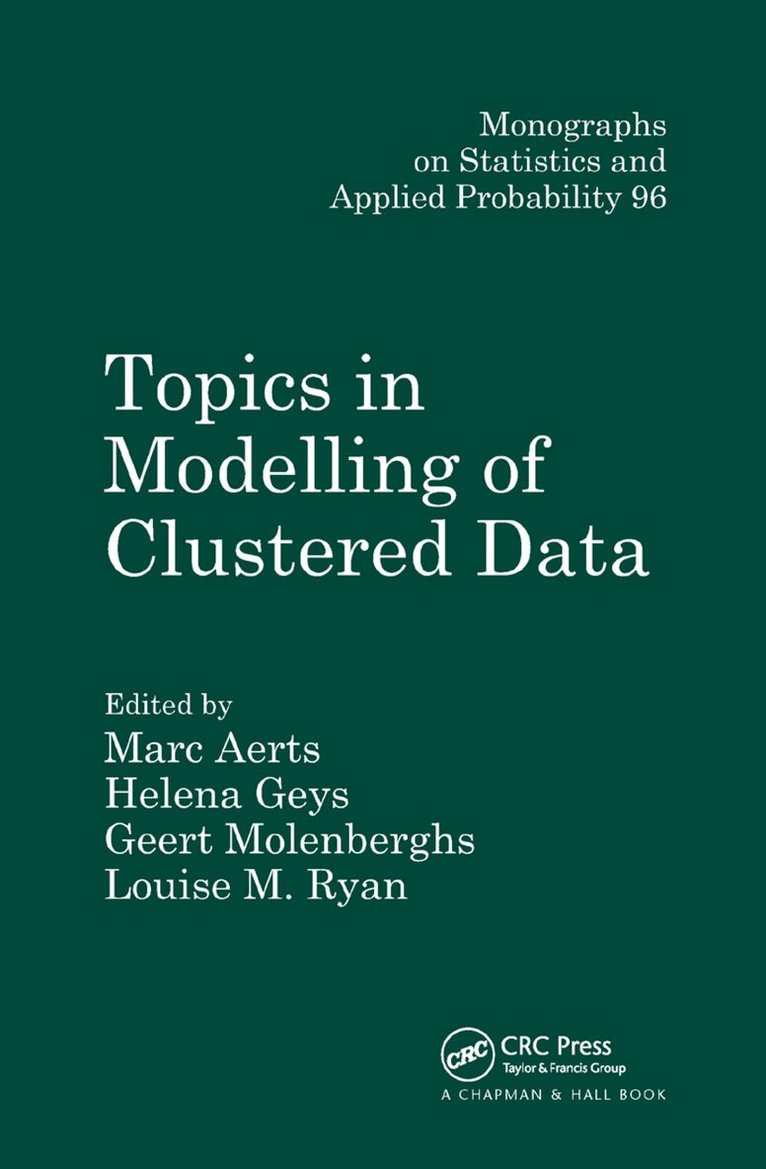
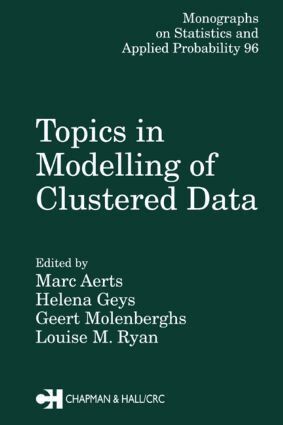
Many methods for analyzing clustered data exist, all with advantages and limitations in particular applications. Compiled from the contributions of leading specialists in the field, Topics in Modelling of Clustered Data describes the tools and techniques for modelling the clustered data often encountered in medical, biological, environmental, and social science studies. It focuses on providing a comprehensive treatment of marginal, conditional, and random effects models using, among others, likelihood, pseudo-likelihood, and generalized estimating equations methods.The authors motivate and illustrate all aspects of these models in a variety of real applications. They discuss several variations and extensions, including individual-level covariates and combined continuous and discrete outcomes. Flexible modelling with fractional and local polynomials, omnibus lack-of-fit tests, robustification against misspecification, exact, and bootstrap inferential procedures all receive extensive treatment. The applications discussed center primarily, but not exclusively, on developmental toxicity, which leads naturally to discussion of other methodologies, including risk assessment and dose-response modelling.Clearly written, Topics in Modelling of Clustered Data offers a practical, easily accessible survey of important modelling issues. Overview models give structure to a multitude of approaches, figures help readers visualize model characteristics, and a generous use of examples illustrates all aspects of the modelling process.
Del 63 - Statistics for Biology and Health
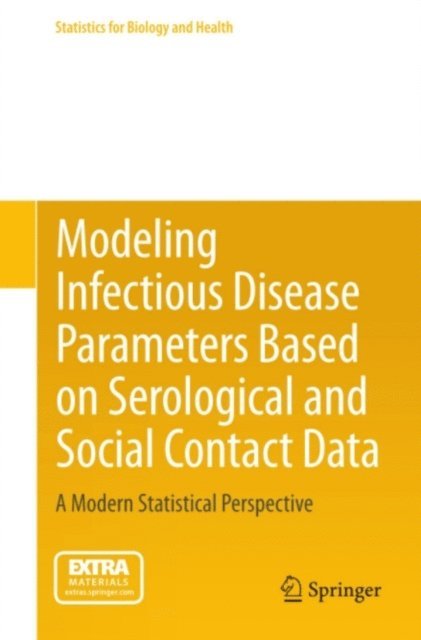
Modeling Infectious Disease Parameters Based on Serological and Social Contact Data
A Modern Statistical Perspective
Inbunden, Engelska, 2012
1 314 kr
Skickas inom 10-15 vardagar
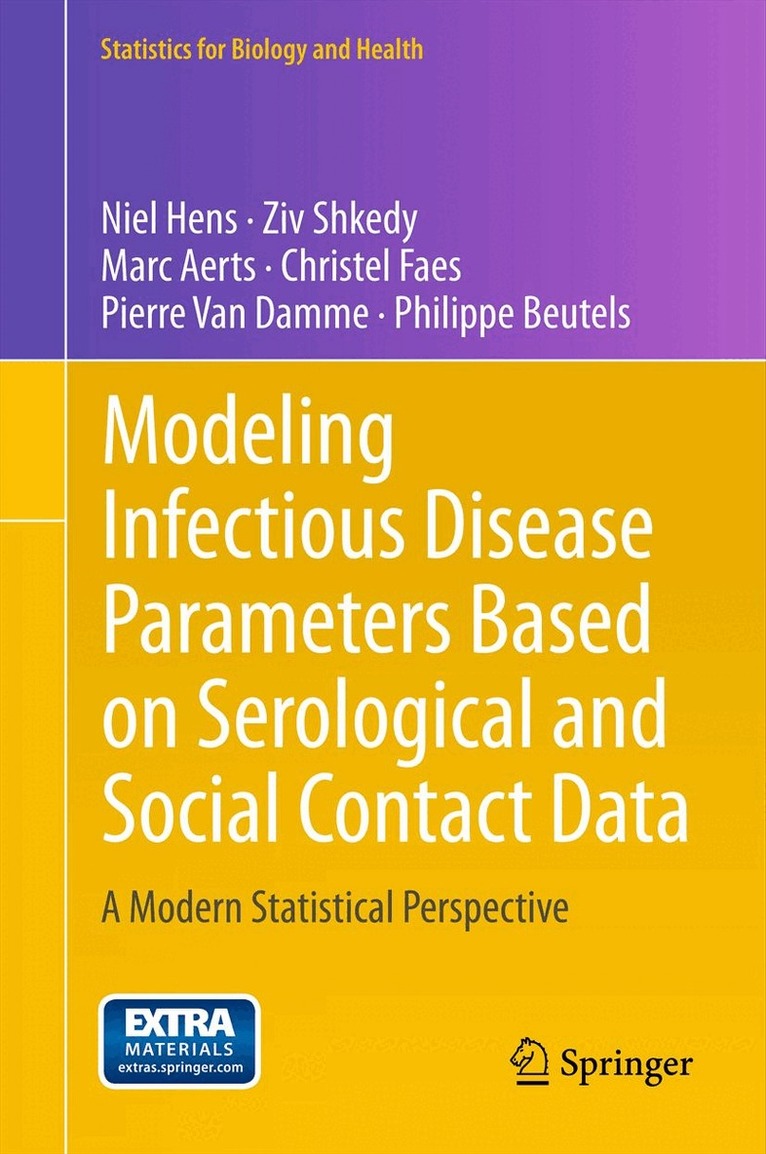
Mathematical epidemiology of infectious diseases usually involves describing the flow of individuals between mutually exclusive infection states. One of the key parameters describing the transition from the susceptible to the infected class is the hazard of infection, often referred to as the force of infection. The force of infection reflects the degree of contact with potential for transmission between infected and susceptible individuals. The mathematical relation between the force of infection and effective contact patterns is generally assumed to be subjected to the mass action principle, which yields the necessary information to estimate the basic reproduction number, another key parameter in infectious disease epidemiology. It is within this context that the Center for Statistics (CenStat, I-Biostat, Hasselt University) and the Centre for the Evaluation of Vaccination and the Centre for Health Economic Research and Modelling Infectious Diseases (CEV, CHERMID, Vaccine and Infectious Disease Institute, University of Antwerp) have collaborated over the past 15 years. This book demonstrates the past and current research activities of these institutes and can be considered to be a milestone in this collaboration. This book is focused on the application of modern statistical methods and models to estimate infectious disease parameters. We want to provide the readers with software guidance, such as R packages, and with data, as far as they can be made publicly available.
Del 63 - Statistics for Biology and Health
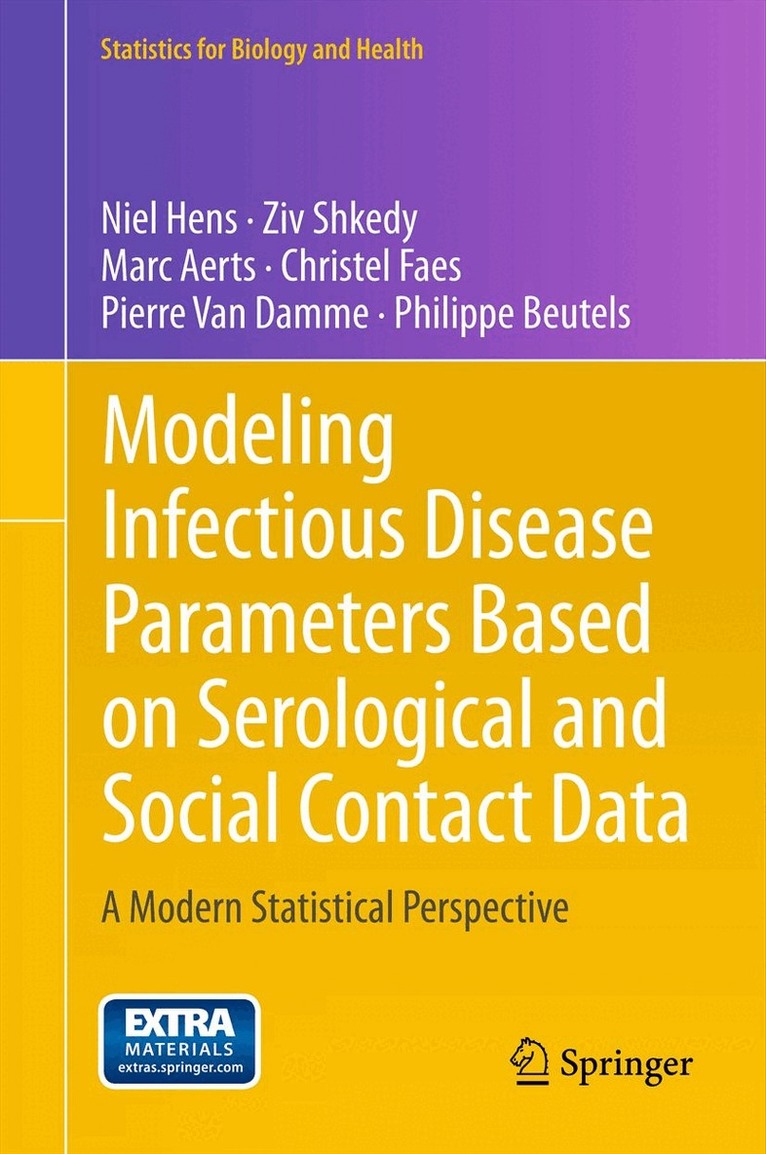
Modeling Infectious Disease Parameters Based on Serological and Social Contact Data
A Modern Statistical Perspective
Häftad, Engelska, 2014
933 kr
Skickas inom 10-15 vardagar
Mathematical epidemiology of infectious diseases usually involves describing the flow of individuals between mutually exclusive infection states. One of the key parameters describing the transition from the susceptible to the infected class is the hazard of infection, often referred to as the force of infection. The force of infection reflects the degree of contact with potential for transmission between infected and susceptible individuals. The mathematical relation between the force of infection and effective contact patterns is generally assumed to be subjected to the mass action principle, which yields the necessary information to estimate the basic reproduction number, another key parameter in infectious disease epidemiology. It is within this context that the Center for Statistics (CenStat, I-Biostat, Hasselt University) and the Centre for the Evaluation of Vaccination and the Centre for Health Economic Research and Modelling Infectious Diseases (CEV, CHERMID, Vaccine and Infectious Disease Institute, University of Antwerp) have collaborated over the past 15 years. This book demonstrates the past and current research activities of these institutes and can be considered to be a milestone in this collaboration. This book is focused on the application of modern statistical methods and models to estimate infectious disease parameters. We want to provide the readers with software guidance, such as R packages, and with data, as far as they can be made publicly available.
2 306 kr
Skickas inom 10-15 vardagar
Many methods for analyzing clustered data exist, all with advantages and limitations in particular applications. Compiled from the contributions of leading specialists in the field, Topics in Modelling of Clustered Data describes the tools and techniques for modelling the clustered data often encountered in medical, biological, environmental, and social science studies. It focuses on providing a comprehensive treatment of marginal, conditional, and random effects models using, among others, likelihood, pseudo-likelihood, and generalized estimating equations methods.The authors motivate and illustrate all aspects of these models in a variety of real applications. They discuss several variations and extensions, including individual-level covariates and combined continuous and discrete outcomes. Flexible modelling with fractional and local polynomials, omnibus lack-of-fit tests, robustification against misspecification, exact, and bootstrap inferential procedures all receive extensive treatment. The applications discussed center primarily, but not exclusively, on developmental toxicity, which leads naturally to discussion of other methodologies, including risk assessment and dose-response modelling.Clearly written, Topics in Modelling of Clustered Data offers a practical, easily accessible survey of important modelling issues. Overview models give structure to a multitude of approaches, figures help readers visualize model characteristics, and a generous use of examples illustrates all aspects of the modelling process.