Marc Crépon – författare
Visar alla böcker från författaren Marc Crépon. Handla med fri frakt och snabb leverans.
22 produkter
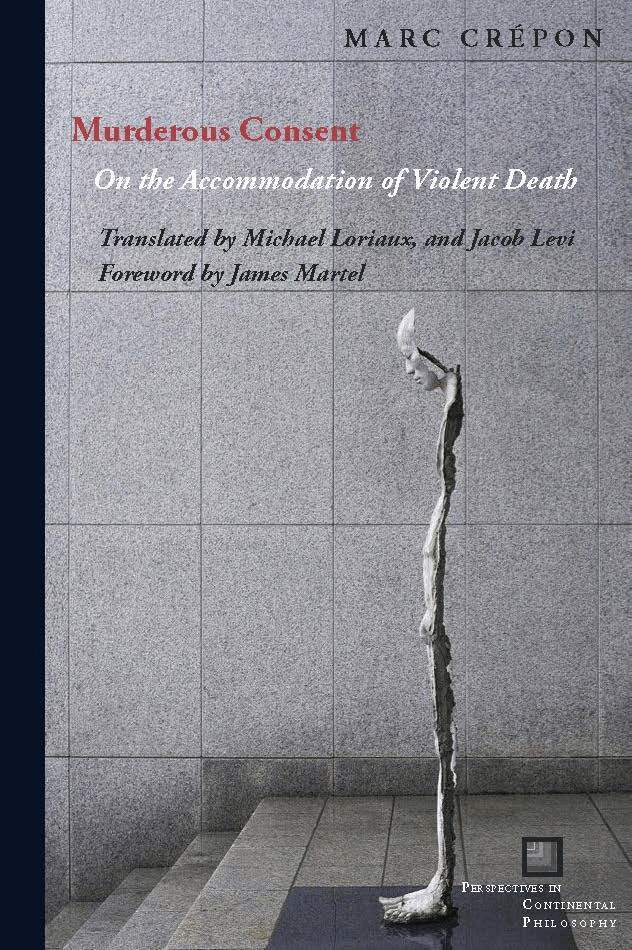
Murderous Consent
On the Accommodation of Violent Death
Av Marc Crépon
Häftad, 2019
431 kr
Lägg i varukorg
Winner, 2002 French Translation Prize for NonfictionMurderous Consent details our implication in violence we do not directly inflict but in which we are structurally complicit: famines, civil wars, political repression in far-away places, and war, as it's classically understood. Marc Crépon insists …
Murderous Consent
On the Accommodation of Violent Death
Av Marc Crépon
Inbunden, 2019
1363 kr
Lägg i varukorg
Winner, 2002 French Translation Prize for NonfictionMurderous Consent details our implication in violence we do not directly inflict but in which we are structurally complicit: famines, civil wars, political repression in far-away places, and war, as it's classically understood. Marc Crépon insists …
Philosophy, Language and the Political
Poststructuralism in Perspective
Av Marc Crepon, Franson Manjali
E-bok, 2026
831 kr
Lägg i varukorg
This book presents critical essays examining the intersection of philosophy, language, and politics in poststructuralist thought. The collection explores Jacques Derrida's philosophical legacy alongside contributions from leading scholars analyzing deconstruction, psychoanalysis, and political …
Philosophy, Language and the Political
Poststructuralism in Perspective
Av Marc Crepon, Franson Manjali
E-bok, 2026
813 kr
Lägg i varukorg
This book presents critical essays examining the intersection of philosophy, language, and politics in poststructuralist thought. The collection explores Jacques Derrida's philosophical legacy alongside contributions from leading scholars analyzing deconstruction, psychoanalysis, and political …
Philosophy, Language and the Political
Poststructuralism in Perspective
Av Franson Manjali, Marc Crépon m. fl.
Inbunden, 2026
2512 kr
Lägg i varukorg
This book presents critical essays examining the intersection of philosophy, language, and politics in poststructuralist thought. The collection explores Jacques Derrida's philosophical legacy alongside contributions from leading scholars analyzing deconstruction, psychoanalysis, and political …
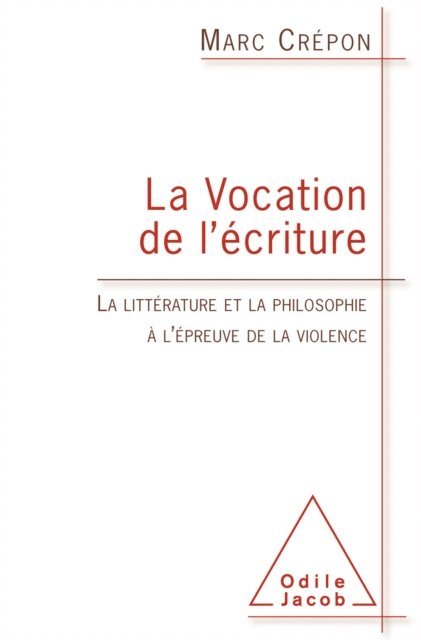
Vocation of Writing
Literature, Philosophy, and the Test of Violence
Av Marc Crépon
Häftad, 2019
453 kr
Lägg i varukorg
Explores how violence structures language and the writing of literature and philosophy.Within the violence our societies must confront today exists a dimension proper to language. Anyone who has been through the educational system, for example, recognizes how language not only shapes and models us, …
Vocation of Writing
Literature, Philosophy, and the Test of Violence
Av Marc Crépon
Inbunden, 2018
1286 kr
Lägg i varukorg
Explores how violence structures language and the writing of literature and philosophy.Within the violence our societies must confront today exists a dimension proper to language. Anyone who has been through the educational system, for example, recognizes how language not only shapes and models us, …
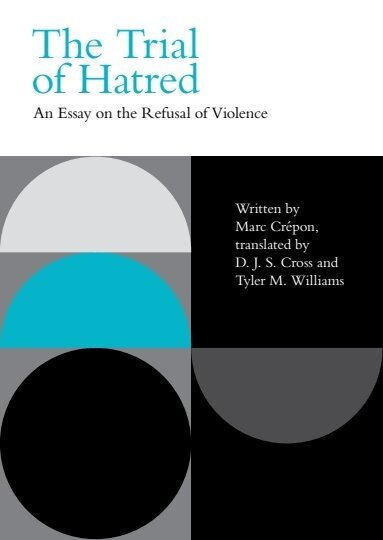
Trial of Hatred
An Essay on the Refusal of Violence
Av Marc Crépon
Häftad, 2021
303 kr
Lägg i varukorg
In this urgently needed book, Marc Crepon addresses the nature of hatred and its manifestations in international and domestic terrorism, racism, war and other forms of violence. Looking at the evidence of violence motivated by hatred, including US racial segregation, South African apartheid and the …
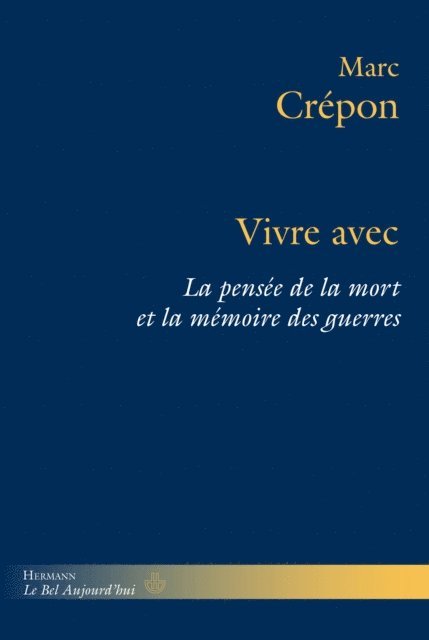
Vivre avec : La pensée de la mort et la mémoire des guerres
Av Marc Crepon
E-bok, 2008
407 kr
Lägg i varukorg
Il n’y a pas de guerre, pas de génocide, pas d’abandon de populations entières à leur errance entre des frontières meurtrières qui ne soient possibles sans une « suspension » de la relation à la mort d’autrui, un déni des gestes de secours, des paroles de réconfort, du partage qu’elle appelle. …
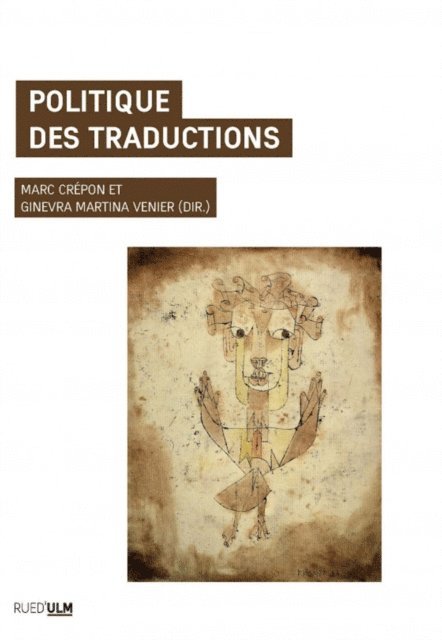
Politique des traductions
Av Ginevra Martina (dir.) Venier, Marc Crepon
E-bok, 2023
232 kr
Lägg i varukorg
Comment mesurer les enjeux politiques de la traduction dans un monde fracturé, du point de vue de sa pratique comme des réflexions théoriques qu’elle appelle ? C’est le défi relevé par ce livre. Revenant sur « la tâche du traducteur » (W. Benjamin), il articule deux ordres de problème : le premier …
Politique des traductions
Av Ginevra Martina (dir.) Venier, Marc Crepon
E-bok, 2023
227 kr
Lägg i varukorg
Comment mesurer les enjeux politiques de la traduction dans un monde fracturé, du point de vue de sa pratique comme des réflexions théoriques qu’elle appelle ? C’est le défi relevé par ce livre. Revenant sur « la tâche du traducteur » (W. Benjamin), il articule deux ordres de problème : le premier …
La peine de mort - Vers l'abolition absolue ?
Vers l''abolition absolue ?
Av Stefano Manacorda, Jean-Louis Halperin m. fl.
E-bok, 2016
122 kr
Lägg i varukorg
Depuis trois décennies, la peine de mort recule incontestablement dans le monde. Le noyau dur des États rétentionnistes procédant à des exécutions se réduit désormais à une trentaine de pays. Pourtant, en Amérique du Nord, en Asie, en Afrique, il est des États qui paraissent peu affectés par le …
La peine de mort - Vers l'abolition absolue ?
Vers l''abolition absolue ?
Av Stefano Manacorda, Jean-Louis Halperin m. fl.
E-bok, 2016
122 kr
Lägg i varukorg
Depuis trois décennies, la peine de mort recule incontestablement dans le monde. Le noyau dur des États rétentionnistes procédant à des exécutions se réduit désormais à une trentaine de pays. Pourtant, en Amérique du Nord, en Asie, en Afrique, il est des États qui paraissent peu affectés par le …
Inhumaines conditions
Combattre l''intolérable
Av Marc Crepon
E-bok, 2018
172 kr
Lägg i varukorg
Plus jamais ça ! Comment expliquer qu’à un moment nous ne supportons plus ce qui nous paraissait encore acceptable peu de temps auparavant ? Pourquoi ce qui était considéré comme normal devient-il soudainement intolérable au point que nous décidions de nous y opposer ? Cela tient au fait que ce qui …
L' Épreuve de la haine
Essai sur le refus de la violence
Av Marc Crepon
E-bok, 2016
208 kr
Lägg i varukorg
La violence n’a pas subitement surgi dans nos vies avec les attentats de janvier et de novembre 2015. Aucune de nos relations, qu’elles soient familiales, scolaires, professionnelles, morales ou politiques, n’y échappe. Mais la terreur instaurée par les attaques terroristes est une épreuve sans …
La Vocation de l’écriture
La littérature et la philosophie à l’épreuve de la violence
Av Marc Crepon
E-bok, 2014
214 kr
Lägg i varukorg
Il y a dans la violence que doivent aujourd’hui affronter nos sociétés une dimension propre à la langue. Quiconque a fait l’apprentissage de l’éducation doit reconnaître au creux de sa propre expérience la manière dont la langue façonne, modèle, impose. Quant au XXe siècle, il s’est chargé de nous …
De la démocratie participative: Fondements et limites
Av Marc Crépon, Bernard Stiegler
Häftad, 2018
407 kr
Lägg i varukorg
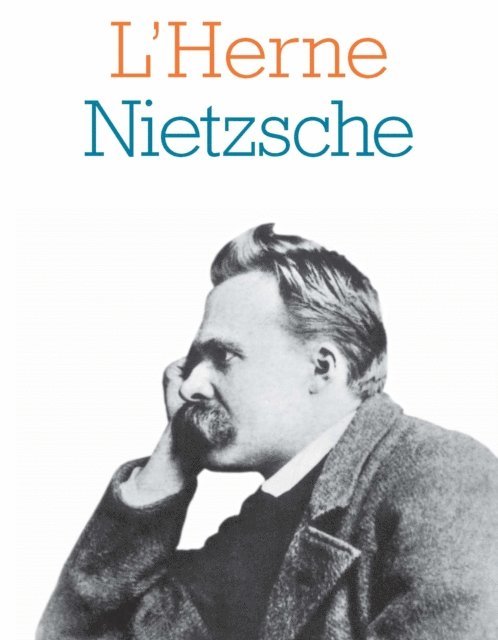
Cahier de L'Herne n°73 : Nietzsche
Av Marc Crepon
E-bok, 2006
482 kr
Lägg i varukorg
Dirigé par Marc Crépon . Comme Nietzsche le dit à plusieurs reprises : la lecture de son oeuvre n?est pas de celles dont on sort sans que rien n?ait changé. Et ceci est d?autant plus vrai que rien de ce qu?elle prophétise ou annonce ne s?est définitivement accompli. Nous ne sommes pas sortis de ce …
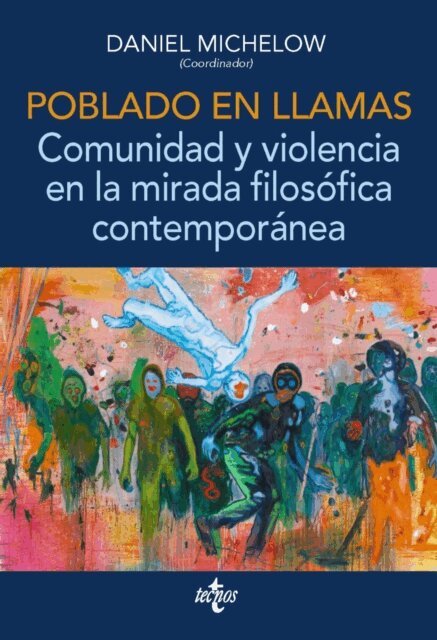
Poblado en llamas. Comunidad y violencia en la mirada filosofica contemporanea
Av Alejandro Javier Viveros Espinosa, Lorena Souyris Oportot m. fl.
E-bok, 2022
179 kr
Lägg i varukorg
Pensar la comunidad, mas tambien pensar en comunidad y su conflictividad es lo que Poblado en llamas nos llama a hacer. A pensar masas, multitudes, colectivos, cabildos, a pensar pueblo a traves de la mirada de los debates contemporaneos es a lo que este libro nos invita, trayendo a su vez una …
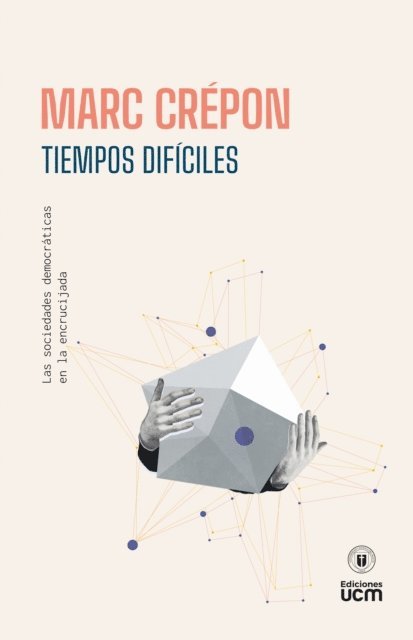
Tiempos difíciles
Las sociedades democrácticas en la encrucijada
Av Lorena Souyris, Javier Aguero m. fl.
E-bok, 2020
70 kr
Lägg i varukorg
"Sería desastroso, en efecto, que la pandemia pase, sin haber revelado las conciencias suficientemente para que recuerden que la urgencia sanitaria no es la última palabra de la crisis. Una vez salidos de los combates dados día a día para salvar vidas, son otras las luchas futuras las que será …
Élections
De la démophobie
Av Marc Crepon
E-bok, 2012
285 kr
Lägg i varukorg
On appellera « démophobie » toute méthode de contournement ou de rejet de la « parole » du peuple qui procède de l''allergie, de l''appréhension ou de la défiance que ce même peuple suscite, qu''on l''estime « ignorant », victime de ses affects suraffecté ou désaffecté. Elle est le propre des …
La communauté aujourd'hui
Autour de Jean-Luc Nancy
Av Lucia Angelino, Marc CREPON m. fl.
E-bok, 2024
399 kr
Lägg i varukorg
Jean-Luc Nancy (1940-2021) a, tout au long de son chemin philosophique, maintenu le cap d’une interrogation centrée autour de la question dite de la « communauté », ou bien encore, et comme ses travaux ont incité à le dire le plus souvent, de l’« être-en-commun », de l’« être-ensemble », et …