Session C74: Methods of Art History Tested against Prehistory; Session C81: Spirals and Circular Forms: the Most Common Rock Art in the World Session
391 kr
Skickas inom 3-6 vardagar
391 kr
Skickas inom 3-6 vardagar
386 kr
Skickas inom 3-6 vardagar
Proceedings of Session A11d of the 17th World Congress of the IUPPS (Actes de la session A11d du 17e Congrés mondial de l'UISPP) (Burgos 1-7 September 2014)
1 000 kr
Skickas inom 5-8 vardagar
2 299 kr
Skickas
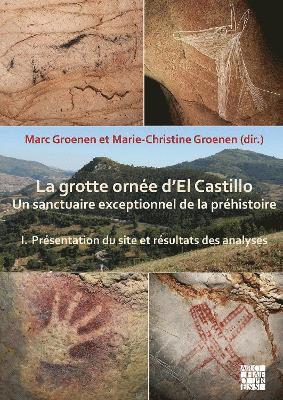
A UNESCO World Heritage Site since 2008, the El Castillo cave (Cantabria, Spain) had not been the subject of a comprehensive study for over a century. Twenty years of work were needed to record and describe the 2,698 or so motifs and archaeological evidence in the cave, and the resulting monograph offers a new approach to prehistoric art. By examining the relationships between the underground space and the graphic entities, the authors aim to demonstrate that different areas of the cave were not equal for Palaeolithic decorators. Decorative elements appear to be moulded to the architectural features of the network, leading the authors to consider the cave as an ornate form of architecture. Far from being a closed complex, they posit El Castillo cave as a central link in an extensive cultural network, permeable to the dissemination of aesthetic and symbolic concepts. With its multi-millennia of occupation, the quality and wealth of its cave art, the El Castillo cave must today be considered one of the major prehistoric sites on the Atlantic seaboard.
391 kr
Skickas inom 3-6 vardagar
386 kr
Skickas inom 3-6 vardagar
Proceedings of Session A11d of the 17th World Congress of the IUPPS (Actes de la session A11d du 17e Congrés mondial de l'UISPP) (Burgos 1-7 September 2014)
1 000 kr
Skickas inom 5-8 vardagar
2 299 kr
Skickas
A UNESCO World Heritage Site since 2008, the El Castillo cave (Cantabria, Spain) had not been the subject of a comprehensive study for over a century. Twenty years of work were needed to record and describe the 2,698 or so motifs and archaeological evidence in the cave, and the resulting monograph offers a new approach to prehistoric art. By examining the relationships between the underground space and the graphic entities, the authors aim to demonstrate that different areas of the cave were not equal for Palaeolithic decorators. Decorative elements appear to be moulded to the architectural features of the network, leading the authors to consider the cave as an ornate form of architecture. Far from being a closed complex, they posit El Castillo cave as a central link in an extensive cultural network, permeable to the dissemination of aesthetic and symbolic concepts. With its multi-millennia of occupation, the quality and wealth of its cave art, the El Castillo cave must today be considered one of the major prehistoric sites on the Atlantic seaboard.