Marc Lankhorst – författare
Visar alla böcker från författaren Marc Lankhorst. Handla med fri frakt och snabb leverans.
11 produkter
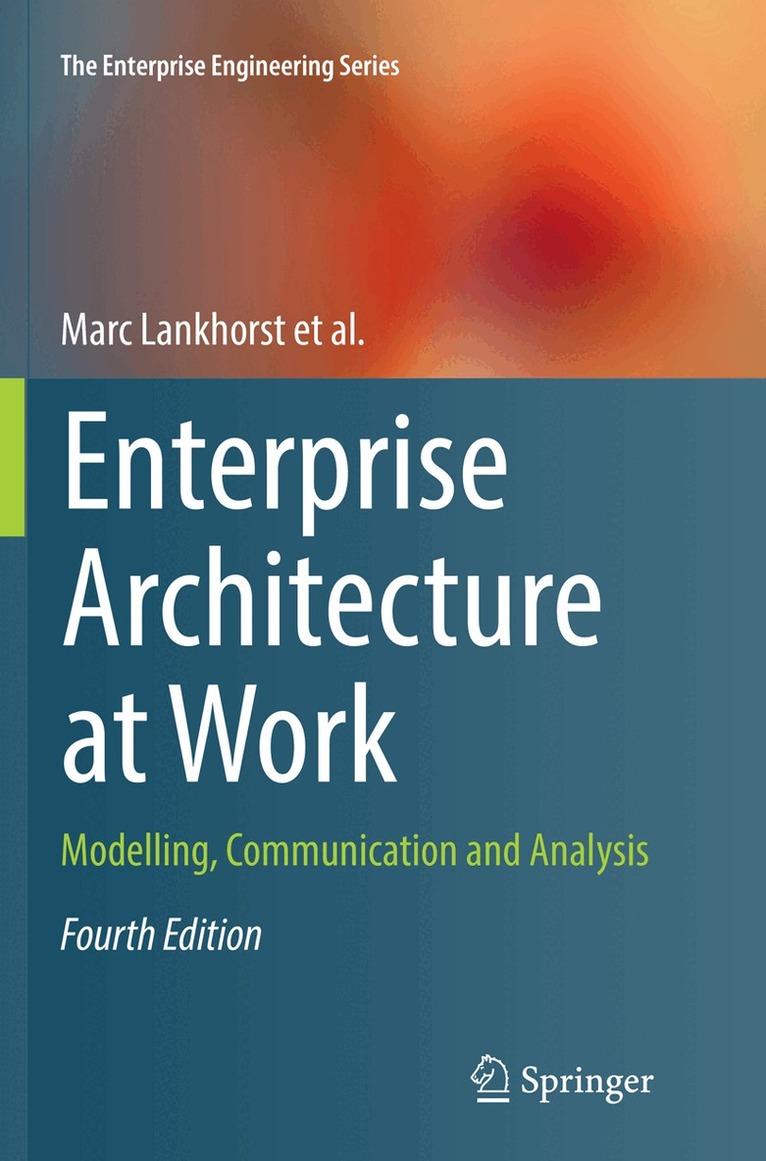
Enterprise Architecture at Work
Modelling, Communication and Analysis
Häftad, 2018
422 kr
Lägg i varukorg
Lankhorst and his co‑authors present ArchiMate® 3.0, enterprise modelling language that captures the complexity of architectural domains and their relations and allows the construction of integrated enterprise architecture models. They provide architects with concrete instruments that improve their …
Enterprise Architecture at Work
Modelling, Communication and Analysis
E-bok, 2005
739 kr
Lägg i varukorg
An enterprise architecture tries to describe and control an organisation’s structure, processes, applications, systems and techniques in an integrated way. The unambiguous specification and description of components and their relationships in such an architecture requires a coherent architecture …
Enterprise Architecture at Work
Modelling, Communication and Analysis
E-bok, 2009
821 kr
Lägg i varukorg
An enterprise architecture tries to describe and control an organisation’s structure, processes, applications, systems and techniques in an integrated way. The unambiguous specification and description of components and their relationships in such an architecture requires a coherent architecture …
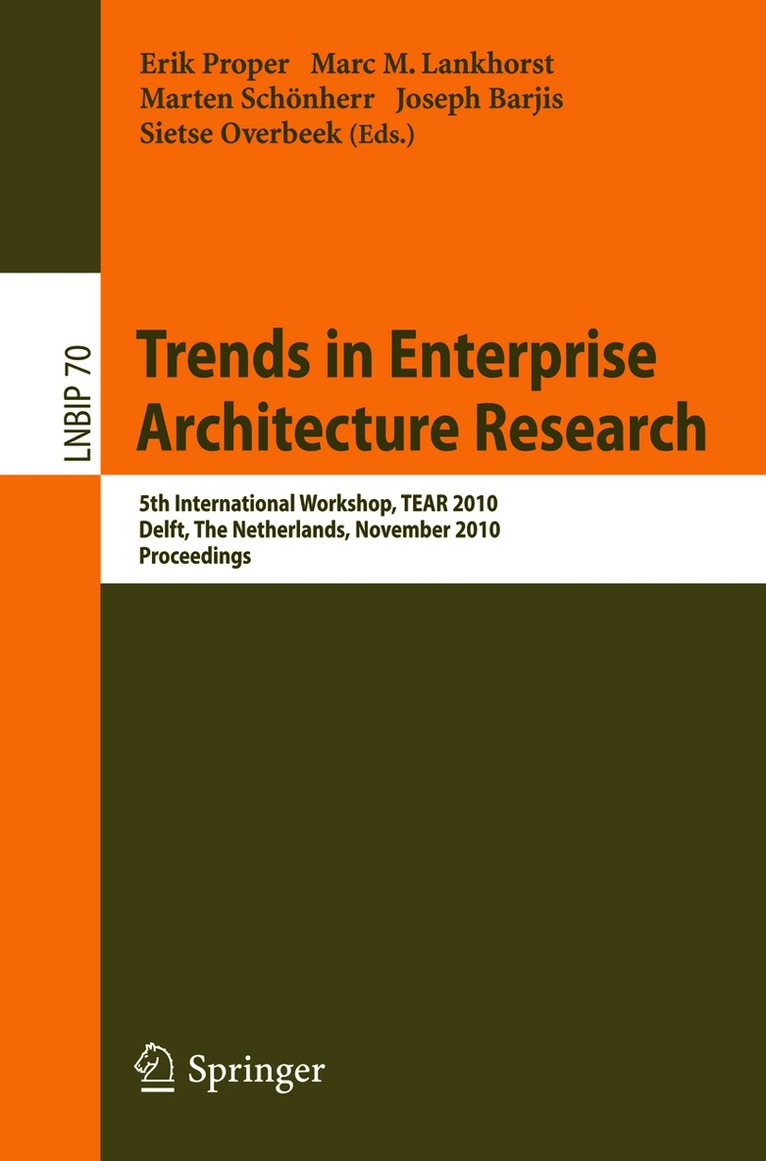
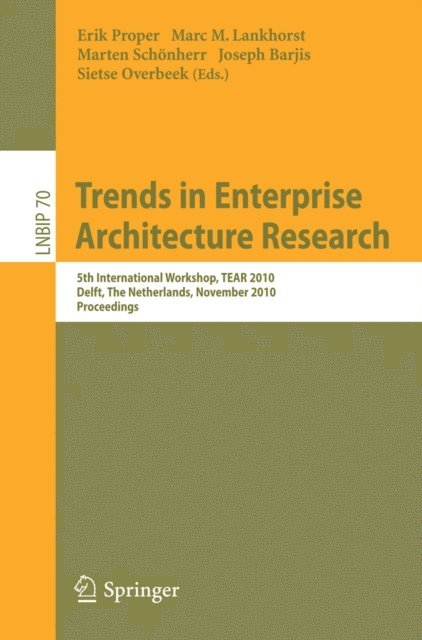
Trends in Enterprise Architecture Research
5th Workshop, TEAR 2010, Delft, The Netherlands, November 12, 2010, Proceedings
Av Marc Lankhorst, Marten Schönherr m. fl.
Häftad, 2010
551 kr
Lägg i varukorg
This volume constitutes the proceedings of the 5th International Workshop on Trends in Enterprise Architecture Research (TEAR), held in Delft, The Netherlands, on November 12, 2010. The main objective of the workshop is to identify major trends and challenges in enterprise architecture research by …
Trends in Enterprise Architecture Research
5th Workshop, TEAR 2010, Delft, The Netherlands, November 12, 2010, Proceedings
Av Sietse Overbeek, Joseph Barjis m. fl.
E-bok, 2010
739 kr
Lägg i varukorg
This volume constitutes the proceedings of the 5 th International Workshop on Trends in Enterprise Architecture Research (TEAR), held in Delft, The Netherlands, on November 12, 2010. The main objective of the workshop is to identify major trends and challenges in enterprise architecture research by …
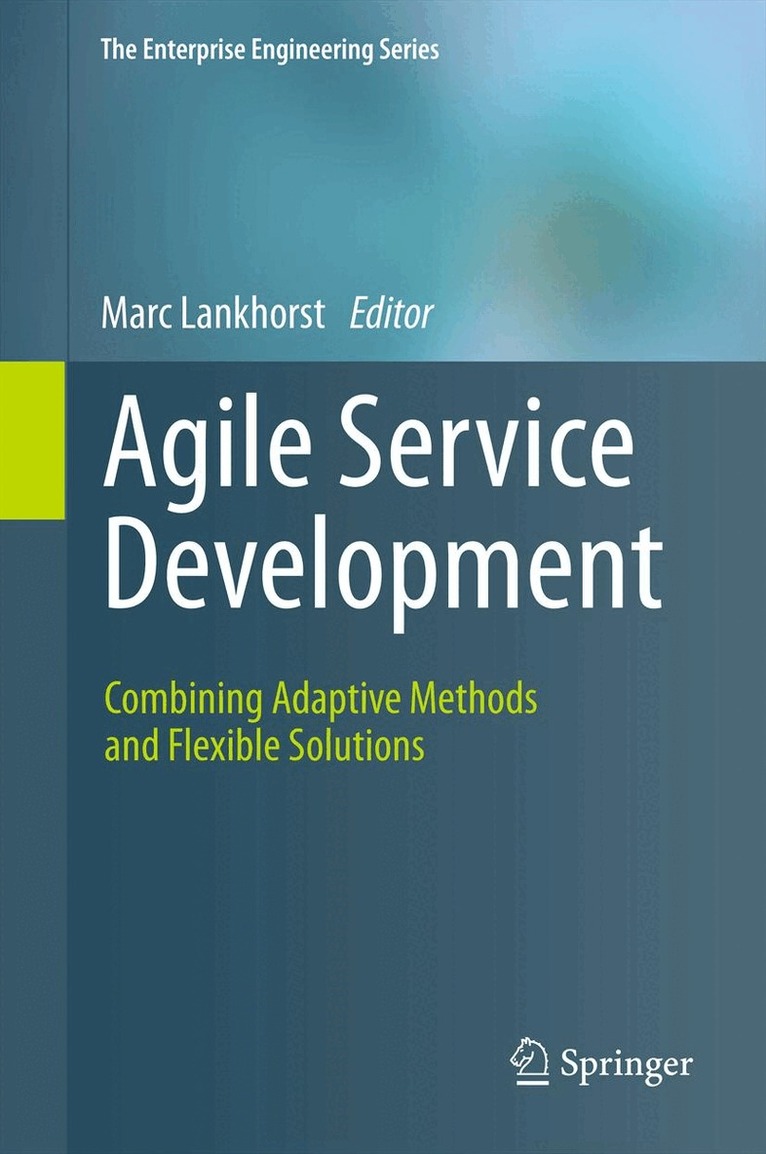
Agile Service Development
Combining Adaptive Methods and Flexible Solutions
Inbunden, 2012
1128 kr
Lägg i varukorg
Economies around the globe have evolved into being largely service-oriented economies. Consumers no longer just want a printer or a car, they rather ask for a printing service or a mobility service. In addition, service-oriented organizations increasingly exploit new devices, technologies and …
Agile Service Development
Combining Adaptive Methods and Flexible Solutions
E-bok, 2012
1335 kr
Lägg i varukorg
Economies around the globe have evolved into being largely service-oriented economies . Consumers no longer just want a printer or a car, they rather ask for a printing service or a mobility service. In addition, service-oriented organizations increasingly exploit new devices, technologies and …
Enterprise Architecture at Work
Modelling, Communication and Analysis
E-bok, 2012
821 kr
Lägg i varukorg
An enterprise architecture tries to describe and control an organisation’s structure, processes, applications, systems and techniques in an integrated way. The unambiguous specification and description of components and their relationships in such an architecture requires a coherent architecture …
Agile Service Development
Combining Adaptive Methods and Flexible Solutions
Häftad, 2014
1016 kr
Lägg i varukorg
Economies around the globe have evolved into being largely service-oriented economies. Consumers no longer just want a printer or a car, they rather ask for a printing service or a mobility service. In addition, service-oriented organizations increasingly exploit new devices, technologies and …
Enterprise Architecture at Work
Modelling, Communication and Analysis
Inbunden, 2017
602 kr
Lägg i varukorg
Lankhorst and his co‑authors present ArchiMate® 3.0, enterprise modelling language that captures the complexity of architectural domains and their relations and allows the construction of integrated enterprise architecture models. They provide architects with concrete instruments that improve their …
Enterprise Architecture at Work
Modelling, Communication and Analysis
E-bok, 2017
821 kr
Lägg i varukorg
Lankhorst and his co‑authors present ArchiMate® 3.0, enterprise modelling language that captures the complexity of architectural domains and their relations and allows the construction of integrated enterprise architecture models. They provide architects with concrete instruments that improve their …