Marcel Kok – författare
Visar alla böcker från författaren Marcel Kok. Handla med fri frakt och snabb leverans.
3 produkter
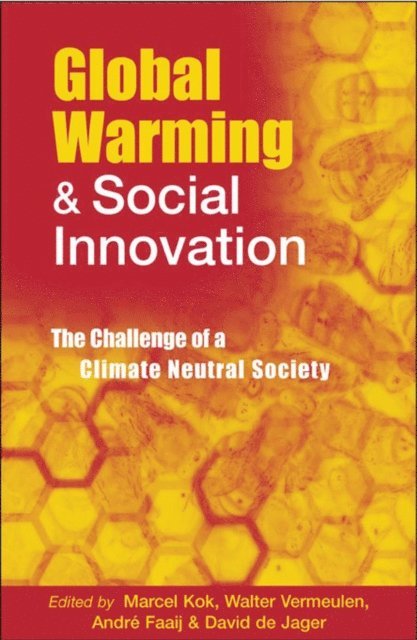
Global Warming and Social Innovation
The Challenge of a Climate Neutral Society
Av Marcel Kok, David Jager m. fl.
E-bok, 2013
390 kr
Lägg i varukorg
Societies need to reduce emissions of greenhouse gases by 80 per cent in order to counter the risks of climate change. This study envisions a climate neutral society - one where the output of polluting gases is minimised by social innovations set up in households, by local authorities, through …
Global Warming and Social Innovation
The Challenge of a Climate Neutral Society
Av Marcel Kok, David Jager m. fl.
E-bok, 2013
399 kr
Lägg i varukorg
Societies need to reduce emissions of greenhouse gases by 80 per cent in order to counter the risks of climate change. This study envisions a climate neutral society - one where the output of polluting gases is minimised by social innovations set up in households, by local authorities, through …
Global Warming and Social Innovation
The Challenge of a Climate Neutral Society
Av Walter Vermeulen, Marcel Kok m. fl.
Inbunden, 2002
755 kr
Lägg i varukorg
Societies need to reduce emissions of greenhouse gases by 80 per cent in order to counter the risks of climate change. This study envisions a climate neutral society - one where the output of polluting gases is minimised by social innovations set up in households, by local authorities, through …