Marcella Schmidt di Friedberg – författare
Visar alla böcker från författaren Marcella Schmidt di Friedberg. Handla med fri frakt och snabb leverans.
5 produkter
5 produkter
618 kr
Skickas inom 10-15 vardagar
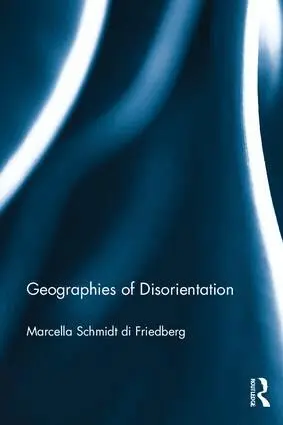
Spatial disorientation is of key relevance to our globalized world, eliciting complex questions about our relationship with technology and the last remaining vestiges of our animal nature. Viewed more broadly, disorientation is a profoundly geographical theme that concerns our relationship with space, places, the body, emotions, and time, as well as being a powerful and frequently recurring metaphor in art, philosophy, and literature.Using multiple perspectives, lenses, methodological tools, and scales, Geographies of Disorientation addresses questions such as: How do we orient ourselves? What are the cognitive and cultural instruments that we use to move through space? Why do we get lost? Two main threads run through the book: getting lost as a practice, explored within a post-phenomenological framework in relation to direct and indirect observation, wayfinding performances, and the various methods and tools used to find our position in space; and disorientation as a metaphor for the contemporary era, used in a broad range of contexts to express the difficulty of finding points of reference in the world we live in.Drawing on a wide range of literature, Geographies of Disorientation is a highly original and intruiging read which will be of interest to scholars of human geography, philosophy, sociology, anthropology, cognitive science, information technology, and the communication sciences.
2 113 kr
Skickas inom 10-15 vardagar
Spatial disorientation is of key relevance to our globalized world, eliciting complex questions about our relationship with technology and the last remaining vestiges of our animal nature. Viewed more broadly, disorientation is a profoundly geographical theme that concerns our relationship with space, places, the body, emotions, and time, as well as being a powerful and frequently recurring metaphor in art, philosophy, and literature.Using multiple perspectives, lenses, methodological tools, and scales, Geographies of Disorientation addresses questions such as: How do we orient ourselves? What are the cognitive and cultural instruments that we use to move through space? Why do we get lost? Two main threads run through the book: getting lost as a practice, explored within a post-phenomenological framework in relation to direct and indirect observation, wayfinding performances, and the various methods and tools used to find our position in space; and disorientation as a metaphor for the contemporary era, used in a broad range of contexts to express the difficulty of finding points of reference in the world we live in.Drawing on a wide range of literature, Geographies of Disorientation is a highly original and intruiging read which will be of interest to scholars of human geography, philosophy, sociology, anthropology, cognitive science, information technology, and the communication sciences.
1 276 kr
Skickas inom 10-15 vardagar
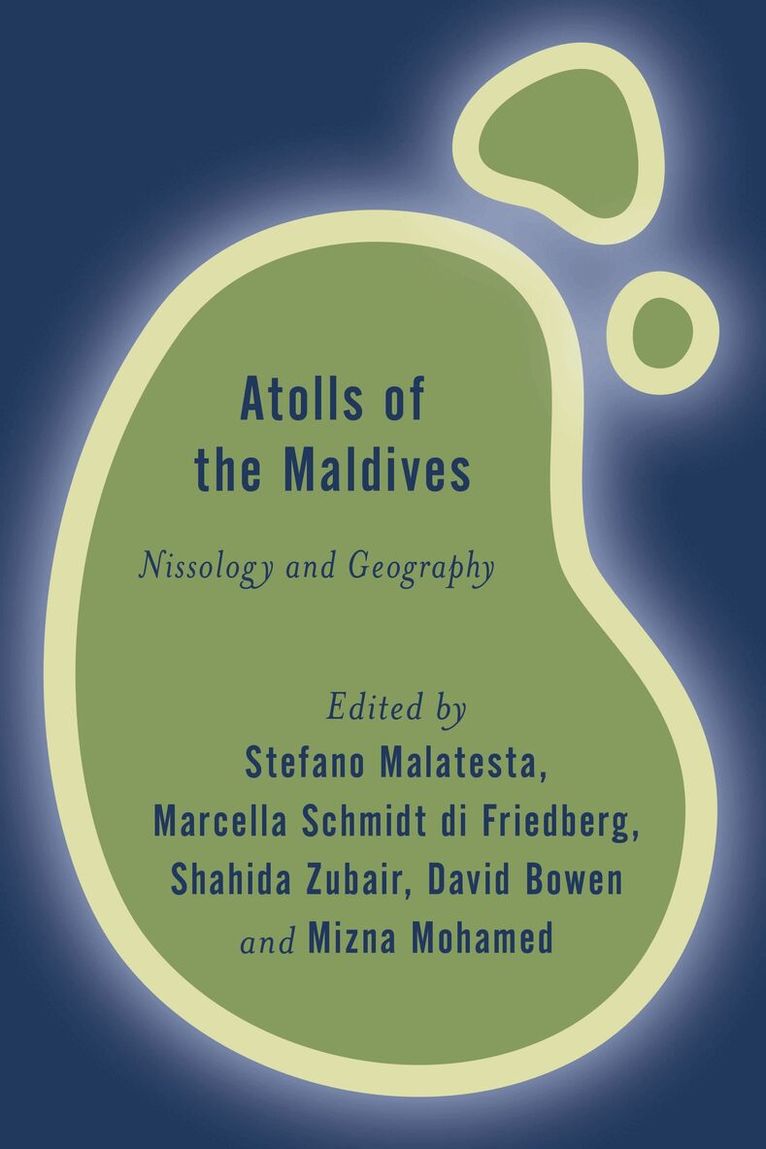
Beyond the tropical paradise and beyond the fear of climate change effects, the Maldives is a fascinating island country that faces social, cultural, economic and environmental transformations. Atolls of the Maldives: Nissology and Geography provides a spatial analysis on some key challenges the Maldivian society has to deal with, and guides the reader in the discovery of the human and environmental geography of this Indian Ocean archipelago. Geographers, political scientists, sociologists, geologists, biologists and experts in environmental policies help the audience to move through the complex systems of interrelations, connections and disconnections that shape the environment and the geography of this extraordinary archipelagic country.
Decolonising and Internationalising Geography
Essays in the History of Contested Science
Inbunden, Engelska, 2020
1 637 kr
Skickas inom 10-15 vardagar
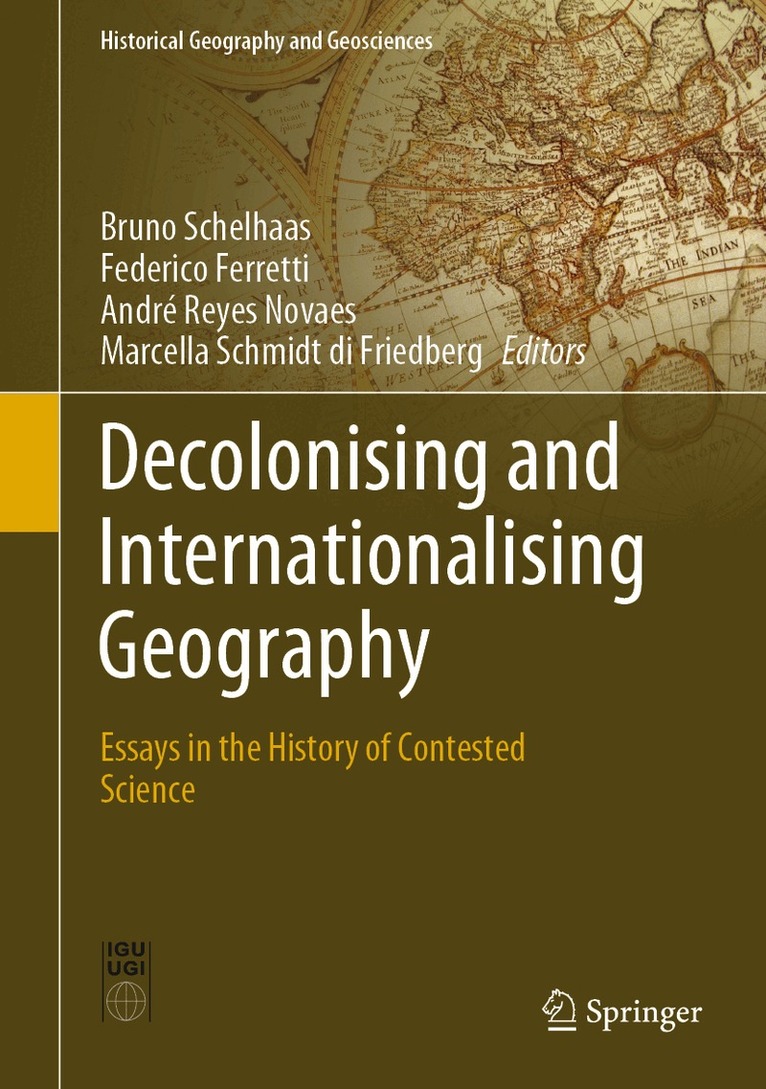
International scholarship is increasingly aware that the ‘geographical tradition’ is a contentious and contested field: while critical reflections on the imperial past of the discipline are still ongoing, new tendencies including de-colonial studies and geographies of internationalism are focusing on the progressive aspects of plural geographical traditions. This volume contains selected papers presented at two Symposia of the Commission on the History of Geography of the International Geographical Union within the 25th International Congress of History of Science and Technology which took place in Rio de Janeiro in July 2017.The papers address processes of ‘decolonising’ and ‘internationalising’ science in the 19th and 20th century, with a special emphasis on geography. Internationalization, circulation and dissemination of geographical concepts and ideas are in the focus. The volume includes case studies on Latin America, tropical regions as well as Europe and Japan. Thereis also an emphasis on the history of international congresses and organizations and on the international circulation of knowledge.
Decolonising and Internationalising Geography
Essays in the History of Contested Science
Häftad, Engelska, 2021
1 637 kr
Skickas inom 10-15 vardagar
International scholarship is increasingly aware that the ‘geographical tradition’ is a contentious and contested field: while critical reflections on the imperial past of the discipline are still ongoing, new tendencies including de-colonial studies and geographies of internationalism are focusing on the progressive aspects of plural geographical traditions. This volume contains selected papers presented at two Symposia of the Commission on the History of Geography of the International Geographical Union within the 25th International Congress of History of Science and Technology which took place in Rio de Janeiro in July 2017.The papers address processes of ‘decolonising’ and ‘internationalising’ science in the 19th and 20th century, with a special emphasis on geography. Internationalization, circulation and dissemination of geographical concepts and ideas are in the focus. The volume includes case studies on Latin America, tropical regions as well as Europe and Japan. Thereis also an emphasis on the history of international congresses and organizations and on the international circulation of knowledge.