Márcia Abreu – författare
Visar alla böcker från författaren Márcia Abreu. Handla med fri frakt och snabb leverans.
8 produkter
8 produkter
E-bok
PDF, Engelska, 2015530 kr
Läs direkt efter köp
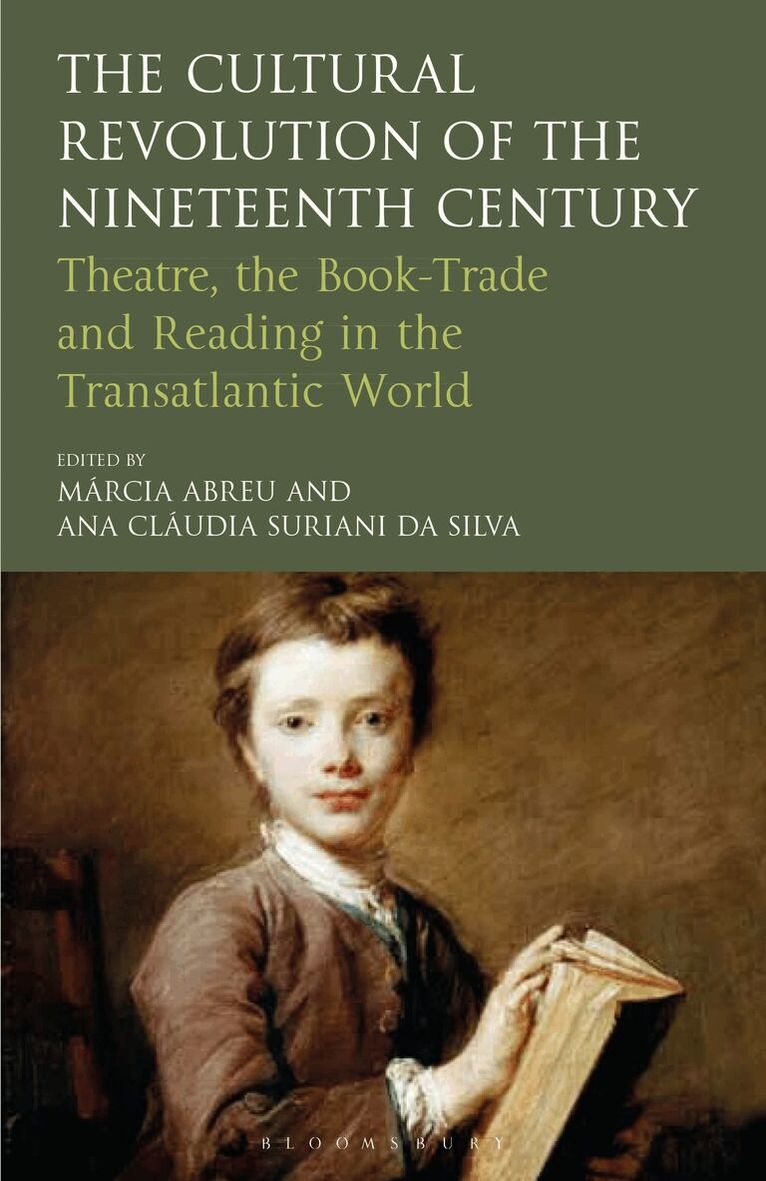
The beginnings of what we now call 'globalization' dates from the early sixteenth century, when Europeans, in particular the Iberian monarchies, began to connect 'the four parts of the world'. From the end of the eighteenth and throughout the nineteenth centuries, technical advancements, such as the growth of the European rail network and the increasing ease of international shipping, narrowed the physical and imagined distances between different parts of the globe. Books, printed matter and theatrical performances were a crucial part of this process and the so-called 'long nineteenth century' saw a remarkable increase in readership and technological improvements that significantly changed the production of printed matter and its relationship with culture. This book analyzes this sea-change in knowledge and sharing of ideas through the prism of the transatlantic diffusion of French, Brazilian, Portuguese and English print-cultures. In particular, it charts the circulation of printed matter, publishers, booksellers and actors between Europe and South America. Featuring a new original essay from Roger Chartier, The Cultural Revolution of the 19th Century is an essential new benchmark in global and transnational history.
E-bok
Engelska, 2015530 kr
Läs direkt efter köp
The beginnings of what we now call 'globalization' dates from the early sixteenth century, when Europeans, in particular the Iberian monarchies, began to connect 'the four parts of the world'. From the end of the eighteenth and throughout the nineteenth centuries, technical advancements, such as the growth of the European rail network and the increasing ease of international shipping, narrowed the physical and imagined distances between different parts of the globe. Books, printed matter and theatrical performances were a crucial part of this process and the so-called 'long nineteenth century' saw a remarkable increase in readership and technological improvements that significantly changed the production of printed matter and its relationship with culture. This book analyzes this sea-change in knowledge and sharing of ideas through the prism of the transatlantic diffusion of French, Brazilian, Portuguese and English print-cultures. In particular, it charts the circulation of printed matter, publishers, booksellers and actors between Europe and South America. Featuring a new original essay from Roger Chartier, The Cultural Revolution of the 19th Century is an essential new benchmark in global and transnational history.
Häftad, Engelska, 2020
494 kr
Skickas inom 10-15 vardagar
The beginnings of what we now call 'globalization' dates from the early sixteenth century, when Europeans, in particular the Iberian monarchies, began to connect 'the four parts of the world'. From the end of the eighteenth and throughout the nineteenth centuries, technical advancements, such as the growth of the European rail network and the increasing ease of international shipping, narrowed the physical and imagined distances between different parts of the globe. Books, printed matter and theatrical performances were a crucial part of this process and the so-called 'long nineteenth century' saw a remarkable increase in readership and technological improvements that significantly changed the production of printed matter and its relationship with culture. This book analyzes this sea-change in knowledge and sharing of ideas through the prism of the transatlantic diffusion of French, Brazilian, Portuguese and English print-cultures. In particular, it charts the circulation of printed matter, publishers, booksellers and actors between Europe and South America. Featuring a new original essay from Roger Chartier, The Cultural Revolution of the 19th Century is an essential new benchmark in global and transnational history.
Inbunden, Engelska, 2017
1 069 kr
Skickas inom 10-15 vardagar
This book brings a renewed critical focus to the history of novel writing, publishing, selling and reading, expanding its viewing beyond national territories. Relying on primary sources (such as advertisements, censorship reviews, publisher and bookstore catalogues), the book examines the paths taken by novels in their shifts between Europe and Brazil, investigates the flow of translations in both directions, pays attention to the successful novels of the time and analyses the critical response to fiction in both sides of the Atlantic. It reveals that neither nineteenth century culture can be properly understood by focusing on a single territory, nor literature can be fully perceived by looking only to the texts, ignoring their material existence and their place in social and economical practices.
E-bok
Engelska, 20171 378 kr
Läs direkt efter köp
This book brings a renewed critical focus to the history of novel writing, publishing, selling and reading, expanding its viewing beyond national territories. Relying on primary sources (such as advertisements, censorship reviews, publisher and bookstore catalogues), the book examines the paths taken by novels in their shifts between Europe and Brazil, investigates the flow of translations in both directions, pays attention to the successful novels of the time and analyses the critical response to fiction in both sides of the Atlantic. It reveals that neither nineteenth century culture can be properly understood by focusing on a single territory, nor literature can be fully perceived by looking only to the texts, ignoring their material existence and their place in social and economical practices.
Häftad, Engelska, 2018
1 069 kr
Skickas inom 10-15 vardagar
This book brings a renewed critical focus to the history of novel writing, publishing, selling and reading, expanding its viewing beyond national territories. Relying on primary sources (such as advertisements, censorship reviews, publisher and bookstore catalogues), the book examines the paths taken by novels in their shifts between Europe and Brazil, investigates the flow of translations in both directions, pays attention to the successful novels of the time and analyses the critical response to fiction in both sides of the Atlantic. It reveals that neither nineteenth century culture can be properly understood by focusing on a single territory, nor literature can be fully perceived by looking only to the texts, ignoring their material existence and their place in social and economical practices.
Häftad, Portugisiska, 2022
537 kr
Skickas inom 5-8 vardagar
E-bok
PDF, Spanska, 202296 kr
Läs direkt efter köp
Río de Janeiro, periodo colonial. La vida no era fácil para alguien que quería leer un libro. La Corona portuguesa impidió la impresión en Brasil hasta que la familia real se mudó allí durante el periodo de las invasiones napoleónicas. Antes y después del cambio, el contacto con los libros estuvo fuertemente controlado por los organismos de censura, que eran responsables de sancionar lo que se podía leer, escribir e imprimir. Sin embargo, no era imposible tener acceso a los libros. Sometiéndose a las exigencias de la censura o siguiendo los caminos de la ilegalidad, las obras llegaban a manos de quienes las buscaban: textos religiosos y de oficios eran muy apetecidos, pero también las bellas letras —especialmente la novela— gozaban de especial interés. Los caminos de los libros cuenta una parte de esta historia: cómo fue la censura en Portugal y Brasil, descubre los títulos más populares y arroja luces sobre los modos de lectura y las personas que habitaron ese mundo.