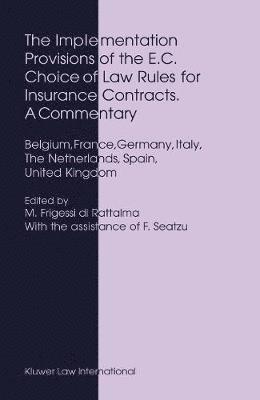
Marco Frigessi di Rattalma – författare
Visar alla böcker från författaren . Handla med fri frakt och snabb leverans.
5 produkter
5 produkter
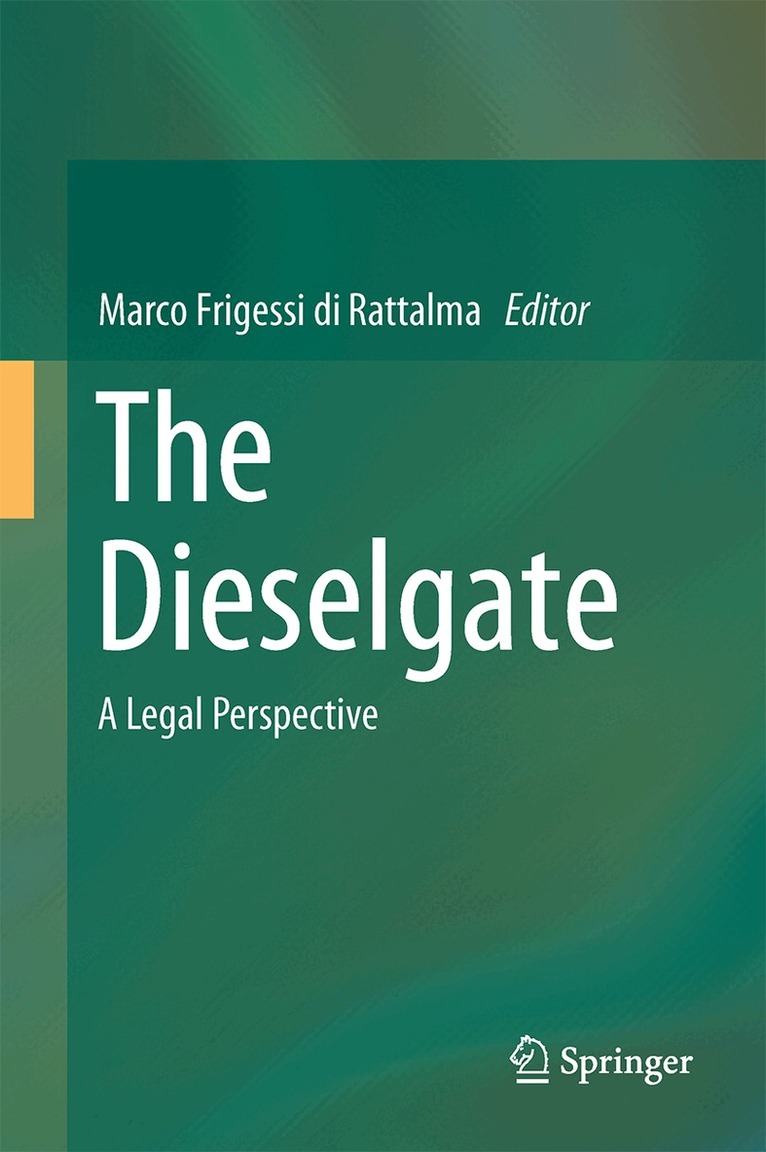
Inbunden, Engelska, 2017
1 491 kr
Skickas inom 10-15 vardagar
This book explains, compares and assesses the legal implications of Dieselgate within a range of selected jurisdictions and at the EU, international and comparative law level.The book analyses the US EPA-VW $14.7 billion dollar settlement of 2016, one of the largest civil settlements in the history of environmental law. As it shows, the Dieselgate affair has raised a host of issues concerning corporate and social responsibility, tort liability, environmental liability, contractual defective products, warranty, and false environmental claims in a range of jurisdictions. Issues like repurchasing or retrofitting cars from consumers and making direct payments to consumers through car buy-backs and compensation are analysed. Further, the book relates how Dieselgate has also contributed to the discussion about the introduction of more effective collective measures of redress for consumers, such as class actions, in Germany, France, Italy and the UK.The book subsequently reviews the criminal offences Volkswagen is currently confronted with in Germany, France and Italy, i.e. fraud and manipulation of capital markets (by belatedly providing shareholders with essential information relevant for the share value), and, potentially, environmental crimes. It demonstrates how Dieselgate has sparked new debates in Germany, Italy, France and the UK about the need to introduce enterprise liability for organised crimes, lack of compliance and control structures, and intentional violations of the law.Lastly, the book discusses how EU law has sought to respond to Dieselgate and thus investigates the controversial EU Regulation No. 2016/646 introducing a "temporary conformity factor" of 2.1 (equivalent to a 110% increase on the current limit) to be applied for NOx in the new RDE testing cycle, and the works of the EU committee of inquiry into Emissions Measurements in the Automotive Sector (EMIS).
E-bok
Engelska, 20171 449 kr
Läs direkt efter köp
This book explains, compares and assesses the legal implications of Dieselgate within a range of selected jurisdictions and at the EU, international and comparative law level.The book analyses the US EPA-VW $14.7 billion dollar settlement of 2016, one of the largest civil settlements in the history of environmental law. As it shows, the Dieselgate affair has raised a host of issues concerning corporate and social responsibility, tort liability, environmental liability, contractual defective products, warranty, and false environmental claims in a range of jurisdictions. Issues like repurchasing or retrofitting cars from consumers and making direct payments to consumers through car buy-backs and compensation are analysed. Further, the book relates how Dieselgate has also contributed to the discussion about the introduction of more effective collective measures of redress for consumers, such as class actions, in Germany, France, Italy and the UK.The book subsequently reviews the criminal offences Volkswagen is currently confronted with in Germany, France and Italy, i.e. fraud and manipulation of capital markets (by belatedly providing shareholders with essential information relevant for the share value), and, potentially, environmental crimes. It demonstrates how Dieselgate has sparked new debates in Germany, Italy, France and the UK about the need to introduce enterprise liability for organised crimes, lack of compliance and control structures, and intentional violations of the law.Lastly, the book discusses how EU law has sought to respond to Dieselgate and thus investigates the controversial EU Regulation No. 2016/646 introducing a "temporary conformity factor" of 2.1 (equivalent to a 110% increase on the current limit) to be applied for NOx in the new RDE testing cycle, and the works of the EU committee of inquiry into Emissions Measurements in the Automotive Sector (EMIS).
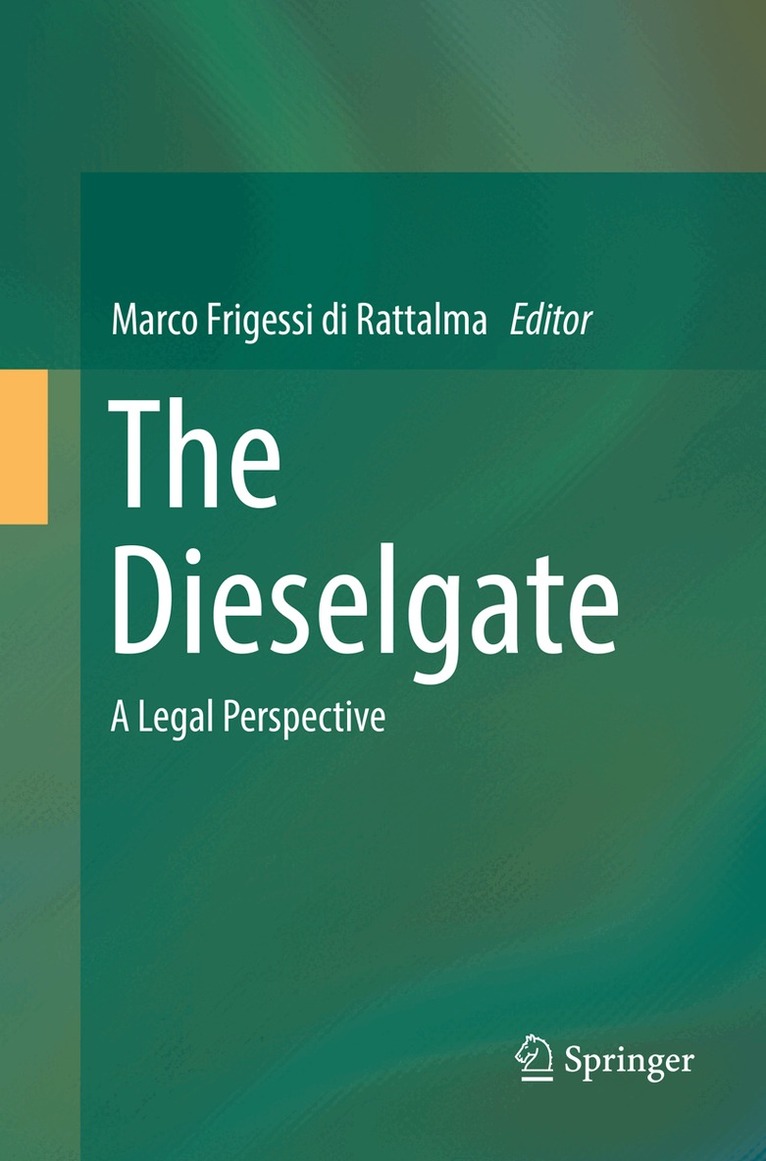
Häftad, Engelska, 2018
1 095 kr
Skickas inom 10-15 vardagar
This book explains, compares and assesses the legal implications of Dieselgate within a range of selected jurisdictions and at the EU, international and comparative law level.The book analyses the US EPA-VW $14.7 billion dollar settlement of 2016, one of the largest civil settlements in the history of environmental law. As it shows, the Dieselgate affair has raised a host of issues concerning corporate and social responsibility, tort liability, environmental liability, contractual defective products, warranty, and false environmental claims in a range of jurisdictions. Issues like repurchasing or retrofitting cars from consumers and making direct payments to consumers through car buy-backs and compensation are analysed. Further, the book relates how Dieselgate has also contributed to the discussion about the introduction of more effective collective measures of redress for consumers, such as class actions, in Germany, France, Italy and the UK.The book subsequently reviews the criminal offences Volkswagen is currently confronted with in Germany, France and Italy, i.e. fraud and manipulation of capital markets (by belatedly providing shareholders with essential information relevant for the share value), and, potentially, environmental crimes. It demonstrates how Dieselgate has sparked new debates in Germany, Italy, France and the UK about the need to introduce enterprise liability for organised crimes, lack of compliance and control structures, and intentional violations of the law.Lastly, the book discusses how EU law has sought to respond to Dieselgate and thus investigates the controversial EU Regulation No. 2016/646 introducing a "temporary conformity factor" of 2.1 (equivalent to a 110% increase on the current limit) to be applied for NOx in the new RDE testing cycle, and the works of the EU committee of inquiry into Emissions Measurements in the Automotive Sector (EMIS).
Inbunden, Engelska, 2004
996 kr
Skickas inom 10-15 vardagar
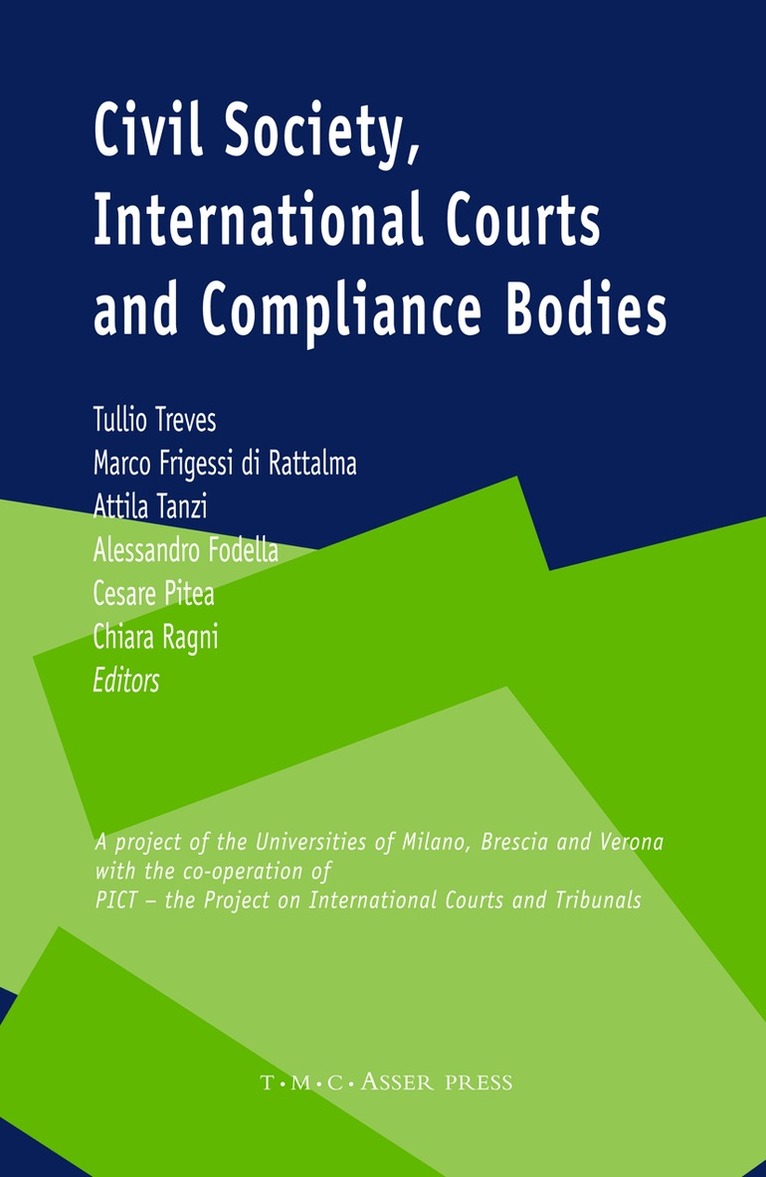
The well-publicized contributions of civil society in setting items on the international agenda, in developing new international treaties, in exercising pressure on States in favour of or against the ratification of such treaties and in assisting the functioning of new institutions has attracted the attention of scholars who discuss the presence and the role of ‘new actors’ on the international stage. The role of civil society as regards international courts and tribunals, as well as compliance mechanisms set up especially in the environmental field, may be less well-known but is certainly no less important. This book explores this crucial area.The attempt is timely and particularly relevant because of the continuous increase in the number of international courts, tribunals and compliance mechanisms. The areas of human rights, international criminal law and international environmental law are the main focus of the study, in the light of the well-established role of NGOs in Human Rights Courts and UN bodies as well as in the light of their remarkable success in setting up the International Criminal Court and the promising avenues which are now open in the compliance bodies of environmental law conventions. Broader questions and bodies such as the International Court of Justice, the International Tribunal for the Law of the Sea as well as European courts and tribunals are also included. The experience of a multinational group of academic scholars, judges and registrars of international tribunals, and experts from Non-Governmental Organizations, who have contributed to the book, provide it with the necessary variety of approaches and points of view.This book is based on the results of a research project by the Universities of Milan, Brescia and Verona, supported by the Italian Ministry for University and Research, and by PICT, the London-New York Project on International Courts and Tribunals. Tullio Treves is a Judge at theInternational Tribunal for the Law of the Sea and a Professor of International Law at the State University of Milano. Marco Frigessi di Rattalma teaches International Law at the University of Brescia. Attila Tanzi teaches International Law at the University of Verona. Alessandro Fodella teaches International Human Rights Protection at the University of Trento. Cesare Pitea and Chiara Ragni are research assistants at the University of Milan.
Häftad, Engelska, 2003
2 427 kr
Tillfälligt slut