Marco Norskov – författare
Visar alla böcker från författaren Marco Norskov. Handla med fri frakt och snabb leverans.
5 produkter
5 produkter
E-bok
PDF, Engelska, 2017790 kr
Läs direkt efter köp
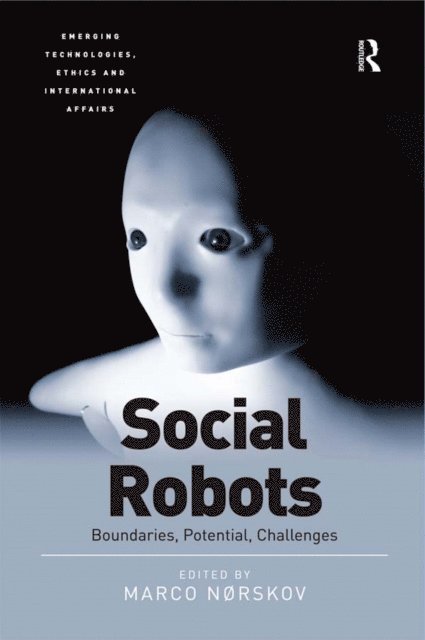
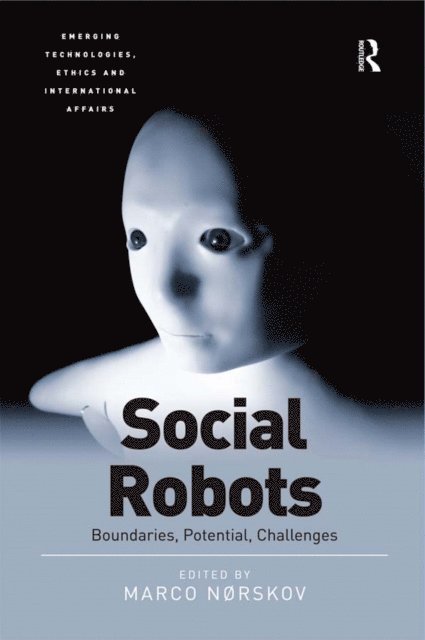
Social robotics is a cutting edge research area gathering researchers and stakeholders from various disciplines and organizations. The transformational potential that these machines, in the form of, for example, caregiving, entertainment or partner robots, pose to our societies and to us as individuals seems to be limited by our technical limitations and phantasy alone. This collection contributes to the field of social robotics by exploring its boundaries from a philosophically informed standpoint. It constructively outlines central potentials and challenges and thereby also provides a stable fundament for further research of empirical, qualitative or methodological nature.
E-bok
Engelska, 2017790 kr
Läs direkt efter köp
Social robotics is a cutting edge research area gathering researchers and stakeholders from various disciplines and organizations. The transformational potential that these machines, in the form of, for example, caregiving, entertainment or partner robots, pose to our societies and to us as individuals seems to be limited by our technical limitations and phantasy alone. This collection contributes to the field of social robotics by exploring its boundaries from a philosophically informed standpoint. It constructively outlines central potentials and challenges and thereby also provides a stable fundament for further research of empirical, qualitative or methodological nature.
1 605 kr
Skickas
The robotics industry is growing rapidly, and to a large extent the development of this market sector is due to the area of social robotics – the production of robots that are designed to enter the space of human social interaction, both physically and semantically. Since social robots present a new type of social agent, they have been aptly classified as a disruptive technology, i.e. the sort of technology which affects the core of our current social practices and might lead to profound cultural and social change.Due to its disruptive and innovative potential, social robotics raises not only questions about utility, ethics, and legal aspects, but calls for “robo-philosophy” – the comprehensive philosophical reflection from the perspectives of all philosophical disciplines. This book presents the proceedings of the first conference in this new area, “Robo-Philosophy 2014 – Sociable Robots and the Future of Social Relations, held in Aarhus, Denmark, in August 2014. The short papers and abstracts collected here address questions of social robotics from the perspectives of philosophy of mind, social ontology, ethics, meta-ethics, political philosophy, aesthetics, intercultural philosophy, and metaphilosophy.Social robotics is still in its early stages, but it is precisely now that we need to reflect its possible cultural repercussions. This book is accessible to a wide readership and will be of interest to everyone involved in the development and use of social robotics applications, from social roboticists to policy makers.
2 202 kr
Skickas
The subject of social robotics has enormous projected economic significance. However, social robots not only present us with novel opportunities but also with novel risks that go far beyond safety issues. It is a potentially highly disruptive technology which could negatively affect the most valuable parts of the fabric of human social interactions in irreparable ways. Since engineering educations do not yet offer the necessary competences to analyze, holistically assess, and constructively mitigate these risks, new alliances must be established between engineering and SSH disciplines, with special emphasis on the humanities (i.e. disciplines specializing in the analysis of socio-cultural interactions and human experience). The Robophilosophy Conference Series was established in 2014 with the purpose of creating a new forum and catalyzing the research discussion in this important area of applied humanities research, with focus on robophilosophy. Robophilosophy conferences have been the world’s largest venues for humanities research in and on social robotics. The book at hand presents the proceedings of Robophilosophy Conference 2020: Culturally Sustainable Social Robotics, the fourth event in the international, biennial Robophilosophy Conference Series, which brought together close to 400 participants from 29 countries. The speakers of the conference, whose contributions are collected in this volume, were invited to offer concrete proposals for how the Humanities can help to shape a future where social robotics is guided by the goals of enhancing socio-cultural values rather than by utility alone. The book is divided into 3 parts; Abstracts of Plenaries, which contains 6 plenary sessions; Session Papers, with 44 papers under 8 thematic categories; and Workshops, containing 25 items on 5 selected topics.Providing concrete proposals from philosophers and other SSH researchers for new models and methods, this book will be of interest to all those involved in developing artificial ‘social’ agents in a culturally sustainable way that is also – a fortiori – ethically responsible.
E-bok
Engelska, 20261 733 kr
Läs direkt efter köp
This book is about social robots and their disruptive potential with respect to social environments and cultural institutions. It seeks to develop an in-depth understanding and ethical analysis of how our cultural tenets are affected by the introduction of socially competent robotic technologies and how we can ensure that this will foster human well-being.Researchers around the world and from a variety of disciplines are exploring the many facets of this novel type of technology. This volume is comprised of state-of-the-art research contributions from leading experts within the field, providing a comprehensive exploration and elaboration of topics crucial to social robotics and cultural sustainability. The result is a unique book that brings together a variety of disciplines, including well-established experts within the field, as well as promising newcomers, highlighting the dynamics that are at play when social robots meet our various cultural institutions.