Marco Pellegrini – författare
Visar alla böcker från författaren Marco Pellegrini. Handla med fri frakt och snabb leverans.
7 produkter
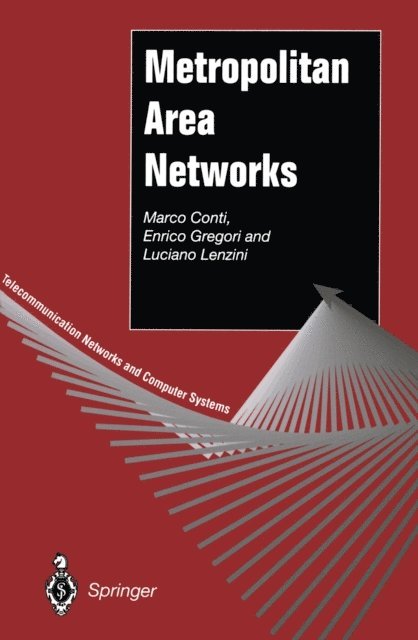
Metropolitan Area Networks
Av Luciano Lenzini, Enrico Gregori m. fl.
E-bok, 2012
1459 kr
Lägg i varukorg
With the continuing success of Local Area Networks (IANs), there is an increasing demand to extend their capabilities towards higher data rates and wider areas. This, together with the progress in fiber-optic technology, has given rise to the so-called Metropolitan Area Networks (MANs). MANs can …
Metropolitan Area Networks
Av Marco Pellegrini, Enrico Gregori m. fl.
Häftad, 2012
1094 kr
Lägg i varukorg
With the continuing success of Local Area Networks (IANs), there is an increasing demand to extend their capabilities towards higher data rates and wider areas. This, together with the progress in fiber-optic technology, has given rise to the so-called Metropolitan Area Networks (MANs). MANs can …
Colleoni Chapel and the Luogo Pio della Pietà
Guide
Av Stefano Incontro, Marco Pellegrini m. fl.
Häftad, 2027
167 kr
Kommande
Commissioned around 1470 by the commander Bartolomeo Colleoni and designed by the architect and sculptor Giovanni Antonio Amadeo, the chapel, situated in Bergamo, represents one of the finest examples of Lombard Renaissance architecture. Its façade, richly decorated with polychrome marble inlays, …
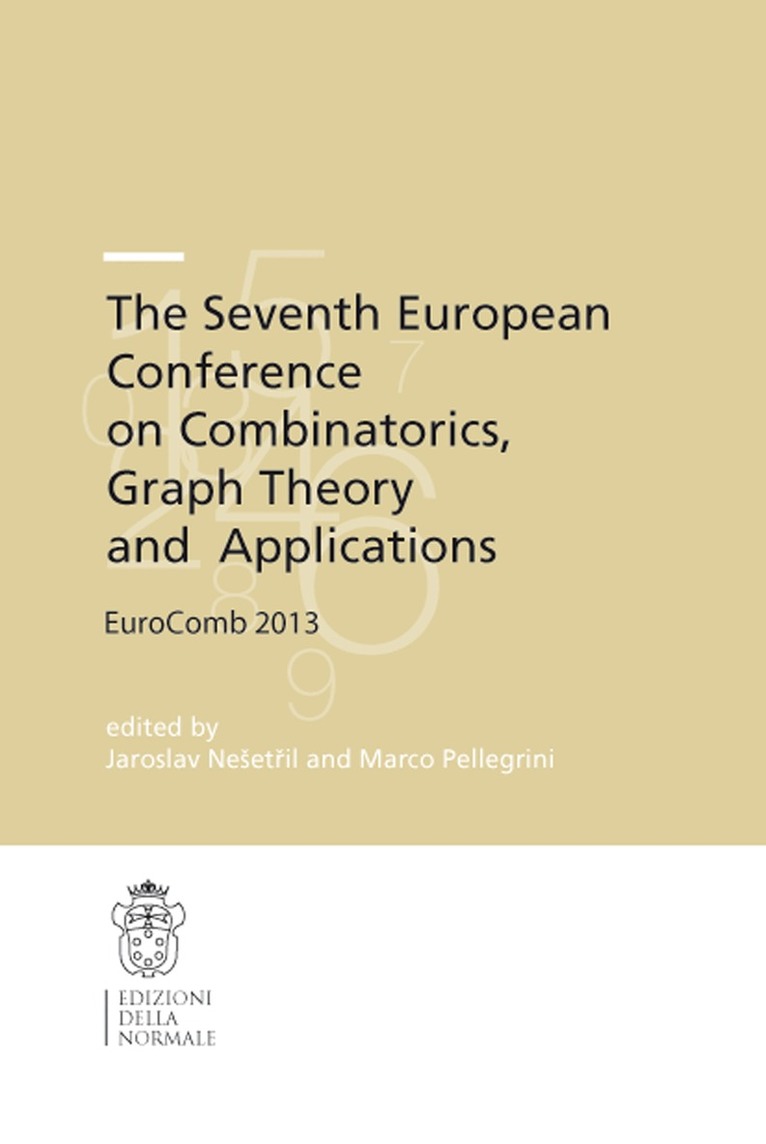
Seventh European Conference on Combinatorics, Graph Theory and Applications
EuroComb 2013
Av Jaroslav Nešetřil, Marco Pellegrini
Häftad, 2013
310 kr
Lägg i varukorg
In the tradition of EuroComb'01 (Barcelona), Eurocomb'03 (Prague), EuroComb'05 (Berlin), Eurocomb'07 (Seville), Eurocomb'09 (Bordeaux), and Eurocomb'11 (Budapest), this volume covers recent advances in combinatorics and graph theory including applications in other areas of mathematics, computer …
Seventh European Conference on Combinatorics, Graph Theory and Applications
EuroComb 2013
Av Marco Pellegrini, Jaroslav Nesetril
E-bok, 2014
408 kr
Lägg i varukorg
In the tradition of EuroComb''01 (Barcelona), Eurocomb''03 (Prague), EuroComb''05 (Berlin), Eurocomb''07 (Seville), Eurocomb''09 (Bordeaux), and Eurocomb''11 (Budapest), this volume covers recent advances in combinatorics and graph theory including applications in other areas of mathematics, …
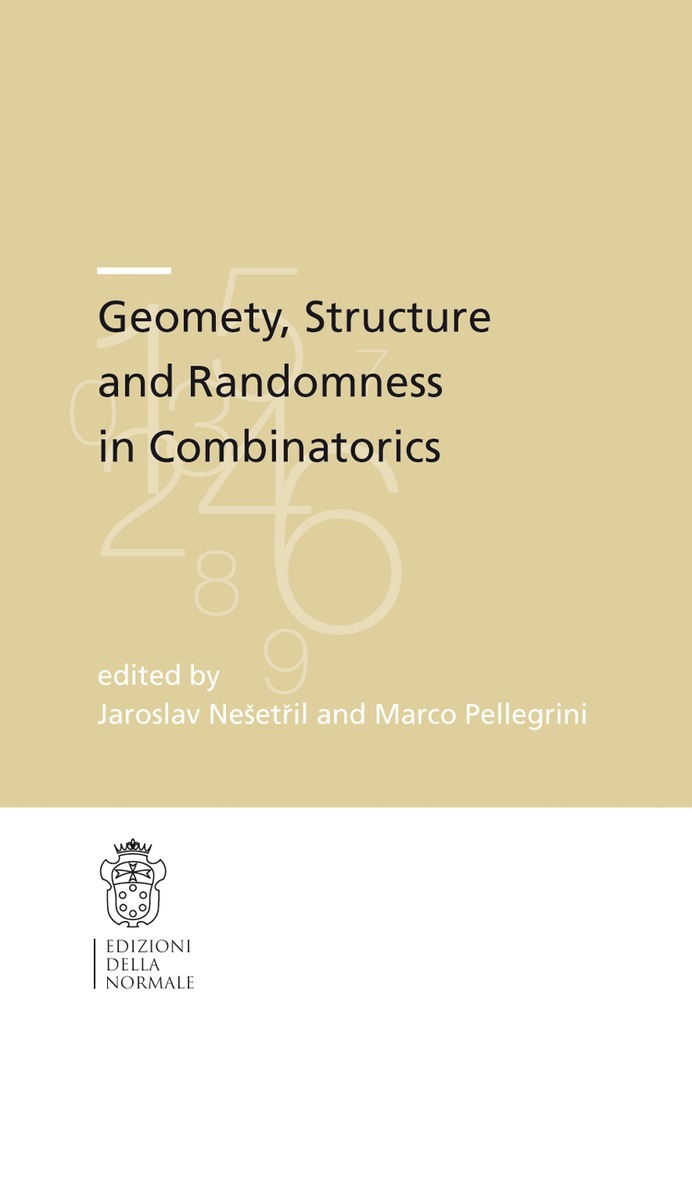
Geometry, Structure and Randomness in Combinatorics
Av Jiří Matousek, Jaroslav Nešetřil m. fl.
Häftad, 2015
310 kr
Lägg i varukorg
This book collects some surveys on current trends in discrete mathematics and discrete geometry. The areas covered include: graph representations, structural graphs theory, extremal graph theory, Ramsey theory and constrained satisfaction problems.
Geometry, Structure and Randomness in Combinatorics
Av Marco Pellegrini, Jaroslav Nesetril m. fl.
E-bok, 2015
408 kr
Lägg i varukorg
This book collects some surveys on current trends in discrete mathematics and discrete geometry. The areas covered include: graph representations, structural graphs theory, extremal graph theory, Ramsey theory and constrained satisfaction problems.