Marcus Evans - Böcker
Visar alla böcker från författaren Marcus Evans. Handla med fri frakt och snabb leverans.
6 produkter
6 produkter
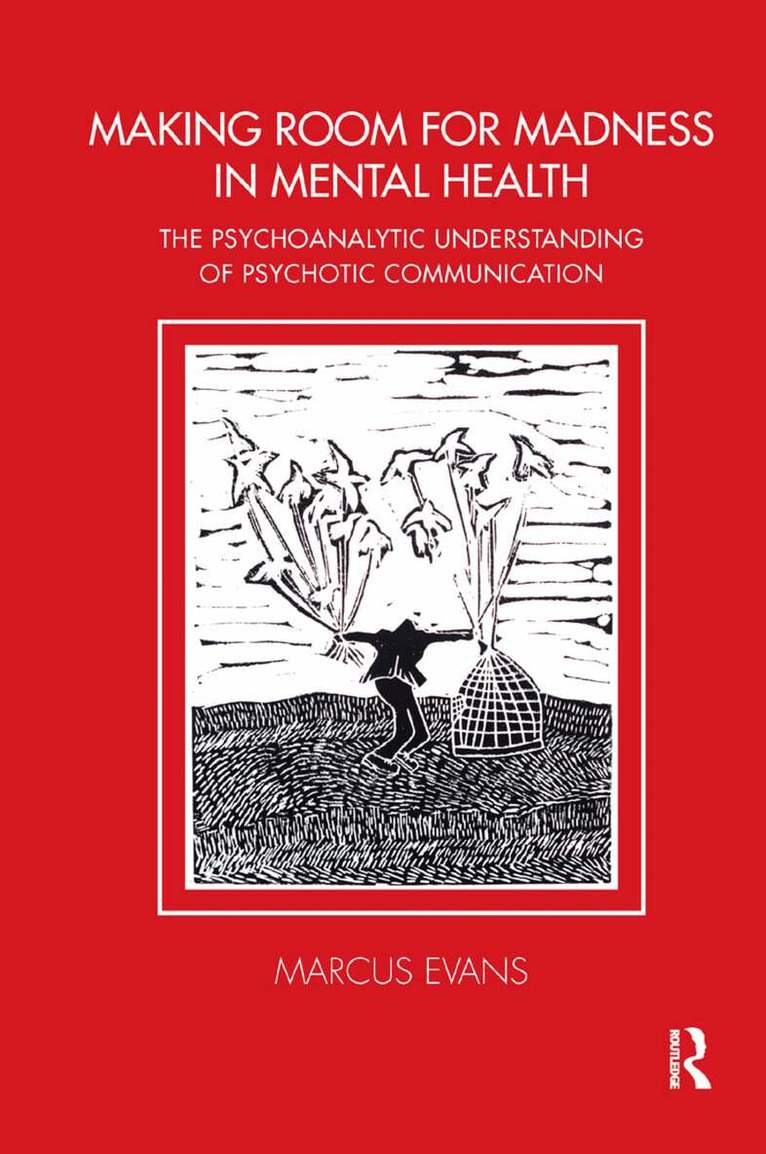
Making Room for Madness in Mental Health
The Psychoanalytic Understanding of Psychotic Communication
Inbunden, Engelska, 2019
2 028 kr
Skickas inom 10-15 vardagar
In this book, Marcus Evans makes a strong case for the importance of psychoanalytic supervision in mental health practice and its role in helping frontline staff to "tune in" to their patients' unconscious communications or the "psychotic wavelength".
1 766 kr
Skickas inom 10-15 vardagar
This book demonstrates the use of psychoanalytic thinking in front-line mental health settings and aims to make an approach to working with emotional and mental disturbance available to a wide range of clinicians within psychiatric and other mental health settings. Rooted in the author’s extensive clinical experiences, the approach explored in this book applies psychoanalytic thinking and discusses this in relation to the mental health conditions regularly encountered in psychiatric settings, such as Schizophrenia, Manic Depression, Psychotic Depression, Anorexia, Deliberate Self Harm, and Personality Disorder. The book therefore provides valuable and practical ways of working with these difficult, complex, and problematic conditions. It further makes sense of the relationships and emotions encountered when working in these settings and introduces possibilities for more effective and rewarding ways of working, including a model of support through supervision, reflective practice, and clinical discussion. Illustrated by clinical examples from more than four decades of experience in the field, this book is ideal for the interested mental health practitioner.
439 kr
Skickas inom 10-15 vardagar
This book demonstrates the use of psychoanalytic thinking in front-line mental health settings and aims to make an approach to working with emotional and mental disturbance available to a wide range of clinicians within psychiatric and other mental health settings. Rooted in the author’s extensive clinical experiences, the approach explored in this book applies psychoanalytic thinking and discusses this in relation to the mental health conditions regularly encountered in psychiatric settings, such as Schizophrenia, Manic Depression, Psychotic Depression, Anorexia, Deliberate Self Harm, and Personality Disorder. The book therefore provides valuable and practical ways of working with these difficult, complex, and problematic conditions. It further makes sense of the relationships and emotions encountered when working in these settings and introduces possibilities for more effective and rewarding ways of working, including a model of support through supervision, reflective practice, and clinical discussion. Illustrated by clinical examples from more than four decades of experience in the field, this book is ideal for the interested mental health practitioner.
Making Room for Madness in Mental Health
The Psychoanalytic Understanding of Psychotic Communication
Häftad, Engelska, 2016
523 kr
Skickas inom 10-15 vardagar
In this book, Marcus Evans argues that in addition to providing a helpful treatment for patients who suffer from serious psychological difficulties, psychoanalytic thinking can also help mental health staff develop a better understanding of their patients and complement other ways of thinking about mental disturbance. Mental health professionals need to be receptive to their patients' projections and communications, but these powerful projections can become overwhelming, especially for clinicians who are in direct contact with their patients for long periods of time. A psychoanalytic model which puts the understanding of the relationship between the clinician and patient at the centre of its preoccupations can also give mental health professionals a language for describing their experiences of, and interactions with, their patients. This model is developmental and provides a dynamic picture of the ways in which different parts of the patient's self wrestle for control of the patient's mind over time. Evans argues that this framework for understanding can help in the day-to-day management of these changes and fluctuations. Evans believes that the diagnosis and active interventions employed by psychiatry need to be accompanied by a receptive approach to treatment and care. Mental health professionals need to be interested in the meaning of their patient's symptoms and verbal and physical communications. These may convey important information about the patient's internal world and underlying conflicts. This receptive approach requires mental health professionals to make a switch from the active state of mind demanded by active interventions, to the receptive state of mind required by the need to take in the patient's emotional state and underlying personality structure. Making Room for Madness in Mental Health draws on the author's extensive experience of working psychoanalytically with people with severe and enduring mental illness, as well as providing psychoanalytic supervision and consultation in a range of mental health settings to show how psychoanalytic ways of thinking may complement other approaches to mental disturbance by highlighting the communication and meaning of such disturbance. This is illuminated by lively clinical vignettes, supported by accessible accounts of key psychoanalytic theory. Working with people with mental illness can be rewarding and enlightening. It can also be disturbing, frightening, boring, frustrating, anxiety provoking and stupefying. Evans argues that we need to provide room and space for mental health professionals to reflect upon and think about their experiences on a day-to-day basis, and to train clinicians to senior levels in order that they can offer clinical supervision to front-line staff, which can help them develop ideas about the meaning of their patients' symptoms and behaviours. Psychoanalysis offers a model for thinking about and providing meaning for, the anxieties that drive us 'out of our minds', and this can reduce the risk of thoughtless action. To some extent this involves putting the madness back into mental health.
Identity and the Foundational Myth
Psychoanalytic Insights into Gender Distress
Häftad, Engelska, 2025
385 kr
Skickas inom 5-8 vardagar
The concept of identity is complex and affected by personal and cultural pressures. No more so than during adolescence, a time when we endeavour to find out who we truly are as our minds and bodies go through many changes, we start to disidentify with our families, and we are exposed to group attitudes and pressures. For many adolescents, puberty can feel like an unwanted betrayal by their own bodies. Their changing physicality seems to pull them further away from the self they imagine or wish to be and they struggle to reconcile their physical form with their sense of self. This book explores gender distress through the lens of early childhood development with a focus on and elaboration of developmental interpretations and corresponding psychotherapeutic approaches. It builds on the work of Evans’ previous book, co-authored with Susan Evans, Gender Dysphoria: A Therapeutic Model for Working with Children, Adolescents and Young Adults (2021). As with his first book, it is based on continuous learning gained through clinical work with different patient groups. The analyst’s role is to remain curious and help patients explore and understand themselves in every aspect of their lives. Evans uses composite cases to chart the progression of therapy and show how psychological support can help individuals. The book includes a Preface from R. D. Hinshelwood and Foreword from Ron Britton. It is essential reading for all clinicians, practising therapists and trainees, as well as any other professionals who work with adolescents and young people.
Gender Dysphoria
A Therapeutic Model for Working with Children, Adolescents and Young Adults
Häftad, Engelska, 2021
376 kr
Skickas inom 5-8 vardagar
In recent years, there has been an explosion in the number of children and young people who diagnose themselves as gender dysphoric, or trans. In the UK, and worldwide, there is a growing tendency to refer them on to ‘specialist’ gender services almost as soon as they express any confusion or distress about their biological sex or gender identity. Due to the rapidly rising numbers and various pressures on the system, patients are increasingly likely to be offered life-altering medication and/or surgical treatments, often with little exploration of their emotional world.As so little is yet known or understood regarding this increase in gender incongruent patients, it seems precipitous to proceed onto physical treatments before any assessment work is undertaken. Many who present as gender dysphoric have complex needs with comorbid problems such as autism, histories of abuse or trauma, social phobias, depression, eating disorders, and other mental health symptoms. Therefore, all aspects of the individual’s life deserve thorough assessment and therapeutic work.This book is aimed primarily at clinicians working in the field to provide a model for understanding, assessing, and treating gender dysphoria. The model uses a psychoanalytic framework to help explain disturbed states of mind and how psychic defences can be enlisted unconsciously to avoid overwhelming psychic pain. This offers professionals a way of trying to think with, and offer understanding to, their trans identifying clients. Clinical examples are given to illustrate these processes and promote the understanding of transgender children, adolescents, and young people and their internal worlds, their thinking, and their interpersonal relationships. As well as clinical exploration and understanding, the book includes an overview of the current political, social, and clinical environments which have all impacted on the clinical care of trans identifying individuals.As well as professional and trainee clinicians, this book might also prove useful to parents, other professionals, and possibly the gender dysphoric person too.