Marcus Kohler – författare
Visar alla böcker från författaren Marcus Kohler. Handla med fri frakt och snabb leverans.
2 produkter
2 produkter
E-bok
PDF, Tyska, 2012836 kr
Läs direkt efter köp
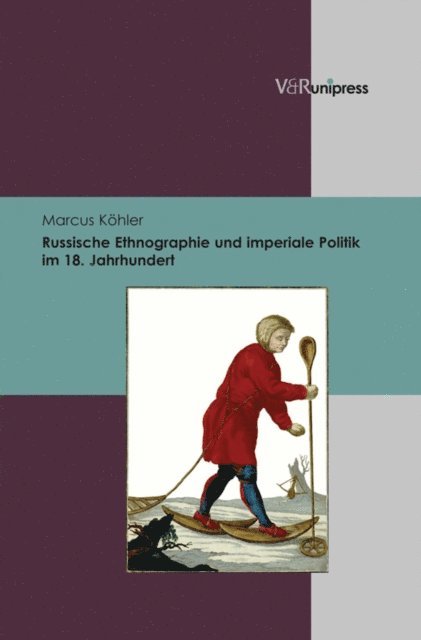
In this study, Marcus Köhler describes the development of ethnography in Russia in terms of a differentiation of a separate scientific discipline at the threshold between imperial expansion, scientific zeal and new initiative. He analyses reports on the great exploratory expeditions of the 18th century to Siberia and the Caucasus for the first time in the light of the development of ethnology in Russia. What interests did Imperial Russia pursue with the study of the ethnic groups on its periphery? How did the explorers, who were predominantly West Europeans, perceive the ethnic groups of the Empire and what scientific statements did they make about them? How did the Centre deal with the increasing complexity of its multi-ethnic empire? It would seem fitting to conclude that for the territorial empire Russia not all questions can be answered using blueprints from the overseas expansion of Western Europe. Russian ethnography was based on other interests and strategies.
E-bok
PDF, Engelska, 2018479 kr
Läs direkt efter köp
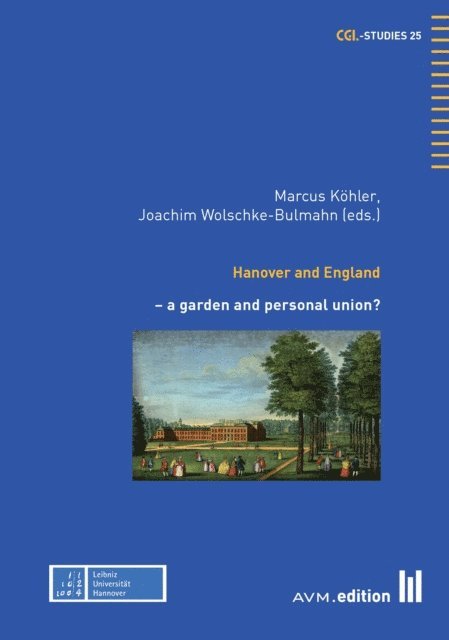
When George I, Elector of Hanover, was crowned King of England in 1714, he established a dynastic union between the two countries that endured until 1837, leaving many cultural and political accomplishments to posterity. The 300th anniversary of this union led the Institute of Landscape Architecture, Technische Universität Dresden, and the Centre of Garden and Landscape Architecture (CGL), Leibniz Universität Hannover, to take a critical look at the gardens that resulted. The symposium "Hanover and England: a union of state and garden / German and British garden culture between 1714 and today" was sponsored by the Lower Saxonian Ministry of Science and Culture. The resulting papers dealt with far more than garden history, addressing as well the background and channels by which ideas on art, agriculture, commerce, technology, literature and politics were exchanged. Given the encyclopedic interests of late 18th century thinkers, it was necessary to invite several academic disciplines to participate, in order to describe and discuss the cultural transfer between Great Britain and Hanover. The transfer of horticultural and artistic ideas very often flourished in the 19th century at different places. For this reason, the conference focused on two key aspects: the Hanoverian-British exchange between 1714 and 1837 (the period of the actual royal union) and the Anglo-German relations that endure to the present day.Als Georg I., Kurfürst von Hannover, 1714 zum König von England gekrönt wurde, begründete dies eine Personalunion zwischen den beiden Ländern, die bis 1837 bestand und der Nachwelt eine Vielzahl kultureller und politischer Errungenschaften hinterließ. Das 300-jährige Jubiläum dieses Zusammenschlusses nahmen das Institut für Landschaftsarchitektur der Technischen Universität Dresden und das Zentrum für Gartenkunst und Landschaftsarchitektur (CGL) der Leibniz Universität Hannover zum Anlass, sich kritisch mit den in dieser Zeit entstandenen Gärten auseinanderzusetzen. Das Symposium "Hanover and England: a union of state and garden / German and British garden culture between 1714 and today" wurde vom Niedersächsischen Ministerium für Wissenschaft und Kultur gefördert. Die Beiträge beschäftigten sich nicht nur mit Gartengeschichte, sondern widmeten sich auch dem Austausch von Ideen zu Kunst, Landwirtschaft, Handel, Technologie, Literatur und Politik. So schien es sinnvoll, unterschiedliche akademische Disziplinen zur Teilnahme einzuladen, um den kulturellen Transfer zwischen Großbritannien und Hannover zu untersuchen und zu diskutieren. Die Konferenz konzentrierte sich auf zwei Schlüsselaspekte: den hannoverisch-britischen Austausch zwischen 1714 und 1837 (die Zeit der Personalunion) und die deutsch-englischen Beziehungen, die bis heute andauern.