Mareile Schramm – författare
319 kr
1 452 kr
Läs direkt efter köp
The book introduces beginning university students of English to the study of English linguistics. The major difference between this book and its potential competitors lies in its hands-on didactic orientation, with a strong focus on linguistic analysis and argumentation. Language and linguistic theory are approached from a strictly empirical perspective: given a certain set of data to be accounted for, certain theoretical and methodological problems must be solved in order to analyze and understand the data properly. Thus, the theoretical apparatus is crucially developed in conversation with the data, and not presented as a set of given facts. After having worked with the book, the students should be able to use necessary methodological tools to obtain relevant data (such as corpora, dictionaries, experiments), and to systematically analyze their data and relate their findings to theoretical problems. The book is not written from the perspective of a particular theoretical framework and draws on insights from various research traditions. Introduction to English Linguistics concentrates on gaining expertise and analytical skills in the traditional core areas of linguistics, i.e. phonology, morphology, syntax, semantics and pragmatics. The final chapter on "Extensions and applications" widens the perspective to other areas of linguistic research, such as historical, socio- and psycholinguistics. Exercises and a glossary are also provided.
310 kr
Läs direkt efter köp
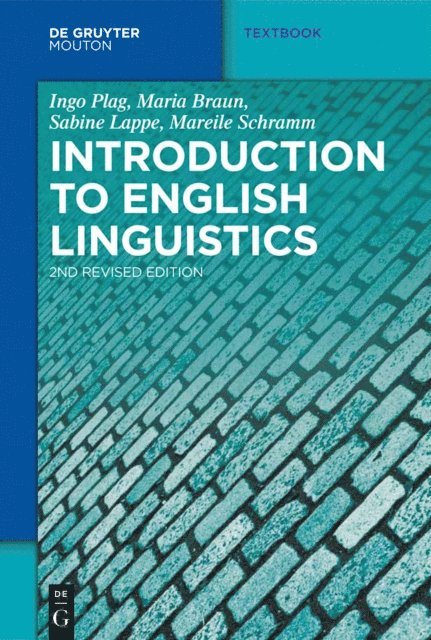
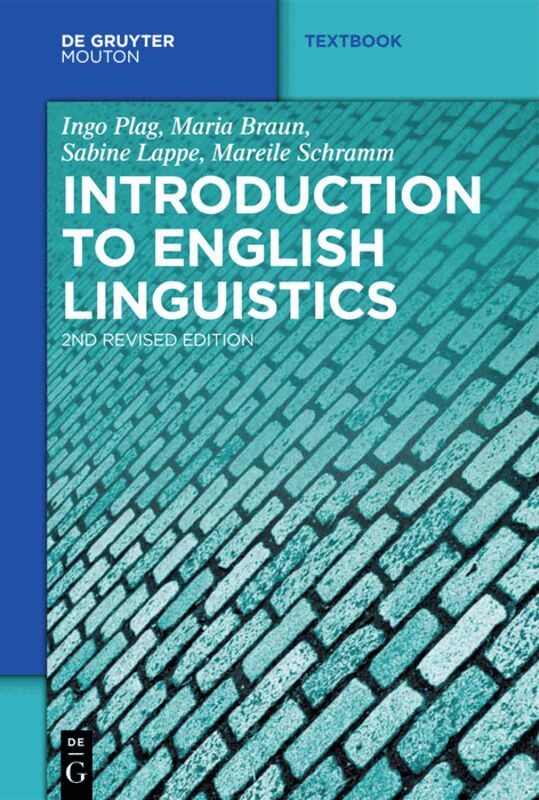
This successful textbook introduces beginning university students of English to the study of English linguistics. Now updated and expanded, the second edition features a more detailed discussion of the differences between British and North American English, and explains the differences in the two traditions of phonetic transcription.
The major difference between this book and its potential competitors lies in its hands-on didactic orientation, with a strong focus on linguistic analysis and argumentation. Language and linguistic theory are approached from a strictly empirical perspective: given a certain set of data to be accounted for, theoretical and methodological problems must be solved in order to analyze and understand the data properly. The book is not written in the perspective of a particular theoretical framework and draws on insights from various research traditions. Introduction to English Linguistics concentrates on gaining expertise and analytical skills in the traditional core areas of linguistics, i.e. phonology, morphology, syntax, semantics and pragmatics. The final chapter on "Extensions and applications" widens the perspective to other areas of linguistic research, such as historical, socio- and psycholinguistics. Each chapter is accompanied by exercises and suggestions for further reading. A glossary and an index facilitate access to terms and topics.
1 744 kr
Skickas inom 5-8 vardagar
1 748 kr
Läs direkt efter köp
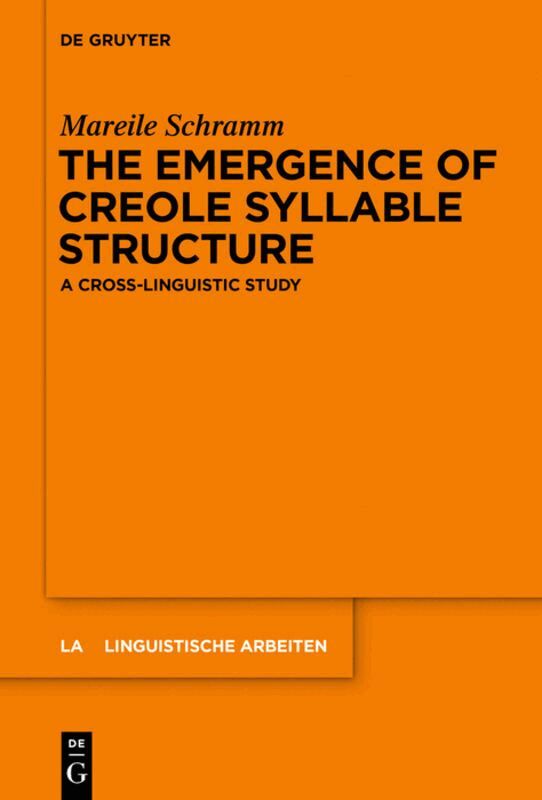
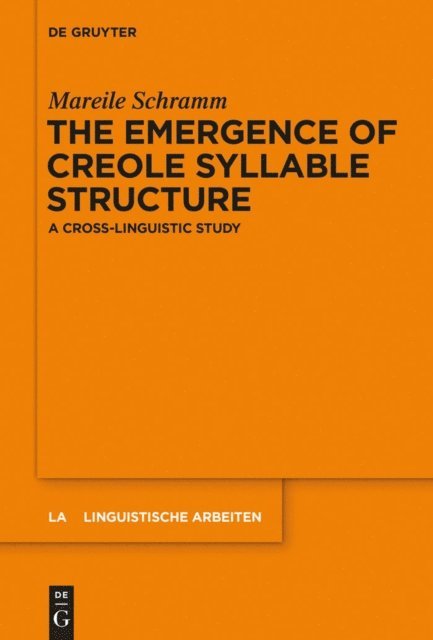
This book investigates syllable structure and phonotactic restructuring in six Caribbean creoles with Dutch, English and French as main lexifier languages. The earliest reliable data available for each creole are analysed statistically to determine which lexifier structures are retained in the creole, which ones undergo restructuring (and at which rates) and which restructuring mechanisms are preferred in case of repair. The description of creole structures is kept as theory-neutral as possible to make the analysis meaningful to researchers working in different theoretical frameworks. The investigation reveals that, although some structures are more commonly permitted than others, there is considerable cross-creole variation, especially with respect to word-final structures. This variation concerns both permissible structures and the preferred choice among different repair strategies. It is shown that the vast majority of the observed patterns can receive a plausible explanation if we assume that L1 transfer, substrate levelling and (partial) L2 acquisition feature prominently among the mechanisms in creolisation. The findings thus provide support for recent SLA approaches to the emergence of creole phonology (Plag 2009, Uffmann 2009).
310 kr
Läs direkt efter köp
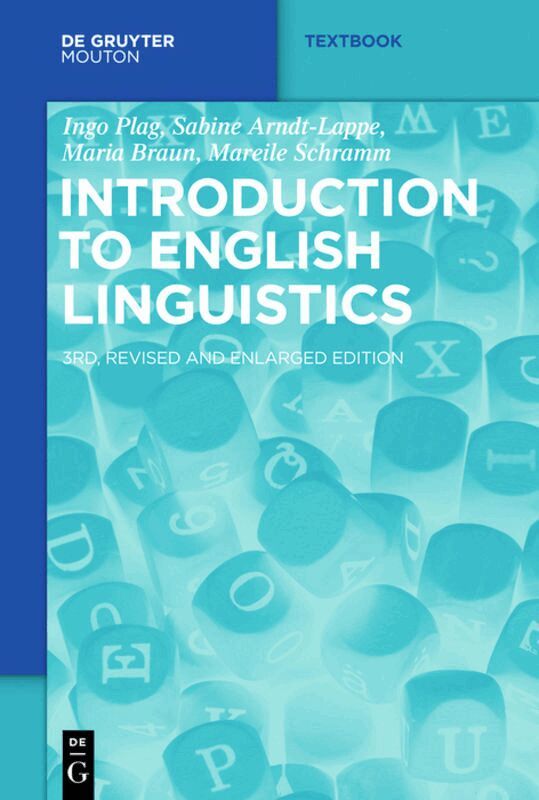
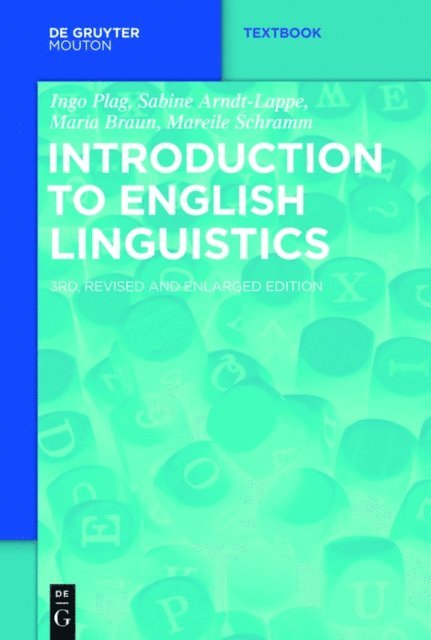
The new and updated third edition of this highly successful textbook contains an additional chapter that presents modern empirical research methods in the form of exemplary small-scale studies. In these projects the authors invite the reader to develop and address research questions from phonetics/phonology, morphology and syntax. The pertinent experimental and corpus-linguistic techniques are introduced and students are familiarized with some basic statistical tools necessary for the analysis of the data. The major difference between this book and its potential competitors lies in its hands-on didactic orientation, with a strong focus on linguistic analysis and argumentation. Language and linguistic theory are approached from a strictly empirical perspective: given a certain set of data to be accounted for, theoretical and methodological problems must be solved in order to analyze and understand the data properly. The book is not written from the perspective of a particular theoretical framework and draws on insights from various research traditions. Introduction to English Linguistics concentrates on gaining expertise and analytical skills in the traditional core areas of linguistics, i.e. phonology, morphology, syntax, semantics and pragmatics. The chapter on "Extensions and applications" widens the perspective to other areas of linguistic research, such as historical, socio- and psycholinguistics. Each chapter is accompanied by exercises and suggestions for further reading. A glossary and an index facilitate access to terms and topics.
1 748 kr
Läs direkt efter köp
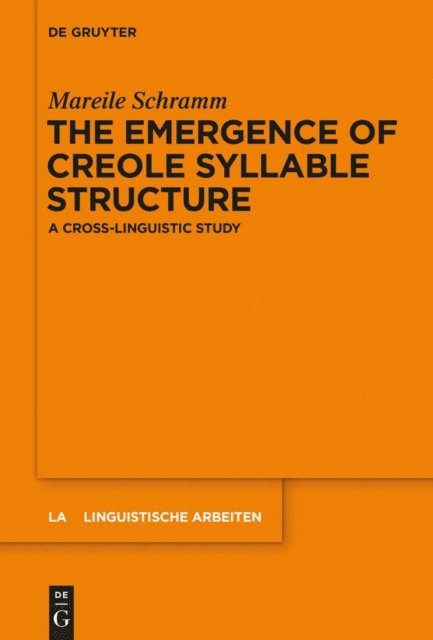
This book investigates syllable structure and phonotactic restructuring in six Caribbean creoles with Dutch, English and French as main lexifier languages. The earliest reliable data available for each creole are analysed statistically to determine which lexifier structures are retained in the creole, which ones undergo restructuring (and at which rates) and which restructuring mechanisms are preferred in case of repair. The description of creole structures is kept as theory-neutral as possible to make the analysis meaningful to researchers working in different theoretical frameworks. The investigation reveals that, although some structures are more commonly permitted than others, there is considerable cross-creole variation, especially with respect to word-final structures. This variation concerns both permissible structures and the preferred choice among different repair strategies. It is shown that the vast majority of the observed patterns can receive a plausible explanation if we assume that L1 transfer, substrate levelling and (partial) L2 acquisition feature prominently among the mechanisms in creolisation. The findings thus provide support for recent SLA approaches to the emergence of creole phonology (Plag 2009, Uffmann 2009).
310 kr
Läs direkt efter köp
The new and updated third edition of this highly successful textbook contains an additional chapter that presents modern empirical research methods in the form of exemplary small-scale studies. In these projects the authors invite the reader to develop and address research questions from phonetics/phonology, morphology and syntax. The pertinent experimental and corpus-linguistic techniques are introduced and students are familiarized with some basic statistical tools necessary for the analysis of the data. The major difference between this book and its potential competitors lies in its hands-on didactic orientation, with a strong focus on linguistic analysis and argumentation. Language and linguistic theory are approached from a strictly empirical perspective: given a certain set of data to be accounted for, theoretical and methodological problems must be solved in order to analyze and understand the data properly. The book is not written from the perspective of a particular theoretical framework and draws on insights from various research traditions. Introduction to English Linguistics concentrates on gaining expertise and analytical skills in the traditional core areas of linguistics, i.e. phonology, morphology, syntax, semantics and pragmatics. The chapter on "Extensions and applications" widens the perspective to other areas of linguistic research, such as historical, socio- and psycholinguistics. Each chapter is accompanied by exercises and suggestions for further reading. A glossary and an index facilitate access to terms and topics.