
Concern for humanity’s future has never been more urgent than now - in the present time - when humanity has achieved the level of capability of destroying itself either through environmental disasters or nuclear wars. On the other hand, we have also achieved material and psychological knowledge and progress that can assist us in understanding not only the causation, but also the potential embedded in human nature, to choose either the path to self-destruction or to sustained peace. In this book, we present both the ubiquitous causes of violent discontent and wars and successful attempts to reduce or resolve conflict. Our authors from five continents represent historic, military, philosophical, socio-political, and psychological perspectives and address some of the important issues which any peace-oriented initiative or society at large must contend with. These refer to access to natural resources, ethnicity, religion, human rights, political systems (whether democratic or autocratic), differences in political and military strength and WMDs, and aspirations of the leaders - in combination with the ubiquitous need for control through domination, historic traditions (such as glorification of war effort as heroism and as a sacrifice in the name of lofty ideas). We offer a vision of a humanistic approach to promote peaceful problem solving that needs to be propagated by education, media, political programs and diplomacy in order to lead to peaceful transformations. The role of the military is given special attention. The novelty of our approach is that we address the typical life situations leading to social unrest and wars within the context of the human mind’s capabilities to deal with life challenges. Our Challenge-Resilience-Resourcefulness-Wisdom model (previously published by NOVA) shows how we can study and analyse human errors, regressive tendencies and limitations in order to reframe them as an inspiration for optimal and wise decisions. Based on our authors’ insights, we provide many descriptions of how to deal with social adversity in different locations of the world and also examples of actual successes and failures of peaceful transformations. These chapters provide important knowledge and tools for a wide range of professionals.
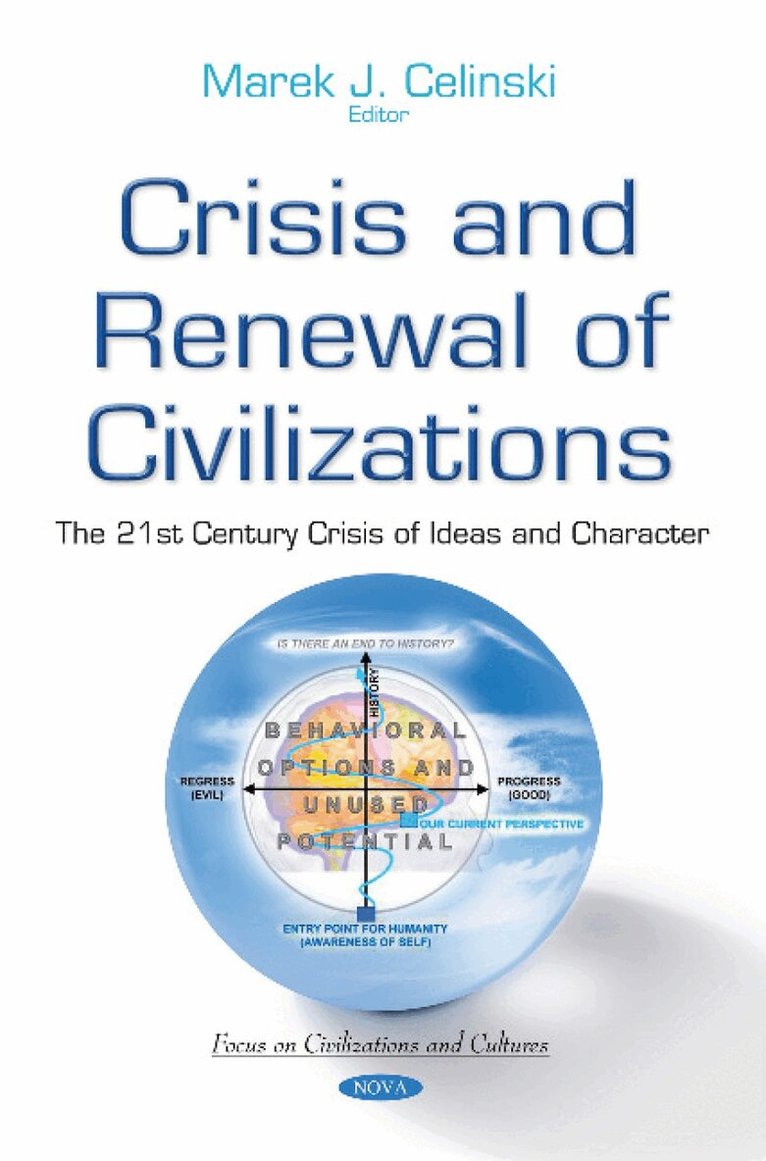
This book expands on the primary assumption that the human brain is a sense and purpose producing organ; we use it to understand and guide us through chaotic realities in order to impact the course of events and ourselves. Humanity's future will be a direct result of what our brains permit us to do, and this is the reason why understanding how the brain functions is so important to promote its best utilisation. We need to learn how to better benefit from the human brain's innate tendency to establish new connections, which could promote flights of creativity and imagination. A unique feature of the human brain is that it is both diversified and united, allowing for a variety of sensory and expressive functions and, at the same time, for cohesive and purposeful behavior. Our mind's cohesiveness breaks down in the brain's pathological conditions, or in conditions of severe stress and deprivation. Examples of crisis observed throughout history can be understood as a projection by our collective mind of pathological states on reality. Put simply, the human mind is unable to make sense of circumstances to assure stability and continuity. It is obvious that we struggle both to separate and unify ourselves, and that every war or social disruption ultimately ends in peace and the temporary restoration of order and stability.
Concern for humanity’s future has never been more urgent than now - in the present time - when humanity has achieved the level of capability of destroying itself either through environmental disasters or nuclear wars. On the other hand, we have also achieved material and psychological knowledge and progress that can assist us in understanding not only the causation, but also the potential embedded in human nature, to choose either the path to self-destruction or to sustained peace. In this book, we present both the ubiquitous causes of violent discontent and wars and successful attempts to reduce or resolve conflict. Our authors from five continents represent historic, military, philosophical, socio-political, and psychological perspectives and address some of the important issues which any peace-oriented initiative or society at large must contend with. These refer to access to natural resources, ethnicity, religion, human rights, political systems (whether democratic or autocratic), differences in political and military strength and WMDs, and aspirations of the leaders - in combination with the ubiquitous need for control through domination, historic traditions (such as glorification of war effort as heroism and as a sacrifice in the name of lofty ideas). We offer a vision of a humanistic approach to promote peaceful problem solving that needs to be propagated by education, media, political programs and diplomacy in order to lead to peaceful transformations. The role of the military is given special attention. The novelty of our approach is that we address the typical life situations leading to social unrest and wars within the context of the human mind’s capabilities to deal with life challenges. Our Challenge-Resilience-Resourcefulness-Wisdom model (previously published by NOVA) shows how we can study and analyse human errors, regressive tendencies and limitations in order to reframe them as an inspiration for optimal and wise decisions. Based on our authors’ insights, we provide many descriptions of how to deal with social adversity in different locations of the world and also examples of actual successes and failures of peaceful transformations. These chapters provide important knowledge and tools for a wide range of professionals.
This book expands on the primary assumption that the human brain is a sense and purpose producing organ; we use it to understand and guide us through chaotic realities in order to impact the course of events and ourselves. Humanity's future will be a direct result of what our brains permit us to do, and this is the reason why understanding how the brain functions is so important to promote its best utilisation. We need to learn how to better benefit from the human brain's innate tendency to establish new connections, which could promote flights of creativity and imagination. A unique feature of the human brain is that it is both diversified and united, allowing for a variety of sensory and expressive functions and, at the same time, for cohesive and purposeful behavior. Our mind's cohesiveness breaks down in the brain's pathological conditions, or in conditions of severe stress and deprivation. Examples of crisis observed throughout history can be understood as a projection by our collective mind of pathological states on reality. Put simply, the human mind is unable to make sense of circumstances to assure stability and continuity. It is obvious that we struggle both to separate and unify ourselves, and that every war or social disruption ultimately ends in peace and the temporary restoration of order and stability.