Maren Bak – författare
Visar alla böcker från författaren Maren Bak. Handla med fri frakt och snabb leverans.
5 produkter
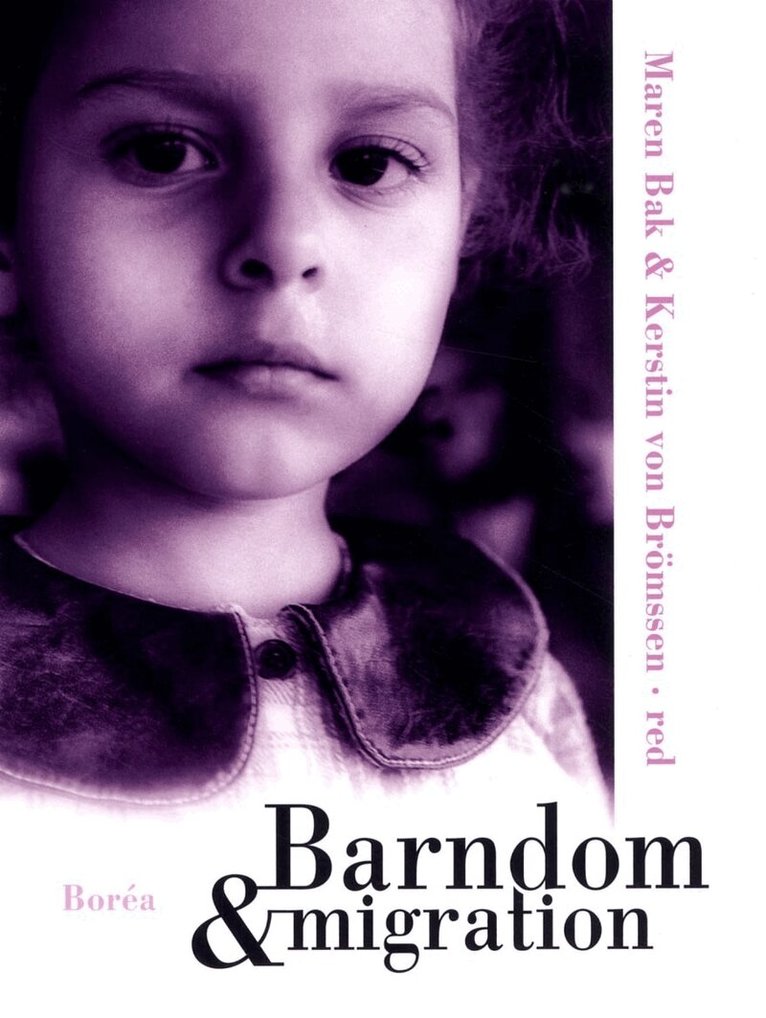
Barndom och migration
Av Kerstin Alstam, Maren Bak m. fl.
Häftad, 2013
3,5 utav 5 stjärnor. Totalt antal röster: (2)
248 kr
Lägg i varukorg
Hur barn påverkas av migration är något vi har relativt liten kunskap om, både nationellt och internationellt. I Norden lever de flesta barn sina liv som barn gör mest, i en vardag som rymmer lek, skola och familjeliv. Men det finns erfarenheter som påtagligt påverkar tillvaron för vissa barn; …
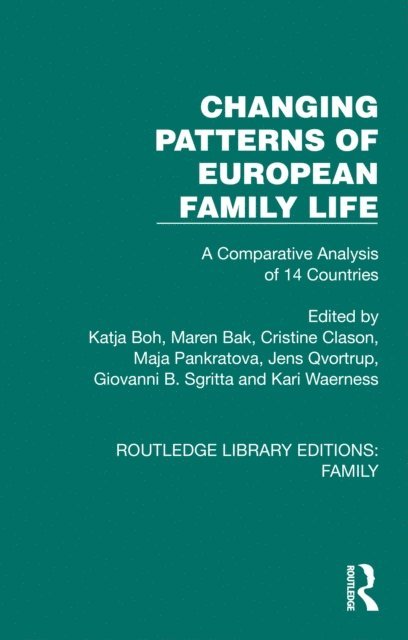
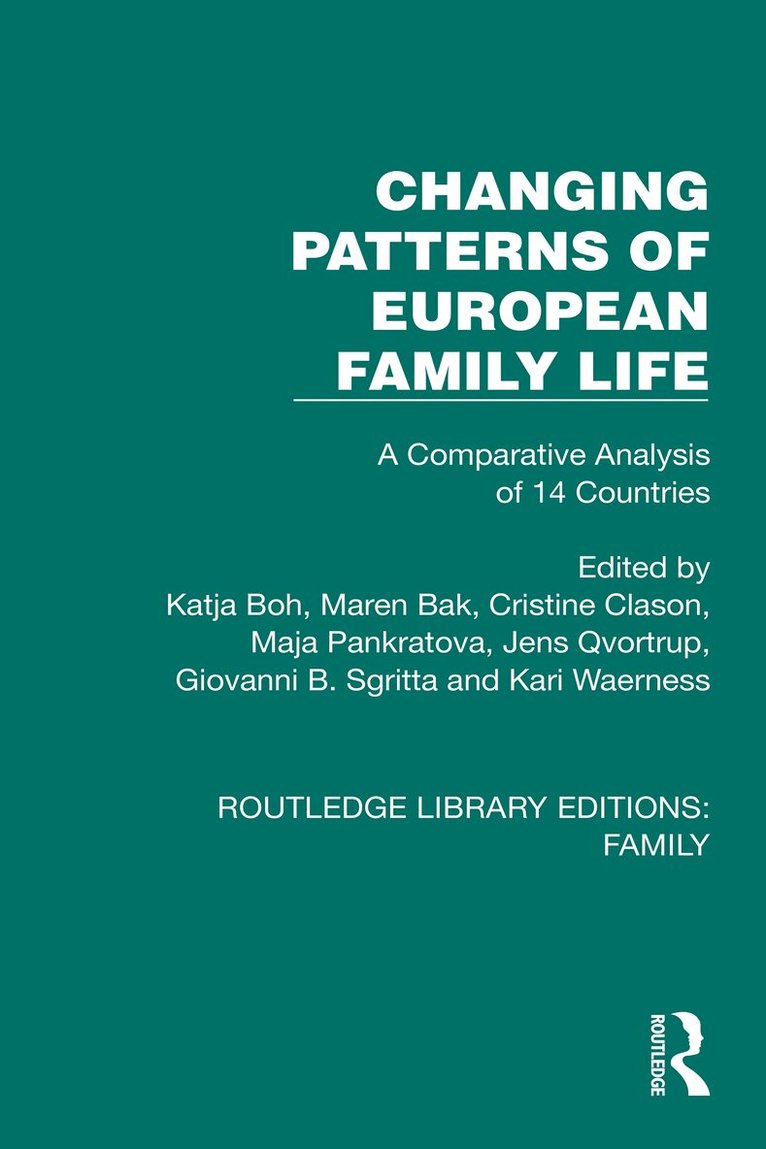
Changing Patterns of European Family Life
A Comparative Analysis of 14 Countries
Av Kari Waerness, Giovanni B. Sgritta m. fl.
E-bok, 2023
576 kr
Lägg i varukorg
Originally published in 1989, this cross-national study investigates the role and pattern of family life in fourteen countries in contemporary Europe. Providing a wealth of information on European families, it is a key source for anyone wishing to understand the changes in the family at that time. …
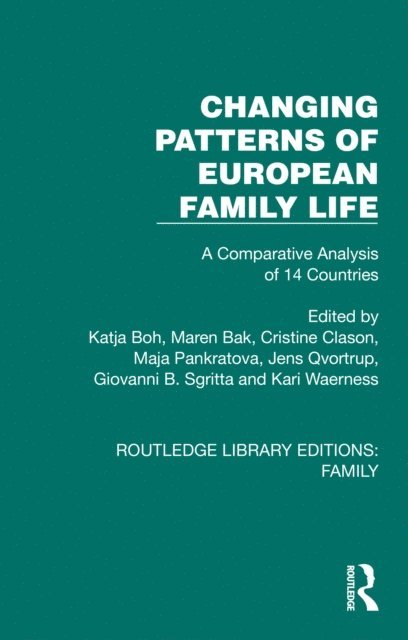
Changing Patterns of European Family Life
A Comparative Analysis of 14 Countries
Av Kari Waerness, Giovanni B. Sgritta m. fl.
E-bok, 2023
589 kr
Lägg i varukorg
Originally published in 1989, this cross-national study investigates the role and pattern of family life in fourteen countries in contemporary Europe. Providing a wealth of information on European families, it is a key source for anyone wishing to understand the changes in the family at that time. …
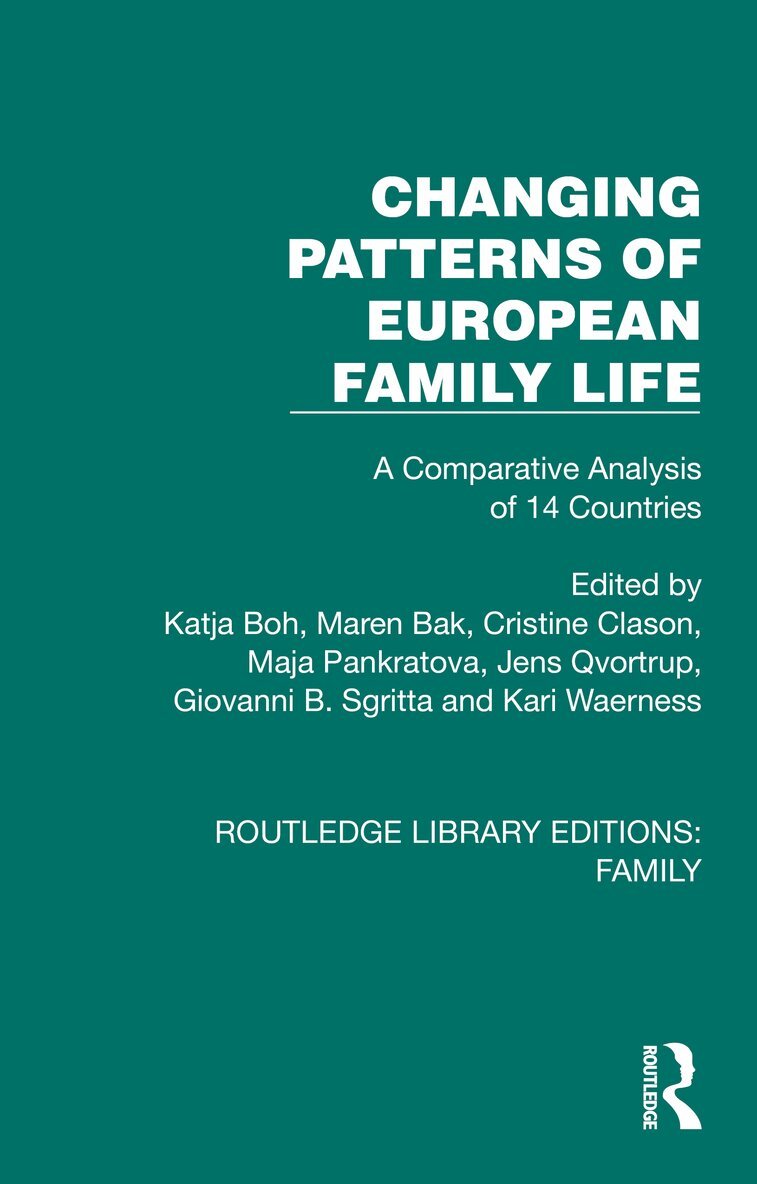
Changing Patterns of European Family Life
A Comparative Analysis of 14 Countries
Av Katja Boh, Maren Bak m. fl.
Inbunden, 2023
2136 kr
Lägg i varukorg
Originally published in 1989, this cross-national study investigates the role and pattern of family life in fourteen countries in contemporary Europe. Providing a wealth of information on European families, it is a key source for anyone wishing to understand the changes in the family at that …
Changing Patterns of European Family Life
A Comparative Analysis of 14 Countries
Av Katja Boh, Maren Bak m. fl.
Häftad, 2025
503 kr
Lägg i varukorg
Originally published in 1989, this cross-national study investigates the role and pattern of family life in fourteen countries in contemporary Europe. Providing a wealth of information on European families, it is a key source for anyone wishing to understand the changes in the family at that …