Maren Elfert - Böcker
Visar alla böcker från författaren Maren Elfert. Handla med fri frakt och snabb leverans.
5 produkter
5 produkter
560 kr
Skickas inom 10-15 vardagar
With a focus on lifelong learning, this book examines the shifts that UNESCO’s educational concepts have undergone in reaction to historical pressures and dilemmas since the founding of the organization in 1945. The tensions between UNESCO’s humanistic worldview and the pressures placed on the organization have forced UNESCO to depart from its utopian vision of lifelong learning, while still claiming continuity. Elfert interprets the history of lifelong learning in UNESCO as part of a much bigger story of a struggle of ideologies between a humanistic-emancipatory and an economistic-technocratic worldview. With a close study of UNESCO’s two education flagship reports, the Faure and Delors reports, Elfert sheds light on the global impact of UNESCO’s professed humanistic goals and its shifting influence on lifelong learning around the world.
2 030 kr
Skickas inom 10-15 vardagar
With a focus on lifelong learning, this book examines the shifts that UNESCO’s educational concepts have undergone in reaction to historical pressures and dilemmas since the founding of the organization in 1945. The tensions between UNESCO’s humanistic worldview and the pressures placed on the organization have forced UNESCO to depart from its utopian vision of lifelong learning, while still claiming continuity. Elfert interprets the history of lifelong learning in UNESCO as part of a much bigger story of a struggle of ideologies between a humanistic-emancipatory and an economistic-technocratic worldview. With a close study of UNESCO’s two education flagship reports, the Faure and Delors reports, Elfert sheds light on the global impact of UNESCO’s professed humanistic goals and its shifting influence on lifelong learning around the world.
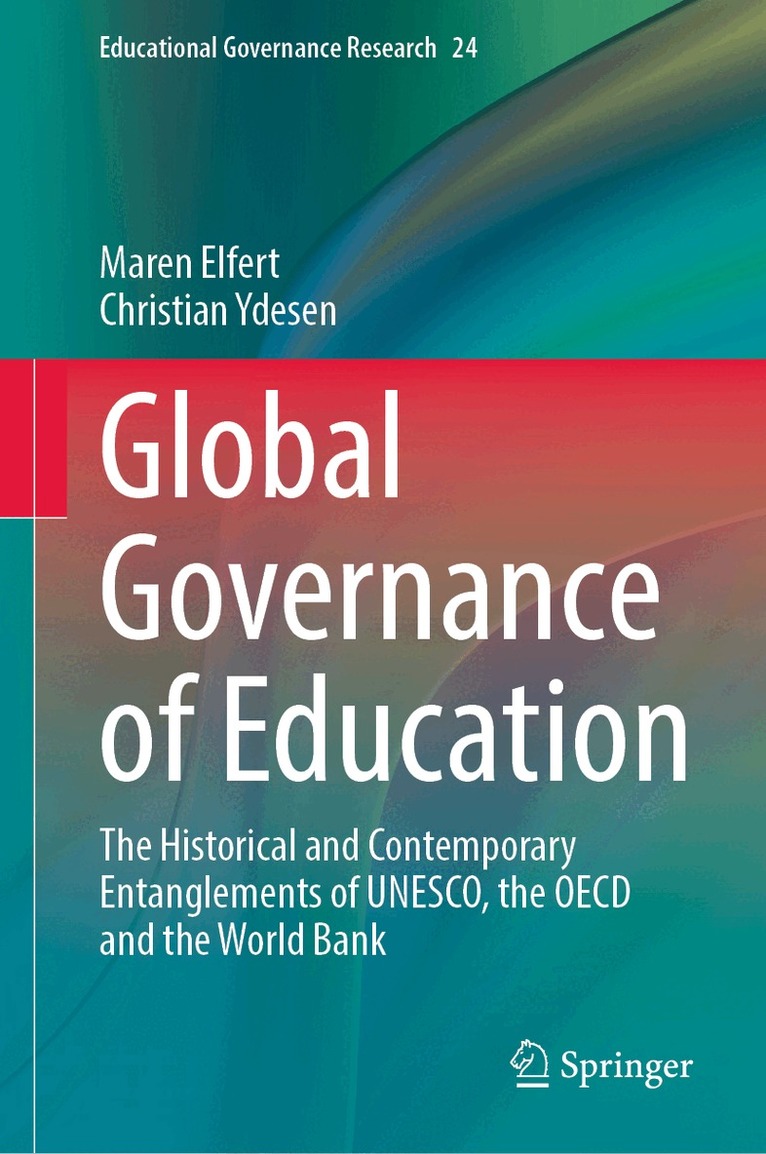
Global Governance of Education
The Historical and Contemporary Entanglements of UNESCO, the OECD and the World Bank
Inbunden, Engelska, 2023
1 239 kr
Skickas inom 7-10 vardagar
This book examines the educational role of three international organizations created as part of the post-World War II multilateral architecture: the United Nations Educational, Scientific and Cultural Organization (UNESCO), the World Bank, and the Organisation for Economic Co-operation and Development (OECD). These organizations have significantly promoted and shaped education as a fundamental feature of the modernization of society and contributed to the globalization of educational norms, policies and technologies. Drawing on primary source materials and interviews, the book provides novel perspectives to the literature on the global governance of education by focusing on the historical entanglements, relations and power struggles between these three organizations, rather than treating them separately. The study sheds light on the homogenizing effects of globalized educational policy-making and the shifting power dynamics in the global governance of education.‘This book makes a very distinctive and important contribution to the literature that critically analyses the influence of the global agencies on education globally; it goes beyond the standard discursive analyses of policy texts to also explore the history of those organisations through archival research and in-depth interviews of the key personnel. What emerges is a powerful analysis which locates those agencies within their historical epochs and shines a light on their tensions and micro-politics, both internally and between organisations.’ Paul Morris, Professor of Comparative Education, Institute of Education, University College London, UK‘A must-read historical account of the intermingling, boundary setting and competition between the three big intergovernmental organizations (IOs) in education: OECD, UNESCO, and the World Bank. Different from other scholars that document how these IOs have transformed themselves in response to external and internal changes, Elfert and Ydesen draw attention to the relational aspect: how have these three IOs navigated conflict, carved niches, and used and abused each other to amplify and expand their own mission? How have they done so in an environment that is crowded with intergovernmental and international organizations, each with a claim to govern education globally?’Gita Steiner-Khamsi, Professor of Comparative and International Education, Teachers College, Columbia University; UNESCO Chair of Comparative Education Policy of the Geneva Graduate Institute of International and Development Studies'This volume is a thoughtful and timely work of scholarship. Understanding the roles of UNESCO, the OECD and the World Bank is central to understanding contemporary education in global perspective. Elfert and Ydesen’s historical analysis sets out in rigorous detail how these organisations have evolved, and what has shaped and driven this evolution. The historical analysis is complemented bycontemporary interview data, facilitating an actor-level analysis as well as a broader picture. The book is conceptually and theoretically rich while being accessibly written; the authors manage complexity remarkably well. For anyone interested in global governance and the role of international organisations, or anyone who wants to understand in general how global educational agendas have developed and converged, this book is a most valuable read.' Michele Schweisfurth, Professor of Comparative and International Education, University of Glasgow, UKChapter "UNESCO, the OECD and the World Bank: A Global Governance Perspective” is available open access under a Creative Commons Attribution 4.0 International License via link.springer.com.
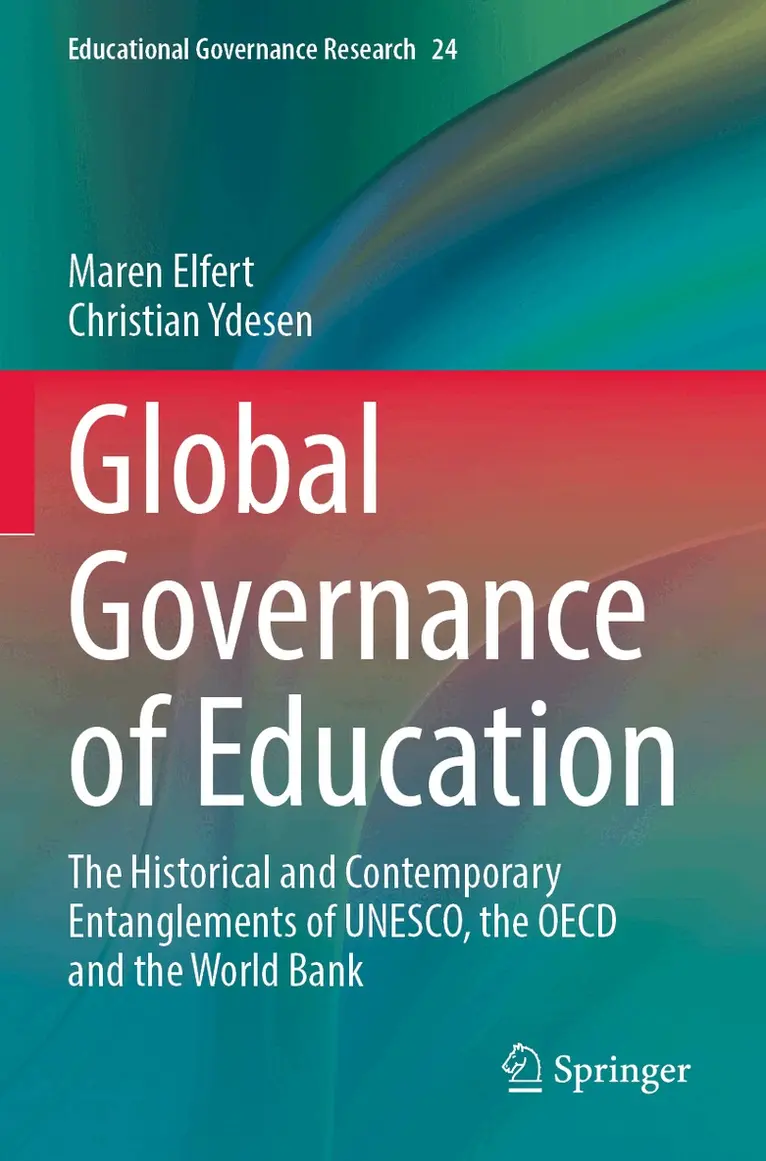
Global Governance of Education
The Historical and Contemporary Entanglements of UNESCO, the OECD and the World Bank
Häftad, Engelska, 2024
1 239 kr
Skickas inom 10-15 vardagar
This book examines the educational role of three international organizations created as part of the post-World War II multilateral architecture: the United Nations Educational, Scientific and Cultural Organization (UNESCO), the World Bank, and the Organisation for Economic Co-operation and Development (OECD). These organizations have significantly promoted and shaped education as a fundamental feature of the modernization of society and contributed to the globalization of educational norms, policies and technologies. Drawing on primary source materials and interviews, the book provides novel perspectives to the literature on the global governance of education by focusing on the historical entanglements, relations and power struggles between these three organizations, rather than treating them separately. The study sheds light on the homogenizing effects of globalized educational policy-making and the shifting power dynamics in the global governance of education.‘This book makes a very distinctive and important contribution to the literature that critically analyses the influence of the global agencies on education globally; it goes beyond the standard discursive analyses of policy texts to also explore the history of those organisations through archival research and in-depth interviews of the key personnel. What emerges is a powerful analysis which locates those agencies within their historical epochs and shines a light on their tensions and micro-politics, both internally and between organisations.’ Paul Morris, Professor of Comparative Education, Institute of Education, University College London, UK‘A must-read historical account of the intermingling, boundary setting and competition between the three big intergovernmental organizations (IOs) in education: OECD, UNESCO, and the World Bank. Different from other scholars that document how these IOs have transformed themselves in response to external and internal changes, Elfert and Ydesen draw attention to the relational aspect: how have these three IOs navigated conflict, carved niches, and used and abused each other to amplify and expand their own mission? How have they done so in an environment that is crowded with intergovernmental and international organizations, each with a claim to govern education globally?’Gita Steiner-Khamsi, Professor of Comparative and International Education, Teachers College, Columbia University; UNESCO Chair of Comparative Education Policy of the Geneva Graduate Institute of International and Development Studies'This volume is a thoughtful and timely work of scholarship. Understanding the roles of UNESCO, the OECD and the World Bank is central to understanding contemporary education in global perspective. Elfert and Ydesen’s historical analysis sets out in rigorous detail how these organisations have evolved, and what has shaped and driven this evolution. The historical analysis is complemented bycontemporary interview data, facilitating an actor-level analysis as well as a broader picture. The book is conceptually and theoretically rich while being accessibly written; the authors manage complexity remarkably well. For anyone interested in global governance and the role of international organisations, or anyone who wants to understand in general how global educational agendas have developed and converged, this book is a most valuable read.' Michele Schweisfurth, Professor of Comparative and International Education, University of Glasgow, UKChapter "UNESCO, the OECD and the World Bank: A Global Governance Perspective” is available open access under a Creative Commons Attribution 4.0 International License via link.springer.com.
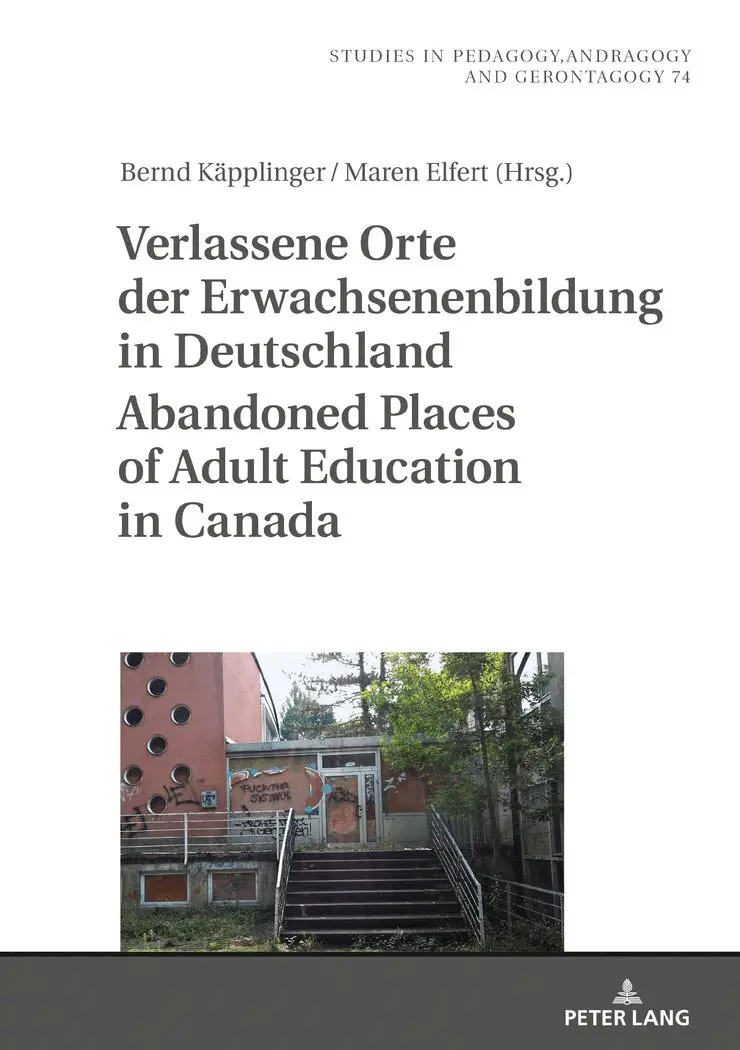
Del 74 - Studien zur Paedagogik, Andragogik und Gerontagogik / Studies in Pedagogy, Andragogy, and Gerontagogy
Verlassene Orte der Erwachsenenbildung in Deutschland / Abandoned Places of Adult Education in Canada
Inbunden, Engelska, 2018
601 kr
Skickas inom 5-8 vardagar
Der Sammelband fokussiert verlassene Orte der Erwachsenenbildung in Deutschland und Kanada. Damit wird zum disziplinären Gedächtnis beigetragen und zukunftsorientiert analytisch nachgefragt, was man von diesen Orten und ihrem Schicksal für heute lernen kann.This volume focuses on abandoned places of adult education in Germany and Canada. The chapters contribute to keeping the memory of the discipline alive and explore what we can learn from the fate of these places for the future.