Margaret A. Majumdar – författare
Visar alla böcker från författaren Margaret A. Majumdar. Handla med fri frakt och snabb leverans.
10 produkter
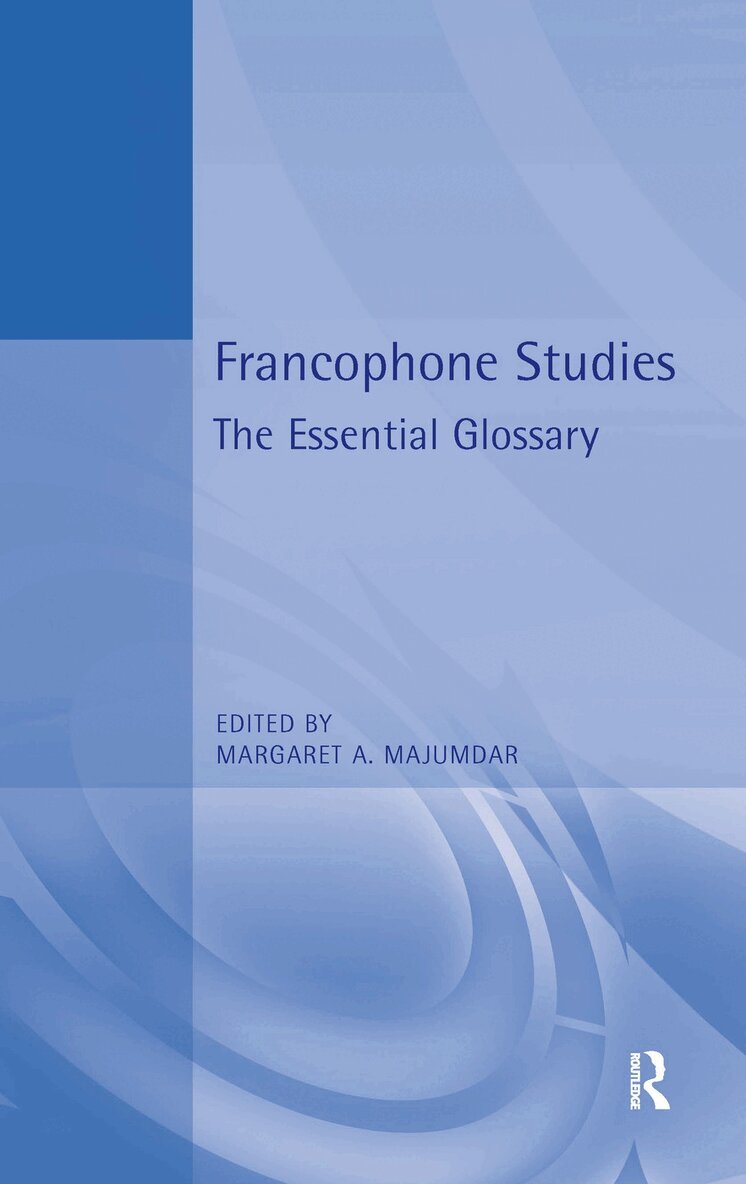
Francophone Studies
The Essential Glossary
Av Margaret Majumdar, Margaret A. Majumdar
Häftad, 2002
532 kr
Lägg i varukorg
This glossary offers an introduction to Francophone Studies and a route-map to further study. Designed specifically with undergraduates in mind, it contains concise and accessible explanations of the key words, events, figures and concepts in Francophone Studies since 1945.From 'Afropessimisme' and …
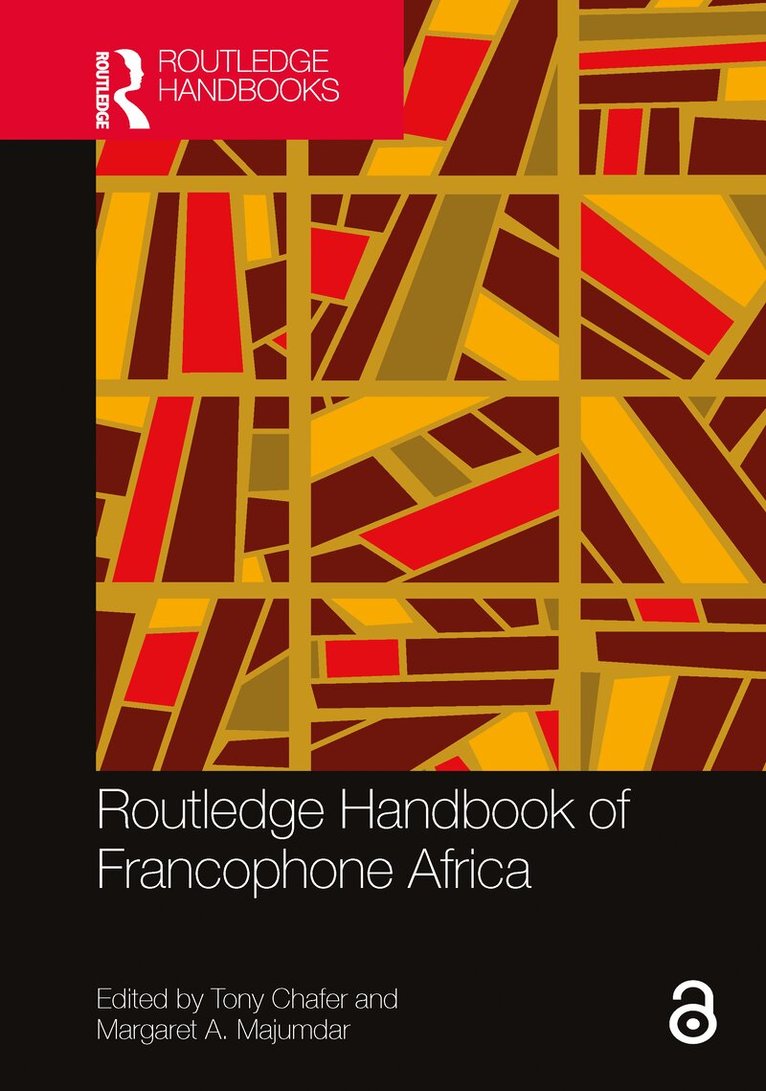
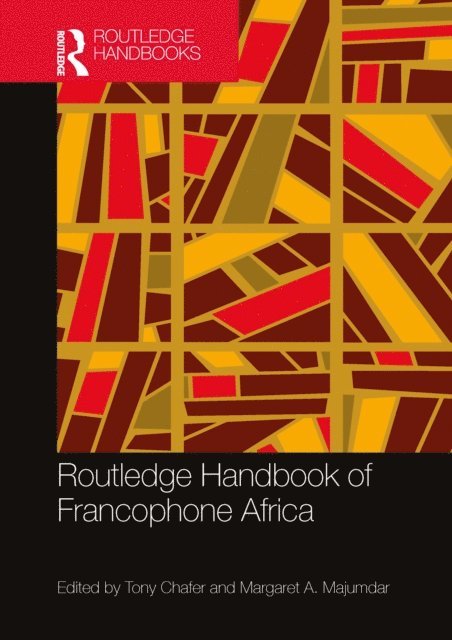
Routledge Handbook of Francophone Africa
Av Tony Chafer, Margaret A. Majumdar
Inbunden, 2023
3799 kr
Lägg i varukorg
The Routledge Handbook of Francophone Africa brings together a multidisciplinary team of international experts to reflect on the history, politics, societies, and cultures of French-speaking parts of Africa.Consisting of approximately 35% of Africa’s territory, Francophone Africa is a shifting …
Routledge Handbook of Francophone Africa
Av Tony Chafer, Margaret A. Majumdar
Häftad, 2025
914 kr
Lägg i varukorg
The Routledge Handbook of Francophone Africa brings together a multidisciplinary team of international experts to reflect on the history, politics, societies, and cultures of French-speaking parts of Africa.Consisting of approximately 35% of Africa’s territory, Francophone Africa is a shifting …
Routledge Handbook of Francophone Africa
Av Margaret A. Majumdar, Tony Chafer
E-bok, 2023
910 kr
Lägg i varukorg
The Routledge Handbook of Francophone Africa brings together a multidisciplinary team of international experts to reflect on the history, politics, societies, and cultures of French-speaking parts of Africa. Consisting of approximately 35% of Africa’s territory, Francophone Africa is a shifting …
Routledge Handbook of Francophone Africa
Av Margaret A. Majumdar, Tony Chafer
E-bok, 2023
910 kr
Lägg i varukorg
The Routledge Handbook of Francophone Africa brings together a multidisciplinary team of international experts to reflect on the history, politics, societies, and cultures of French-speaking parts of Africa. Consisting of approximately 35% of Africa’s territory, Francophone Africa is a shifting …
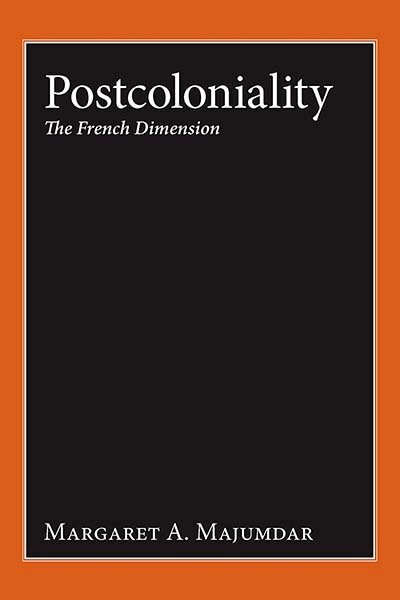
Postcoloniality
The French Dimension
Häftad, 2023
316 kr
Lägg i varukorg
“Postcolonial theory” has become one of the key issues of scholarly debates worldwide; debates, so the author argues, which have become rather sterile and are characterized by a repetitive reworking of old hackneyed issues, focussing on cultural questions of language and identity in particular. …
Transition & Development in Algeria
Economic, Social and Cultural Challenges
Av Mohammed Saad, Margaret A. Majumdar
Häftad, 2013
501 kr
Lägg i varukorg
This book deals with the economic and developmental challenges facing contemporary society. The social structures, the political institutions, the movements and ideologies, as well as cultural dilemmas, are considered in depth to give the fullest picture of the twenty-first century development.The …
Transition & Development in Algeria
Economic, Social and Cultural Challenges
Av Margaret A. Majumdar, Mohammed Saad
E-bok, 2005
306 kr
Lägg i varukorg
This book deals with the economic and developmental challenges facing contemporary society. The social structures, the political institutions, the movements and ideologies, as well as cultural dilemmas, are considered in depth to give the fullest picture of the twenty-first century development. The …
Postcoloniality
The French Dimension
Inbunden, 2007
1979 kr
Lägg i varukorg
“Postcolonial theory” has become one of the key issues of scholarly debates worldwide; debates, so the author argues, which have become rather sterile and are characterized by a repetitive reworking of old hackneyed issues, focussing on cultural questions of language and identity in particular. …