Margaret Cormack – författare
Visar alla böcker från författaren Margaret Cormack. Handla med fri frakt och snabb leverans.
6 produkter
6 produkter
E-bok
Engelska, 2002308 kr
Läs direkt efter köp
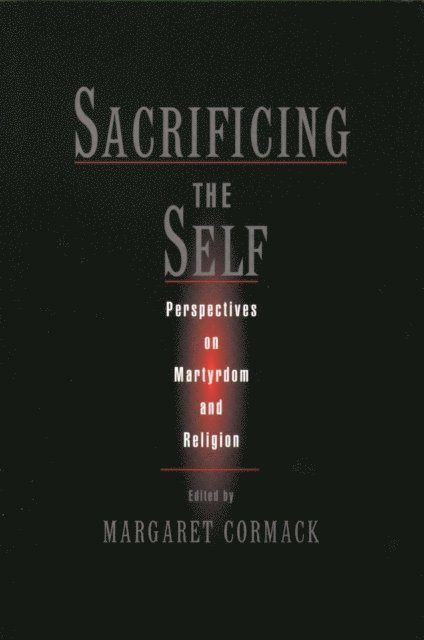
Acts of martyrdom have been found in nearly all the worlds major religious traditions. Though considered by devotees to be perhaps the most potent expression of religious faith, dying for ones god is also one of the most difficult concepts for modern observers of religion to understand. This is especially true in the West, where martyrdom has all but disappeared and martyrs in other cultures are often viewed skeptically and dismissed as fanatics. This book seeks to foster a greater understanding of these acts of religious devotion by explaining how martyrdom has historically been viewed in the worlds major religions. It provides the first sustained, cross-cultural examination of this fascinating aspect of religious life. Margaret Cormack begins with an introduction that sets out a definition of martyrdom that serves as the point of departure for the rest of the volume. Then, scholars of Christianity, Judaism, Hinduism, and Islam examine martyrdom in specific religious cultures. Spanning 4000 years of history and ranging from Saul in the Hebrew Bible to Sati immolations in present-day India, this book provides a wealth of insight into an often noted but rarely understood cultural phenomenon.
E-bok
PDF, Engelska, 2002344 kr
Läs direkt efter köp
Acts of martyrdom have been found in nearly all the worlds major religious traditions. Though considered by devotees to be perhaps the most potent expression of religious faith, dying for ones god is also one of the most difficult concepts for modern observers of religion to understand. This is especially true in the West, where martyrdom has all but disappeared and martyrs in other cultures are often viewed skeptically and dismissed as fanatics. This book seeks to foster a greater understanding of these acts of religious devotion by explaining how martyrdom has historically been viewed in the worlds major religions. It provides the first sustained, cross-cultural examination of this fascinating aspect of religious life. Margaret Cormack begins with an introduction that sets out a definition of martyrdom that serves as the point of departure for the rest of the volume. Then, scholars of Christianity, Judaism, Hinduism, and Islam examine martyrdom in specific religious cultures. Spanning 4000 years of history and ranging from Saul in the Hebrew Bible to Sati immolations in present-day India, this book provides a wealth of insight into an often noted but rarely understood cultural phenomenon.
Inbunden, Engelska, 2013
1 921 kr
Skickas inom 5-8 vardagar
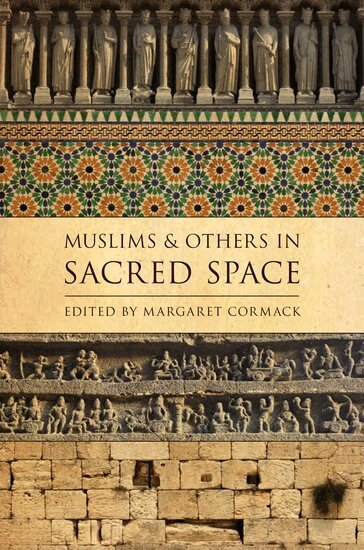
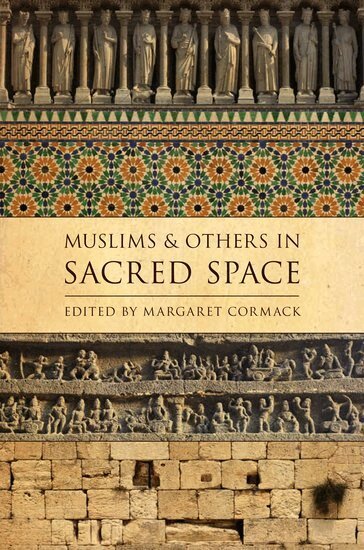
This collection of seven essays offers wide-ranging and in-depth studies of locations sacred to Muslims, of the histories of these sites (real or imagined), and of the ways in which Muslims and members of other religions have interacted peaceably in sacred times and spaces. The volume begins with a discussion by David Damrel of the official, hostile, Muslim attitude toward practices at shrines in South Asia. Lance Laird then presents a case study of a shrine holy to Palestinian Christians, who identify its patron as St. George, as well as to Palestinian Muslims, who believe that its patron is al Khadr. Ethel Sara Wolper illustrates how al Khadr's patronage was used also to show Muslim connections to Christian sites in Anatolia, and JoAnn Gross's essay explores oral and written traditions linking shrines in Tajikistan to traditional Muslim locations and figures. A chapter by the late Thomas Sizgorich examines how Christian and Muslim authors used monastic settings to reimagine the relationship between the two religions, and Alexandra Cuffel offers a study of attitudes towards the mixing of religious groups in religious festivals in eleventh- to sixteenth-century Egypt. Finally, Eric Ross shows how the Layenne Sufi order incorporates a singular combination of Christian and Muslim figures and festivals in its history and practices. Muslims and Others in Sacred Space will be an invaluable resource to anyone interested in the complex meanings of sacred sites in Muslim history.
E-bok
PDF, Engelska, 2012397 kr
Läs direkt efter köp
This collection of seven essays offers wide-ranging and in-depth studies of locations sacred to Muslims, of the histories of these sites (real or imagined), and of the ways in which Muslims and members of other religions have interacted peaceably in sacred times and spaces.
Häftad, Engelska, 2013
511 kr
Skickas inom 5-8 vardagar
This collection of seven essays offers wide-ranging and in-depth studies of locations sacred to Muslims, of the histories of these sites (real or imagined), and of the ways in which Muslims and members of other religions have interacted peaceably in sacred times and spaces. The volume begins with a discussion by David Damrel of the official, hostile, Muslim attitude toward practices at shrines in South Asia. Lance Laird then presents a case study of a shrine holy to Palestinian Christians, who identify its patron as St. George, as well as to Palestinian Muslims, who believe that its patron is al Khadr. Ethel Sara Wolper illustrates how al Khadr's patronage was used also to show Muslim connections to Christian sites in Anatolia, and JoAnn Gross's essay explores oral and written traditions linking shrines in Tajikistan to traditional Muslim locations and figures. A chapter by the late Thomas Sizgorich examines how Christian and Muslim authors used monastic settings to reimagine the relationship between the two religions, and Alexandra Cuffel offers a study of attitudes towards the mixing of religious groups in religious festivals in eleventh- to sixteenth-century Egypt. Finally, Eric Ross shows how the Layenne Sufi order incorporates a singular combination of Christian and Muslim figures and festivals in its history and practices. Muslims and Others in Sacred Space will be an invaluable resource to anyone interested in the complex meanings of sacred sites in Muslim history.
Inbunden, Engelska, 2007
586 kr
Skickas inom 10-15 vardagar
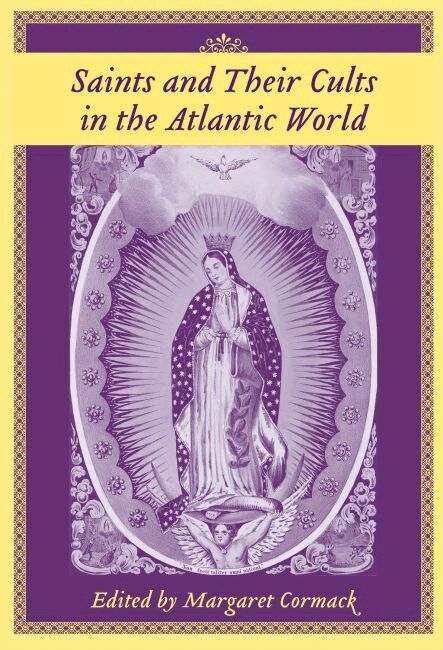
Saints and Their Cults in the Atlantic World traces the changing significance of a dozen saints and holy sites from the fourth century to the twentieth and from Africa, Sicily, Wales, and Iceland to Canada, Boston, Mexico, Brazil, and the Caribbean. Scholars representing the fields of history, art history, religious studies, and communications contribute their perspectives in this interdisciplinary collection, also notable as the first English language study of many of the saints treated in the volume. Several chapters chart the changing images and meanings of holy people as their veneration traveled from the Old World to the New; others describe sites and devotions that developed in the Americas. The ways that a group feels connected to the holy figure by ethnicity or regionalism proves to be a critical factor in a saint's reception, and many contributors discuss the tensions that develop between ecclesiastical authorities and communities of devotees. Exploring the fluid boundaries between pilgrimage and tourism, ritual and knowledge, articles assess the importance of place in saint veneration and shed new light on the relationship between a saint's popularity and his or her association with holy relics, healing waters, and keepsakes purchased at a pilgrimage site. In addition to St. Benedict the Moor, medieval Irish pilgrimage art, and Ponce de Leon's ""Fountain of Youth"", the authors discuss figures such as the Holy Child of Atocha, St. Winefride of Wales, Father Patrick Power, St. Amico of Italy and Louisiana, Our Lady of Prompt Succor, and the Icelandic bishop Gumundr Arason.