Margaret Littler – författare
Visar alla böcker från författaren Margaret Littler. Handla med fri frakt och snabb leverans.
5 produkter
Contemporary Women's Writing in German
Changing the Subject
Av Margaret Littler, Brigid Haines
E-bok, 2004
759 kr
Lägg i varukorg
Six key texts by contemporary women writers are read afresh by leading critics, using insights from poststructuralist and new materialist feminist theory. Ingeborg Bachmann, Christa Wolf, and Elfriede Jelinek have long been prominent in the fields of Austrian modernism, GDR writing, and avant-garde …
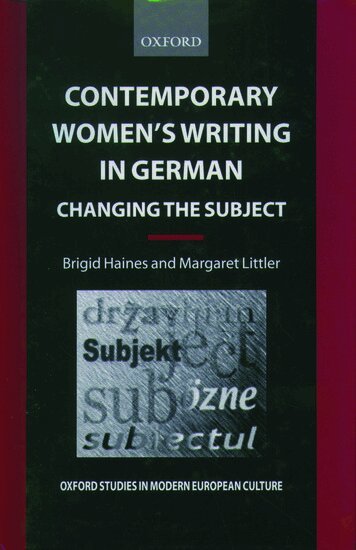
Contemporary Women's Writing in German
Changing the Subject
Av Brigid Haines, Margaret Littler
Inbunden, 2004
1193 kr
Lägg i varukorg
Six key texts by contemporary women writers are read afresh by leading critics, using insights from poststructuralist and new materialist feminist theory. Ingeborg Bachmann, Christa Wolf, and Elfriede Jelinek have long been prominent in the fields of Austrian modernism, GDR writing, and avant-garde …
Contested Communities
Small, Minority and Minor Literatures in Europe
Av Kate Averis, Margaret Littler m. fl.
Inbunden, 2023
1704 kr
Lägg i varukorg
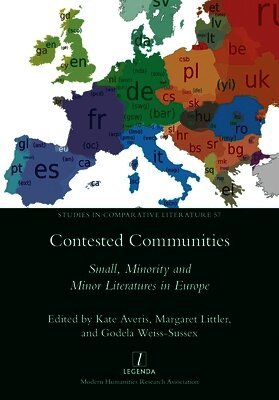
Contested Communities
Small, Minority and Minor Literatures in Europe
Av Kate Averis, Margaret Littler m. fl.
Häftad, 2025
310 kr
Lägg i varukorg
Gendering German Studies
New Perspectives on German Literature and Culture
Häftad, 1997
312 kr
Tillfälligt slut
This collection of essays demonstrates across a spectrum of cultural topics the productive intersection of feminism and German Studies. Taking gender as a central analytical catagory, the authors explore German literature from the Middle Ages to the present day, aspects of popular culture and film, …