Margaret Schabas - Böcker
Visar alla böcker från författaren Margaret Schabas. Handla med fri frakt och snabb leverans.
8 produkter
8 produkter
571 kr
Tillfälligt slut
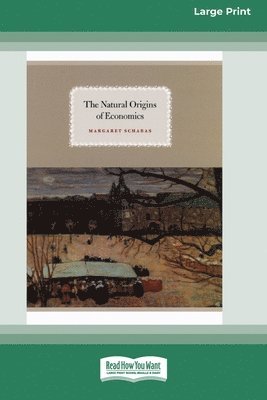
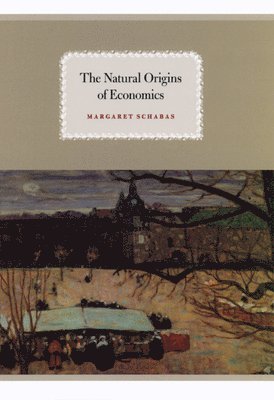
References to the economy are ubiquitous in modern life, and virtually every facet of human activity has capitulated to market mechanisms. In the early modern period, however, there was no common perception of the economy, and discourses on money, trade, and commerce treated economic phenomena as properties of physical nature. Only in the early nineteenth century did economists begin to posit and identify the economy as a distinct object, divorcing it from natural processes and attaching it exclusively to human laws and agency. In "The Natural Origins of Economics", Margaret Schabas traces the emergence and transformation of economics in the eighteenth and nineteenth centuries from a natural to a social science. Focusing on the works of several prominent economists - David Hume, Adam Smith, Thomas Malthus, David Ricardo, and John Stuart Mill - Schabas examines their conceptual debt to natural science and thus locates the evolution of economic ideas within the history of science. An ambitious study, "The Natural Origins of Economics" will be of interest to economists, historians, and philosophers alike.
290 kr
Skickas inom 7-10 vardagar
References to the economy are ubiquitous in modern life, and virtually every facet of human activity has capitulated to market mechanisms. In the early modern period, however, there was no common perception of the economy, and discourses on money, trade, and commerce treated economic phenomena as properties of physical nature. Only in the early nineteenth century did economists begin to posit and identify the economy as a distinct object, divorcing it from natural processes and attaching it exclusively to human laws and agency. In "The Natural Origins of Economics", Margaret Schabas traces the emergence and transformation of economics in the eighteenth and nineteenth centuries from a natural to a social science. Focusing on the works of several prominent economists - David Hume, Adam Smith, Thomas Malthus, David Ricardo, and John Stuart Mill - Schabas examines their conceptual debt to natural science and thus locates the evolution of economic ideas within the history of science. An ambitious study, "The Natural Origins of Economics" will be of interest to economists, historians, and philosophers alike.
299 kr
Skickas inom 7-10 vardagar
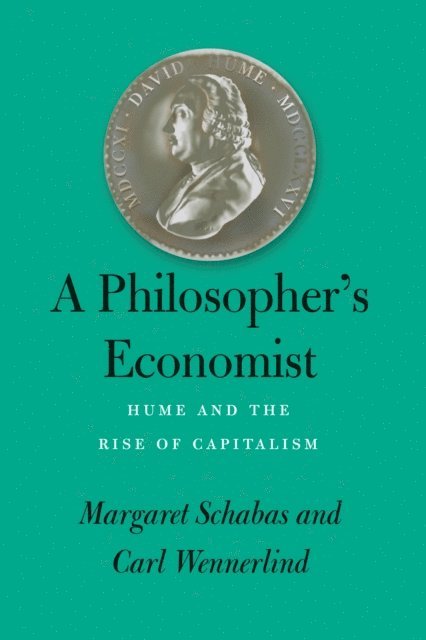
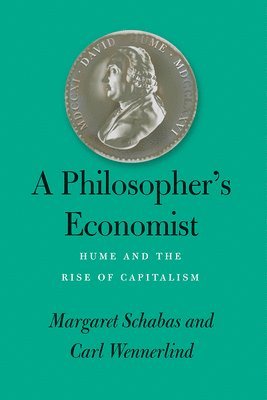
Reconsiders the centrality and legacy of Hume’s economic thought and serves as an important springboard for reflections on the philosophical underpinnings of economics.Although David Hume’s contributions to philosophy are firmly established, his economics has been largely overlooked. A Philosopher’s Economist offers the definitive account of Hume’s “worldly philosophy” and argues that economics was a central preoccupation of his life and work. Margaret Schabas and Carl Wennerlind show that Hume made important contributions to the science of economics, notably on money, trade, and public finance. Hume’s astute understanding of human behavior provided an important foundation for his economics and proved essential to his analysis of the ethical and political dimensions of capitalism. Hume also linked his economic theory with policy recommendations and sought to influence people in power. While in favor of the modern commercial world, believing that it had and would continue to raise standards of living, promote peaceful relations, and foster moral refinement, Hume was not an unqualified enthusiast. He recognized many of the underlying injustices of capitalism, its tendencies to promote avarice and inequality, as well as its potential for political instability and absolutism. Hume’s imprint on modern economics is profound and far-reaching, whether through his close friend Adam Smith or later admirers such as John Maynard Keynes and Friedrich Hayek. Schabas and Wennerlind’s book compels us to reconsider the centrality and legacy of Hume’s economic thought—for both his time and ours—and thus serves as an important springboard for reflections on the philosophical underpinnings of economics.
408 kr
Skickas inom 5-8 vardagar
2 167 kr
Skickas inom 10-15 vardagar
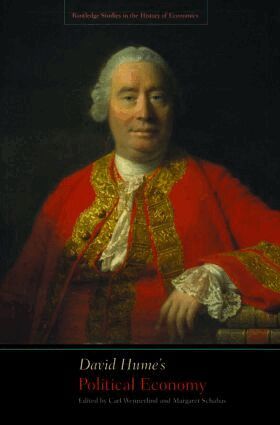
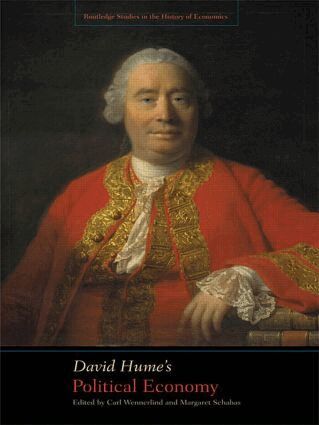
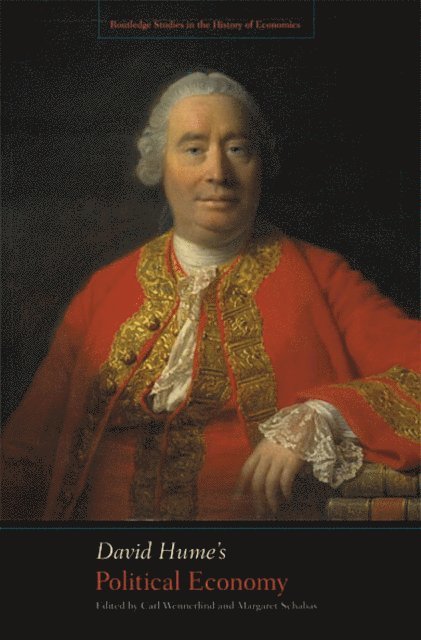
Hume’s Political Discourses (1752) won immediate acclaim and positioned him as an authoritative figure on the subject of political economy. This volume of thirteen new essays definitively establishes the central place of political economy in Hume’s intellectual endeavor, as well as the profound and far-reaching influence of his theories on Enlightenment discourse and practice. A major strength of this collection is that the contributors come from a diverse set of fields – philosophy, economics, political science, history and literature. This promotes a comprehensive reading of Hume’s political economy, taking into account his entire set of writings and correspondence, in a way that captures his polymathic genius. Hume’s analyses of trade and commerce not only delve into the institutions of money and markets, but also human agency, the role of reason and the passions, manners and social mores. Hume sought general principles but also concrete applications, whether he grappled with the problem of economic development (Scotland and Ireland), with the debates on luxury consumption (France), or with the mounting public debt (England).This book is a key resource for students and researchers in the areas of economic and political philosophy, history of economic and political theory, and the history of ideas.
803 kr
Skickas inom 10-15 vardagar
Hume’s Political Discourses (1752) won immediate acclaim and positioned him as an authoritative figure on the subject of political economy. This volume of thirteen new essays definitively establishes the central place of political economy in Hume’s intellectual endeavor, as well as the profound and far-reaching influence of his theories on Enlightenment discourse and practice. A major strength of this collection is that the contributors come from a diverse set of fields – philosophy, economics, political science, history and literature. This promotes a comprehensive reading of Hume’s political economy, taking into account his entire set of writings and correspondence, in a way that captures his polymathic genius. Hume’s analyses of trade and commerce not only delve into the institutions of money and markets, but also human agency, the role of reason and the passions, manners and social mores. Hume sought general principles but also concrete applications, whether he grappled with the problem of economic development (Scotland and Ireland), with the debates on luxury consumption (France), or with the mounting public debt (England).This book is a key resource for students and researchers in the areas of economic and political philosophy, history of economic and political theory, and the history of ideas.
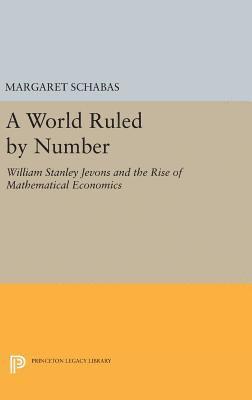
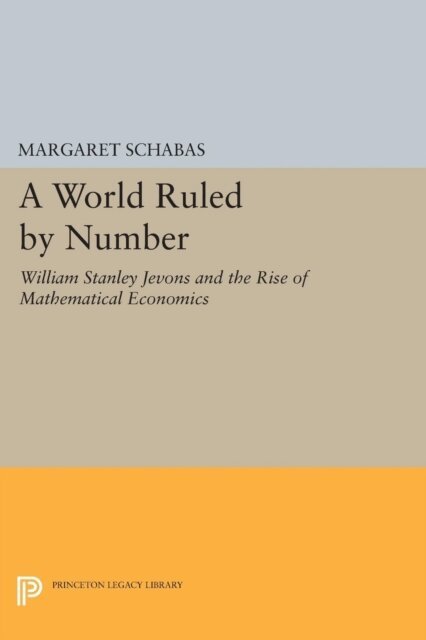
World Ruled by Number
William Stanley Jevons and the Rise of Mathematical Economics
Häftad, Engelska, 2014
412 kr
Skickas inom 7-10 vardagar
If any single characteristic differentiates current, neoclassical economics from the classical economics of Adam Smith and David Ricardo, it is the use of mathematics. Pointing to the critical role of William Stanley Jevons (1835-1882), Margaret Schabas demonstrates that the advent of mathematical economics in late Victorian England resulted more from new currents in logic and the philosophy of science than from problems specific to the classical theory of value and distribution. Jevons's Principles of Science (1874) was the first book to take issue with John Stuart Mill's faith in inductive reasoning, to assimilate George Boole's mathematical logic, and to discern many of the limitations that beset scientific inquiry. Together with a renewed appreciation for Bentham's utility calculus, these philosophical insights served to convince Jevons and his followers that the economic world is fundamentally quantitative and thus amenable to mathematical analysis. Originally published in 1990. The Princeton Legacy Library uses the latest print-on-demand technology to again make available previously out-of-print books from the distinguished backlist of Princeton University Press.These editions preserve the original texts of these important books while presenting them in durable paperback and hardcover editions. The goal of the Princeton Legacy Library is to vastly increase access to the rich scholarly heritage found in the thousands of books published by Princeton University Press since its founding in 1905.
World Ruled by Number
William Stanley Jevons and the Rise of Mathematical Economics
Inbunden, Engelska, 2016
1 799 kr
Skickas inom 3-6 vardagar
If any single characteristic differentiates current, neoclassical economics from the classical economics of Adam Smith and David Ricardo, it is the use of mathematics. Pointing to the critical role of William Stanley Jevons (1835-1882), Margaret Schabas demonstrates that the advent of mathematical economics in late Victorian England resulted more from new currents in logic and the philosophy of science than from problems specific to the classical theory of value and distribution. Jevons's Principles of Science (1874) was the first book to take issue with John Stuart Mill's faith in inductive reasoning, to assimilate George Boole's mathematical logic, and to discern many of the limitations that beset scientific inquiry. Together with a renewed appreciation for Bentham's utility calculus, these philosophical insights served to convince Jevons and his followers that the economic world is fundamentally quantitative and thus amenable to mathematical analysis. Originally published in 1990. The Princeton Legacy Library uses the latest print-on-demand technology to again make available previously out-of-print books from the distinguished backlist of Princeton University Press.These editions preserve the original texts of these important books while presenting them in durable paperback and hardcover editions. The goal of the Princeton Legacy Library is to vastly increase access to the rich scholarly heritage found in the thousands of books published by Princeton University Press since its founding in 1905.