Margaret Sleeboom-Faulkner - Böcker
Visar alla böcker från författaren Margaret Sleeboom-Faulkner. Handla med fri frakt och snabb leverans.
8 produkter
8 produkter
433 kr
Skickas inom 10-15 vardagar
This volume investigates human genetic biobanking and its regulation in various Asian countries and areas, including Japan, Mainland China, Taiwan, Hong Kong, India and Indonesia.. It sheds light on how cultural, socio-political and economic factors influence the set-up of bioethical regulation for human genetic biobanks and how bioethical sensitivities surrounding biobanks are handled.Apart from placing discourses of trust in an international perspective, the comparative materials presented in this volume also put into perspective the concepts of genetic theft and exploitation, and genetic wealth and trust. This collection contains case studies of biobanking practices in societies with different needs and welfare levels, and provides insights into government strategies towards genetic resources by examining bioethics as practised at home.
326 kr
Skickas inom 10-15 vardagar
This book provides insights on research into the social, political and ethical aspects of genomics, and reflects the bioethical experiences of researchers from Japan, China, the Philippines, Thailand, Taiwan, Pakistan, India and Malaysia. The subjects of discussion vary from genetics in China to religious perspectives on cloning and genetic therapy. Themes include the commercial and medical application of new bioengineering technologies, such as the impact of preventive genetic medicine, genetic counselling, genetically modified organisms [GMOs] and stem-cell research on wealth distribution, cultural traditions, social well-being, and political and legal regulations and institutions. In the study of bioengineering in Asia, various perspectives were brought together at a concrete research level. The authors tried to avoid macro-concepts incorporated by dichotomies of East and West and to acquire new insights into the relationship between local knowledge systems and cultures and interests groups on the one hand and the constellation of various interests of scientific research, governments and MNCs on the other.
2 302 kr
Skickas inom 10-15 vardagar
Genomics in Asia focuses on issues dealing with the development and application of molecular biology and bioengineering technologies in Asian societies and cultures. The workshop on which this book is based aimed to gain an insight into bioethical issues with relation to the dynamics of Asian societies, cultures and religions. It was to generate debate on Asian Genomics and create a basis for comparative research into the relationship between the development and application of modern genetics, cultural values, and local interests in Asian societies. The papers first of all reflect a great variety of bioethical views discussed from the angle of different disciplinary and cultural backgrounds, creating a basis on which a further comparison between different local knowledge systems in relation to genomic practices will be feasible. This book provides insights on research into the social, political and ethical aspects of genomics, and reflects the bioethical experiences of researchers from Japan, China, the Philippines, Thailand, Taiwan, Pakistan, India and Malaysia. The subjects of discussion vary from genetics in China to religious perspectives on cloning and genetic therapy. Themes include the commercial and medical application of new bioengineering technologies, such as the impact of preventive genetic medicine, genetic counselling, genetically modified organisms [GMOs] and stem-cell research on wealth distribution, cultural traditions, social well-being, and political and legal regulations and institutions. In the study of bioengineering in Asia, various perspectives were brought together at a concrete research level. The authors tried to avoid macro-concepts incorporated by dichotomies of East and West and to acquire new insights into the relationship between local knowledge systems and cultures and interests groups on the one hand and the constellation of various interests of scientific research, governments and MNCs on the other.
1 467 kr
Skickas inom 10-15 vardagar
This volume investigates human genetic biobanking and its regulation in various Asian countries and areas, including Japan, Mainland China, Taiwan, Hong Kong, India and Indonesia.. It sheds light on how cultural, socio-political and economic factors influence the set-up of bioethical regulation for human genetic biobanks and how bioethical sensitivities surrounding biobanks are handled.Apart from placing discourses of trust in an international perspective, the comparative materials presented in this volume also put into perspective the concepts of genetic theft and exploitation, and genetic wealth and trust. This collection contains case studies of biobanking practices in societies with different needs and welfare levels, and provides insights into government strategies towards genetic resources by examining bioethics as practised at home.
Regulatory Violence
The Global Dynamics of Regulatory Experimentation in Biomedicine and Health
Inbunden, Engelska, 2025
1 157 kr
Skickas inom 7-10 vardagar
International case-studies on regulation and science collaboration show how competition and economic pressures on the national regulators of biomedicine condition the development of jurisdictive regulations. But regulation that fails to guarantee a jurisdiction's optimal protection of patients and scientific research in favour of other interests commits foreseeable and avoidable "regulatory violence". Even when well-intended, regulation gets caught up in the intense international competition to support public health and generate national wealth, with real-world implications. Evidence from Asia, Europe and the USA challenges the belief that regulation improves ethical practices in regenerative medicine, connects practitioners with good science, and protects patient safety. This book explains why this is so, and points to ways in which science could help us address healthcare issues in greater solidarity. This title is also available as Open Access on Cambridge Core.
Regulatory Violence
The Global Dynamics of Regulatory Experimentation in Biomedicine and Health
Häftad, Engelska, 2025
382 kr
Skickas inom 7-10 vardagar
International case-studies on regulation and science collaboration show how competition and economic pressures on the national regulators of biomedicine condition the development of jurisdictive regulations. But regulation that fails to guarantee a jurisdiction's optimal protection of patients and scientific research in favour of other interests commits foreseeable and avoidable "regulatory violence". Even when well-intended, regulation gets caught up in the intense international competition to support public health and generate national wealth, with real-world implications. Evidence from Asia, Europe and the USA challenges the belief that regulation improves ethical practices in regenerative medicine, connects practitioners with good science, and protects patient safety. This book explains why this is so, and points to ways in which science could help us address healthcare issues in greater solidarity. This title is also available as Open Access on Cambridge Core.
744 kr
Skickas inom 10-15 vardagar
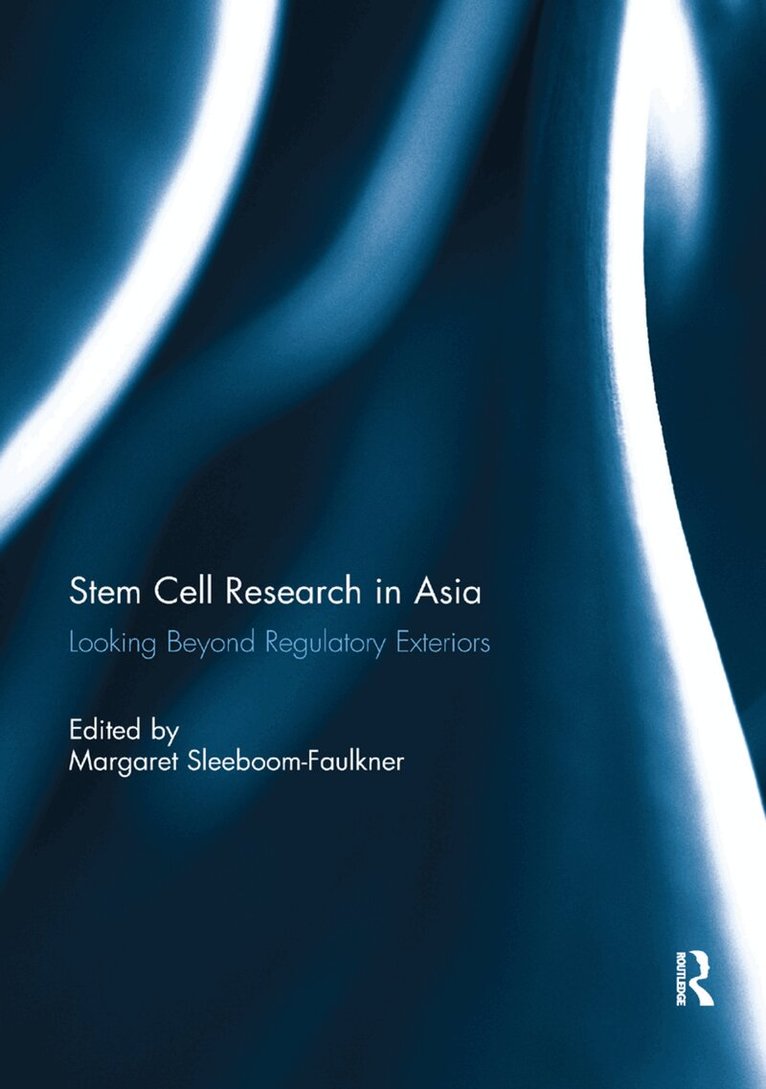
The great hurry to realise promised cures in stem cell research requires regulation to guarantee bioethical research practices. Yet, increasingly similar national guidelines for stem cell research yields a range of diverging research practices. This book shows how the different rationale of regulation affects stem cell research practices in Asia. In low- and medium income countries such as India and China the advancement of science has a different weight on the national agenda, and the evaluation of scientific research is measured with a different yardstick, depending on the political and national research environment. For developing countries the question of research funding into stem cell research, healthcare, and the donation of embryos, foetuses and oocytes entail different considerations compared to in affluent welfare societies. Moreover, research institutions have different cultural and political histories, so that the meaning of formal guidelines, legislation and social rules may differ according to their various institutional settings. This volume discusses the informal cultures, social conventions and traditions that are crucial to the way in which stem cell research takes place in Asia. This book was originally published as a special issue of New Genetics and Society.
2 162 kr
Skickas inom 10-15 vardagar
The great hurry to realise promised cures in stem cell research requires regulation to guarantee bioethical research practices. Yet, increasingly similar national guidelines for stem cell research yields a range of diverging research practices. This book shows how the different rationale of regulation affects stem cell research practices in Asia. In low- and medium income countries such as India and China the advancement of science has a different weight on the national agenda, and the evaluation of scientific research is measured with a different yardstick, depending on the political and national research environment. For developing countries the question of research funding into stem cell research, healthcare, and the donation of embryos, foetuses and oocytes entail different considerations compared to in affluent welfare societies. Moreover, research institutions have different cultural and political histories, so that the meaning of formal guidelines, legislation and social rules may differ according to their various institutional settings. This volume discusses the informal cultures, social conventions and traditions that are crucial to the way in which stem cell research takes place in Asia. This book was originally published as a special issue of New Genetics and Society.