Margaret Ziolkowski – författare
Visar alla böcker från författaren Margaret Ziolkowski. Handla med fri frakt och snabb leverans.
11 produkter
11 produkter
Häftad, Engelska, 2014
516 kr
Skickas inom 5-8 vardagar
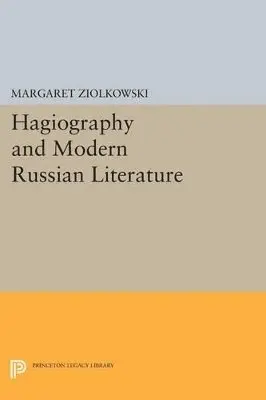
The heritage of medieval hagiography, the diverse and voluminous literature devoted to saints, was much more important in nineteenth-century Russia than is often recognized. Although scholars have treated examples of the influence of hagiographic writing on a few prominent Russian writers, Margaret Ziolkowski is the first to describe the vast extent of its impact. Some of the authors she discusses are Kondratii Ryleev, Aleksandr Bestuzhev-Marlinskii, Fedor Dostoevsky, Leo Tolstoy, Nikolai Leskov, Gleb Uspenskii, Dmitrii Merezhkovskii, and Maksimilian Voloshin. Such writers were often exposed to saints' lives at an early age, and these stories left a deep impression to be dealt with later, whether favorably or otherwise. Professor Ziolkowski identifies and analyzes the most common usages of hagiographic material by Russian writers, as well as the variety of purposes that inspired this exploitation of their cultural past. Tolstoy, for instance, employed hagiographic sources to attack the organized church and the institution of monasticism.Individual chapters treat the influence of hagiography on the poetry of the Decembrists, reworkings of specific hagiographic legends or tales, and the application of hagiographic conventions and features to contemporary characters and situations. Originally published in 1988. The Princeton Legacy Library uses the latest print-on-demand technology to again make available previously out-of-print books from the distinguished backlist of Princeton University Press. These editions preserve the original texts of these important books while presenting them in durable paperback and hardcover editions. The goal of the Princeton Legacy Library is to vastly increase access to the rich scholarly heritage found in the thousands of books published by Princeton University Press since its founding in 1905.
Inbunden, Engelska, 2016
2 033 kr
Skickas inom 3-6 vardagar
The heritage of medieval hagiography, the diverse and voluminous literature devoted to saints, was much more important in nineteenth-century Russia than is often recognized. Although scholars have treated examples of the influence of hagiographic writing on a few prominent Russian writers, Margaret Ziolkowski is the first to describe the vast extent of its impact. Some of the authors she discusses are Kondratii Ryleev, Aleksandr Bestuzhev-Marlinskii, Fedor Dostoevsky, Leo Tolstoy, Nikolai Leskov, Gleb Uspenskii, Dmitrii Merezhkovskii, and Maksimilian Voloshin. Such writers were often exposed to saints' lives at an early age, and these stories left a deep impression to be dealt with later, whether favorably or otherwise. Professor Ziolkowski identifies and analyzes the most common usages of hagiographic material by Russian writers, as well as the variety of purposes that inspired this exploitation of their cultural past. Tolstoy, for instance, employed hagiographic sources to attack the organized church and the institution of monasticism.Individual chapters treat the influence of hagiography on the poetry of the Decembrists, reworkings of specific hagiographic legends or tales, and the application of hagiographic conventions and features to contemporary characters and situations. Originally published in 1988. The Princeton Legacy Library uses the latest print-on-demand technology to again make available previously out-of-print books from the distinguished backlist of Princeton University Press. These editions preserve the original texts of these important books while presenting them in durable paperback and hardcover editions. The goal of the Princeton Legacy Library is to vastly increase access to the rich scholarly heritage found in the thousands of books published by Princeton University Press since its founding in 1905.
Inbunden, Engelska, 2000
1 278 kr
Skickas inom 10-15 vardagar
Margaret Ziolkowski's book comprises a thorough introduction to, skillful translation of, and erudite commentary on the four-hundred-year-old Tale of Boiarynia Morozova. The story of Feodosia Morozova, a member of the Russian aristocratic elite and a major participant in the Russian Othodox Schism, describes one of the most violent ruptures in religious history—the complete destabilization of the bastions of church and society in seventeenth-century Russia. In her explication of this famous text, Ziolkowski examines the hagiography of the Tale, the spiritual asceticism of Morozova in the context of Christian womens' struggles for independence, and the role this prominent female dissident has played as a symbol of resistance to corrupt authority. This work makes a significant contribution to the history of the Orthodox Church, pre-Petrine Russia, women in religion, and the study of medieval Russian literature.
Inbunden, Engelska, 2013
1 514 kr
Skickas inom 10-15 vardagar
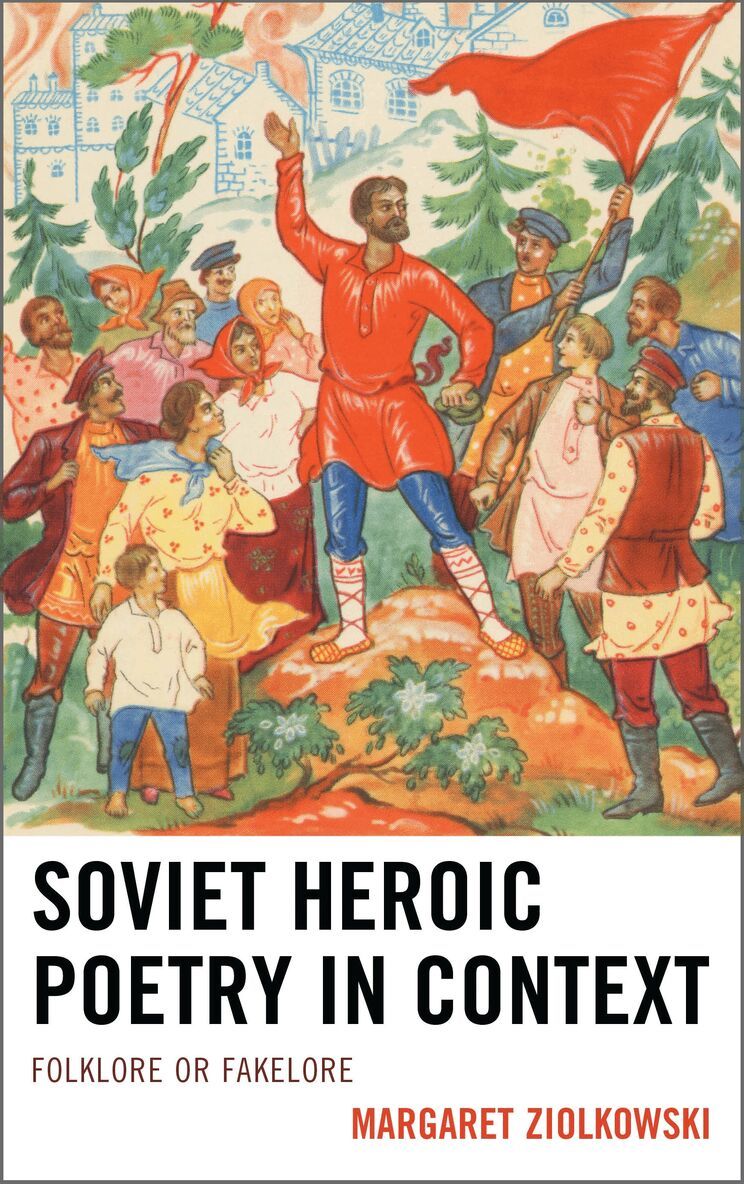
Soviet Heroic Poetry in Context discusses key issues surrounding the composition and recording of folklore as well as its often intensely political aspect and its preoccupation with chimerical cultural authority. These issues are dramatically displayed in Soviet epic compositions of the 1930s and 1940s, the so-called noviny (“new songs”), which took their formal inspiration largely from traditional Russian epic songs, byliny (“songs of the past”), and their narrative content from contemporary, political, and other events in Stalinist Russia. The story of the noviny is at once complex and comprehensible. While it may be tempting to interpret the excrescences of Stalinism as unique aberrations, the reality was often more complicated. The noviny were not simply the result of political fiat, an episode in an ideological vacuum. Their emergence occurred in part because of specific trends and controversies that marked European folklore collection and publication from at least the late eighteenth century on, as well as developments in Russian folkloristics from the mid-nineteenth century on that assumed exaggerated proportions. The demise of the noviny was equally mediated by a host of political and theoretical considerations. This study tells the story of the rise and fall of the noviny in all its cultural richness and pathos, an instructive tale of the interaction of aesthetics and ideology.
E-bok
Engelska, 2013847 kr
Läs direkt efter köp
Soviet Heroic Poetry in Context discusses key issues surrounding the composition and recording of folklore as well as its often intensely political aspect and its preoccupation with chimerical cultural authority. These issues are dramatically displayed in Soviet epic compositions of the 1930s and 1940s, the so-called noviny (“new songs”), which took their formal inspiration largely from traditional Russian epic songs, byliny (“songs of the past”), and their narrative content from contemporary, political, and other events in Stalinist Russia. The story of the noviny is at once complex and comprehensible. While it may be tempting to interpret the excrescences of Stalinism as unique aberrations, the reality was often more complicated. The noviny were not simply the result of political fiat, an episode in an ideological vacuum. Their emergence occurred in part because of specific trends and controversies that marked European folklore collection and publication from at least the late eighteenth century on, as well as developments in Russian folkloristics from the mid-nineteenth century on that assumed exaggerated proportions. The demise of the noviny was equally mediated by a host of political and theoretical considerations. This study tells the story of the rise and fall of the noviny in all its cultural richness and pathos, an instructive tale of the interaction of aesthetics and ideology.
Häftad, Engelska, 2017
801 kr
Skickas inom 10-15 vardagar
Soviet Heroic Poetry in Context discusses key issues surrounding the composition and recording of folklore as well as its often intensely political aspect and its preoccupation with chimerical cultural authority. These issues are dramatically displayed in Soviet epic compositions of the 1930s and 1940s, the so-called noviny (“new songs”), which took their formal inspiration largely from traditional Russian epic songs, byliny (“songs of the past”), and their narrative content from contemporary, political, and other events in Stalinist Russia. The story of the noviny is at once complex and comprehensible. While it may be tempting to interpret the excrescences of Stalinism as unique aberrations, the reality was often more complicated. The noviny were not simply the result of political fiat, an episode in an ideological vacuum. Their emergence occurred in part because of specific trends and controversies that marked European folklore collection and publication from at least the late eighteenth century on, as well as developments in Russian folkloristics from the mid-nineteenth century on that assumed exaggerated proportions. The demise of the noviny was equally mediated by a host of political and theoretical considerations. This study tells the story of the rise and fall of the noviny in all its cultural richness and pathos, an instructive tale of the interaction of aesthetics and ideology.
Inbunden, Engelska, 2020
1 308 kr
Skickas inom 10-15 vardagar
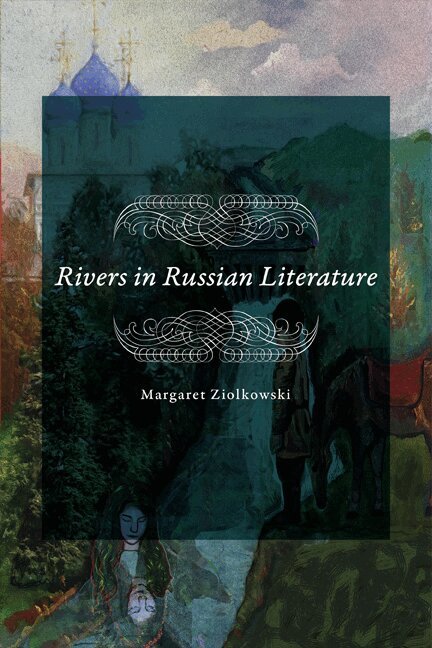
Rivers in Russian Literature focuses on the Russian literary and folkloric treatment of five rivers—the Dnieper, Volga, Neva, Don, and Angara. Each chapter traces, within a geographical and historical context, the evolution of the literary representation of one river. Imagination may endow a river with aesthetic or spiritual qualities; ethnic, national, or racial associations; or commercial or agricultural symbolism of many kinds. Russian literary responses to these five rivers have much to tell us about the society that produced them as well as the rivers they treat. Published by University of Delaware Press. Distributed worldwide by Rutgers University Press.
Häftad, Engelska, 2020
658 kr
Skickas inom 10-15 vardagar
Rivers in Russian Literature focuses on the Russian literary and folkloric treatment of five rivers—the Dnieper, Volga, Neva, Don, and Angara. Each chapter traces, within a geographical and historical context, the evolution of the literary representation of one river. Imagination may endow a river with aesthetic or spiritual qualities; ethnic, national, or racial associations; or commercial or agricultural symbolism of many kinds. Russian literary responses to these five rivers have much to tell us about the society that produced them as well as the rivers they treat. Published by University of Delaware Press. Distributed worldwide by Rutgers University Press.
Häftad, Engelska, 2024
402 kr
Skickas inom 5-8 vardagar
Mega-Dams in World Literature reveals the varied effects of large dams on people and their environments as expressed in literary works, focusing on the shifting attitudes toward large dams that emerged over the course of the twentieth century. Margaret Ziolkowski covers the enthusiasm for large-dam construction that took place during the mid-twentieth-century heyday of mega-dams, the increasing number of people displaced by dams, the troubling environmental effects they incur, and the types of destruction and protest to which they may be subject. Using North American, Native American, Russian, Egyptian, Indian, and Chinese novels and poems, Ziolkowski explores the supposed progress that these structures bring. The book asks how the human urge to exploit and control waterways has affected our relationships to nature and the environment and argues that the high modernism of the twentieth century, along with its preoccupation with development, casts the hydroelectric dam as a central symbol of domination over nature and the power of the nation state. Beyond examining the exultation of large dams as symbols of progress, Mega-Dams in World Literature takes a broad international and cultural approach that humanizes and personalizes the major issues associated with large dams through nuanced analyses, paying particular attention to issues engendered by high modernism and settler colonialism. Both general and specialist readers interested in human-environment relationships will enjoy this prescient book.
Inbunden, Engelska
757 kr
Tillfälligt slut
Inbunden, Engelska, 2024
1 198 kr
Tillfälligt slut
Mega-Dams in World Literature reveals the varied effects of large dams on people and their environments as expressed in literary works, focusing on the shifting attitudes toward large dams that emerged over the course of the twentieth century. Margaret Ziolkowski covers the enthusiasm for large-dam construction that took place during the mid-twentieth-century heyday of mega-dams, the increasing number of people displaced by dams, the troubling environmental effects they incur, and the types of destruction and protest to which they may be subject. Using North American, Native American, Russian, Egyptian, Indian, and Chinese novels and poems, Ziolkowski explores the supposed progress that these structures bring. The book asks how the human urge to exploit and control waterways has affected our relationships to nature and the environment and argues that the high modernism of the twentieth century, along with its preoccupation with development, casts the hydroelectric dam as a central symbol of domination over nature and the power of the nation state. Beyond examining the exultation of large dams as symbols of progress, Mega-Dams in World Literature takes a broad international and cultural approach that humanizes and personalizes the major issues associated with large dams through nuanced analyses, paying particular attention to issues engendered by high modernism and settler colonialism. Both general and specialist readers interested in human-environment relationships will enjoy this prescient book.