Margreth LAnenborg – författare
649 kr
Läs direkt efter köp
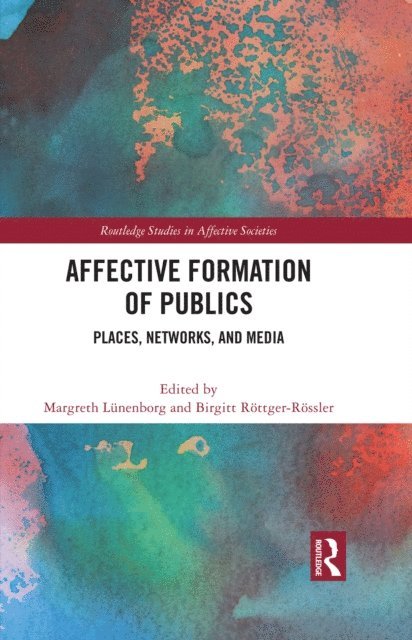
This book offers an interdisciplinary analysis of current formations of publics that is informed by in-depth knowledge of affect and emotion theory.
Using empirical case studies from contexts as diverse as India, Pakistan, Tanzania, and the Americas as well as Europe, the book challenges dichotomous distinctions between private and public. Instead, publics are understood as a relational structure that encompasses both people and their physical and mediatized environment. While each kind of public is affectively constituted, the intensity of its affective attunement varies considerably.
The volume is aimed at academic readers interested in understanding the dynamic and fluid forms of contemporary formation of publics—be it digital or face-to-face encounters as well as in the intersection of both forms. This includes researchers from media and communication studies, social anthropology, theatre or literary studies. It is aimed at advanced students of these disciplines who are interested in the unfolding of contemporary publics.
779 kr
Läs direkt efter köp
As individuals incorporate new forms of media into their daily routines, these media transform individuals’ engagement with networks of heterogeneous actors. Using the concept of media practices, this volume looks at processes of social and political transformation in diverse regions of the world to argue that media change and social change converge on a redefinition of the relations of individuals to larger collective bodies. To this end, contributors examine new collective actors emerging in the public arena through digital media or established actors adjusting to a diversified communication environment. The book offers an important contribution to a vibrant, transdisciplinary, and international field of research emerging at the intersections of communication, performance and social movement studies.
779 kr
Läs direkt efter köp
As individuals incorporate new forms of media into their daily routines, these media transform individuals’ engagement with networks of heterogeneous actors. Using the concept of media practices, this volume looks at processes of social and political transformation in diverse regions of the world to argue that media change and social change converge on a redefinition of the relations of individuals to larger collective bodies. To this end, contributors examine new collective actors emerging in the public arena through digital media or established actors adjusting to a diversified communication environment. The book offers an important contribution to a vibrant, transdisciplinary, and international field of research emerging at the intersections of communication, performance and social movement studies.