María Amalia García – författare
Visar alla böcker från författaren María Amalia García. Handla med fri frakt och snabb leverans.
3 produkter
3 produkter
Inbunden, Engelska, 2019
435 kr
Skickas inom 5-8 vardagar
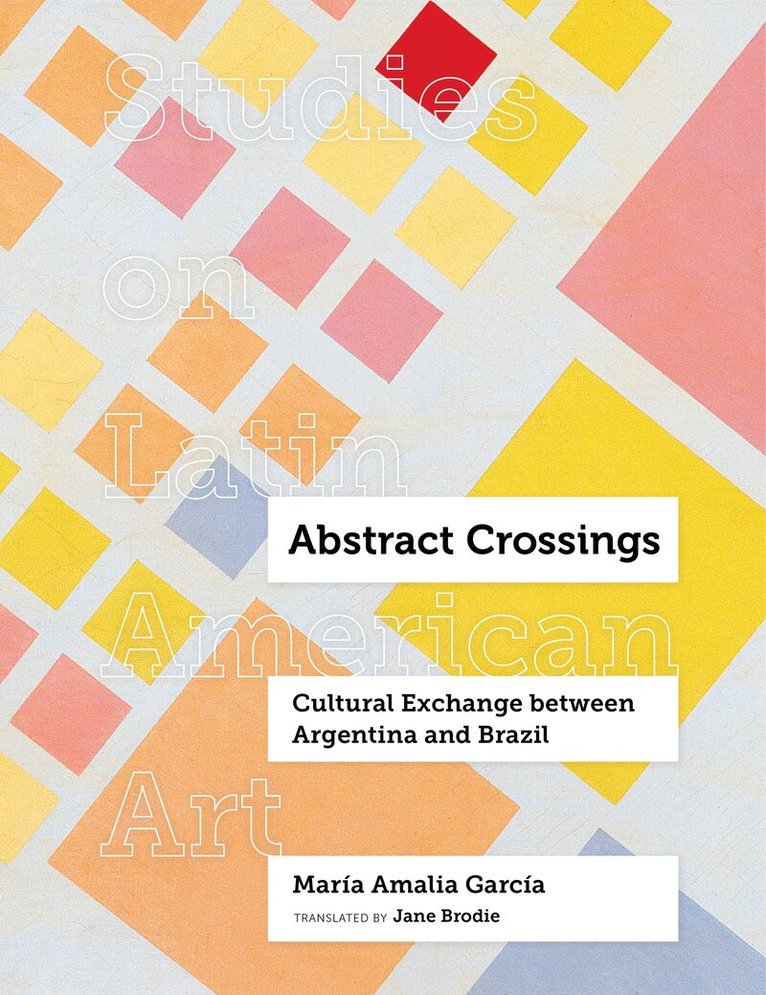
Toward the middle of the 1950s, abstract art became a dominant trend in the Latin American cultural scene. Many artists incorporated elements of abstraction into their rigorous artistic vocabularies, while at the same time, the representation of geometric lines and structures filtered into everyday life, appearing in textiles, posters, murals, and landscapes. The translation of a field-changing Spanish-language book, Abstract Crossings analyzes the relationship between, on the one hand, the emergence of abstract proposals in avant-garde groups and, on the other, the institutionalization and newfound hegemony of abstract poetics as part of Latin America’s imaginary of modernization. A profusion of mid-century artistic institutional exchanges between Argentina and Brazil makes a study of the trajectories of abstraction in these two countries particularly valuable. Examining the work of artists such as Max Bill, Lygia Clark, Waldemar Cordeiro, and Tomás Maldonado, author María Amalia García rewrites the artistic history of the period and proposes a novel reading of the cultural dialogue between Argentina and Brazil.This is the first book in the new Studies on Latin American Art series, supported by a gift from the Institute for Studies on Latin American Art (ISLAA).
Inbunden, Engelska, 2019
474 kr
Skickas inom 5-8 vardagar
E-bok
Spanska, 202589 kr
Läs direkt efter köp
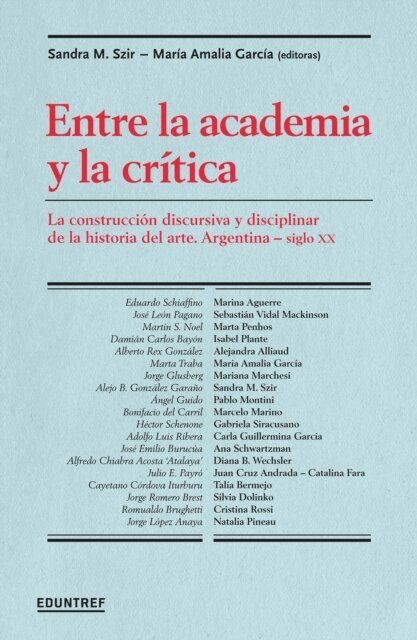
Este libro busca comenzar a saldar una deuda de la disciplina con su propia historia y apunta a reflexionar y poner en valor la historia del arte en el contexto de las ciencias sociales y humanas, y del análisis cultural general. Resulta un punto de partida y un estímulo para la discusión de la historiografía artística, a fin de preguntarse por los modos en que la historia del arte local ha sido escrita, cómo se han elaborado sus narrativas, categorizaciones y cronologías, y revelar así las formas con las cuales la cultura debatió la identidad nacional o la conciencia histórica de la modernidad. La propuesta apunta, entonces, a reconsiderar a algunas de las figuras que construyeron los relatos de la disciplina de la historia del arte en la Argentina, sus manifestaciones discursivas, sus prácticas profesionales, institucionales, pedagógicas y los modos en que se han trazado los bordes intelectuales de su pensamiento, sus identidades y su rol en la sociedad.