Maria Block - Böcker
Visar alla böcker från författaren Maria Block. Handla med fri frakt och snabb leverans.
5 produkter
5 produkter
Spanish QuickStart Guide
The Simplified Beginner's Guide to Learning Essential Vocabulary, Building Practical Grammar Skills, and Mastering Conversational Spanish
Häftad, Engelska, 2025
265 kr
Skickas inom 5-8 vardagar
Spanish QuickStart Guide
The Simplified Beginner's Guide to Learning Essential Vocabulary, Building Practical Grammar Skills, and Mastering Conversational Spanish
Inbunden, Engelska, 2025
345 kr
Skickas inom 5-8 vardagar
Whole Building Handbook
How to Design Healthy, Efficient and Sustainable Buildings
Häftad, Engelska, 2009
1 181 kr
Skickas inom 10-15 vardagar
The Whole Building Handbook is a compendium of all the issues and strategies that architects need to understand to design and construct sustainable buildings for a sustainable society. The authors move beyond the current definition of sustainability in architecture, which tends to focus on energy-efficiency, to include guidance for architecture that promotes social cohesion, personal health, renewable energy sources, water and waste recycling systems, permaculture, energy conservation - and crucially, buildings in relation to their place. The authors offer a holistic approach to sustainable architecture and authoritative technical advice, on: * How to design and construct healthy buildings, through choosing suitable materials, healthy service systems, and designing a healthy and comfortable indoor climate, including solutions for avoiding problems with moisture, radon and noise as well as how to facilitate cleaning and maintenance. * How to design and construct buildings that use resources efficiently, where heating and cooling needs and electricity use is minimized and water-saving technologies and garbage recycling technologies are used. * How to 'close' organic waste, sewage, heat and energy cycles. For example, how to design a sewage system that recycles nutrients. * Includes a section on adaptation of buildings to local conditions, looking at how a site must be studied with respect to nature, climate and community structure as well as human activities. The result is a comprehensive, thoroughly illustrated and carefully structured textbook and reference.
Whole Building Handbook
How to Design Healthy, Efficient and Sustainable Buildings
Inbunden, Engelska, 2009
2 250 kr
Tillfälligt slut
The Whole Building Handbook is a compendium of all the issues and strategies that architects need to understand to design and construct sustainable buildings for a sustainable society. The authors move beyond the current definition of sustainability in architecture, which tends to focus on energy-efficiency, to include guidance for architecture that promotes social cohesion, personal health, renewable energy sources, water and waste recycling systems, permaculture, energy conservation - and crucially, buildings in relation to their place. The authors offer a holistic approach to sustainable architecture and authoritative technical advice, on: * How to design and construct healthy buildings, through choosing suitable materials, healthy service systems, and designing a healthy and comfortable indoor climate, including solutions for avoiding problems with moisture, radon and noise as well as how to facilitate cleaning and maintenance. * How to design and construct buildings that use resources efficiently, where heating and cooling needs and electricity use is minimized and water-saving technologies and garbage recycling technologies are used. * How to 'close' organic waste, sewage, heat and energy cycles. For example, how to design a sewage system that recycles nutrients. * Includes a section on adaptation of buildings to local conditions, looking at how a site must be studied with respect to nature, climate and community structure as well as human activities. The result is a comprehensive, thoroughly illustrated and carefully structured textbook and reference.
1 343 kr
Skickas inom 5-8 vardagar
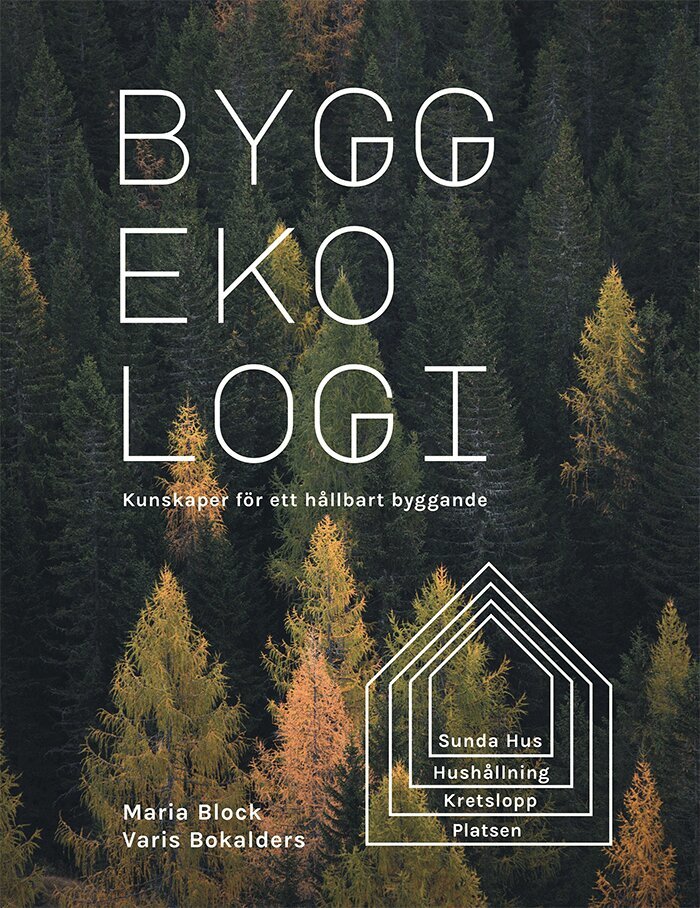
Boken Byggekologi handlar om hur vi bör bygga och ta hand om våra hus, städer och landsbygd om vi vill vara med och skapa ett hållbart samhälle. Vi befinner oss vid ett historiskt vägskäl. Risken är stor att vi, om vi fortsätter som vanligt, drastiskt försämrar förutsättningarna för ett drägligt liv på Jorden. Planeten räcker inte till för nio miljarder människor som lever så slösaktigt och kortsiktigt som vi i konsumtionssamhället. Det är inte lätt att ändra utvecklingen, men det är möjligt. Vi måste använda resurssnål, kretsloppsanpassad, energieffektiv, miljövänlig teknik och förnybara energikällor. Vi måste gå från kvantitet till kvalitet, från slit och släng till ekodesign. Vi bär alla ansvaret att minska våra ekologiska fotavtryck. Följande är avgörande: • Att bygga sunda hus uppnås genom att välja material utifrån miljö- och hälsosynpunkt. Installationerna ska ge ett sunt och komfortabelt inneklimat. Tekniskt utförande ska undvika problem med fukt, radon, buller, brand samt underlätta städning och underhåll. Miljömålen styr genom hela planerings-, bygg- och förvaltningsprocessen. • Att hushålla med resurser uppnås genom att byggnader och samhällen görs resurseffektiva, värme/kylbehov och elanvändning minimeras och vatten– snål teknik används. Avfallsmängder reduceras och avfallet sorteras och åternyttjas. Välj kretsloppsanpassade material som kräver lite energi och som avger små växthusgasutsläpp. • Att slutna kretslopp åstadkoms genom att både uppvärmning och elproduktion sker med förnybar energi. Avloppssystemen utförs så att näringsämnen kan återvinnas. Organiskt avfall går till biogas eller jordförädling. Annat avfall återbrukas, återanvänds eller materialåtervinns. • Att anpassa till platsen innebär att platsen måste studeras med avseende på naturen, klimatet, samhällsstrukturen samt mänskliga aktiviteter. Man utgår ifrån platsens förutsättningar i sin planering för att skapa harmoni med naturen och för människorna. Befintlig bebyggelse tas till vara och miljöanpassas. Författarna Maria Block och Varis Bokalders är båda arkitekter SAR/MSA med egna verksamheter och författare till böckerna Byggekologi 1–4 (1997), och Byggekologi 2004, 2009 och 2014. Den här fjärde utgåvan 2023 är en aktualisering och vidareutveckling av 2014 års utgåva.