Maria de los Angeles Gomez Gonzalez – författare
Visar alla böcker från författaren Maria de los Angeles Gomez Gonzalez. Handla med fri frakt och snabb leverans.
7 produkter
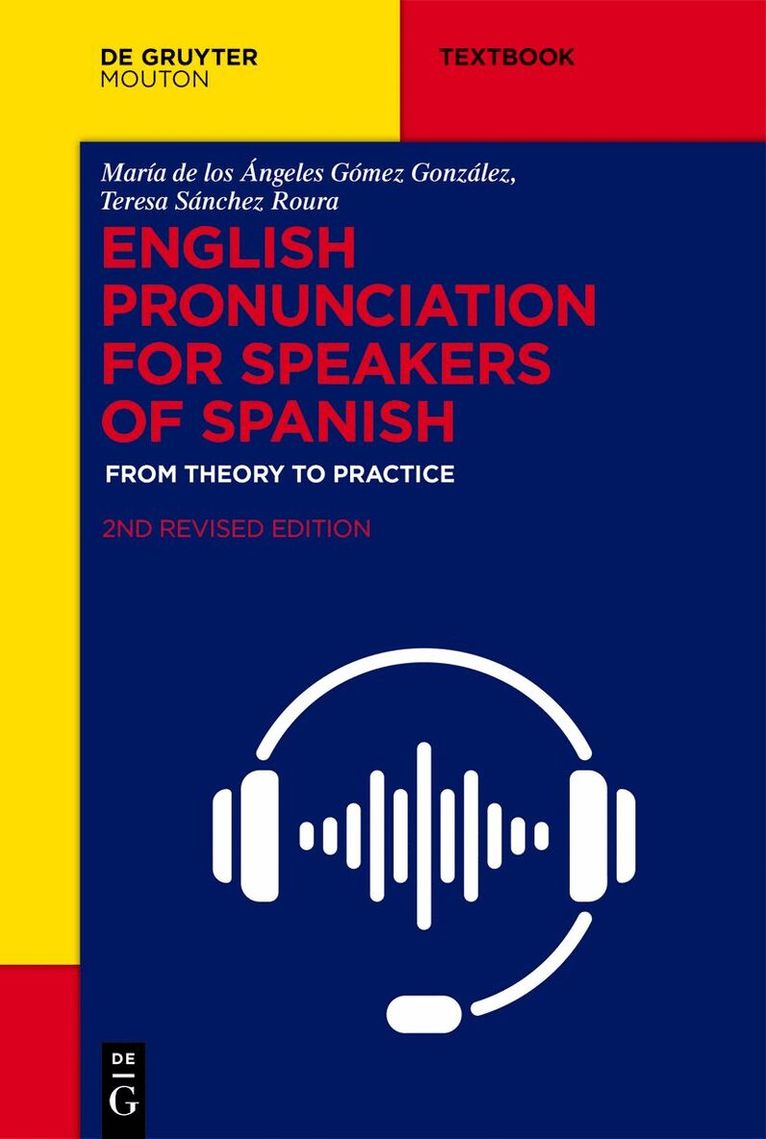
English Pronunciation for Speakers of Spanish
From Theory to Practice
Av Teresa Sanchez Roura, Maria de los Angeles Gomez Gonzalez
E-bok, 2016
536 kr
Lägg i varukorg
English Pronunciation for Speakers of Spanish fills a gaping hole in the market for books on English phonetics and pronunciation because it not only combines theoretical issues and applications to practice, but it also adopts a contrastive English-Spanish approach to better suit the needs of …
English Pronunciation for Speakers of Spanish
From Theory to Practice
Av María de los Ángeles Gómez González, Teresa Sánchez Roura
Häftad, 2016
449 kr
Lägg i varukorg
English Pronunciation for Speakers of Spanish fills a gaping hole in the market for books on English phonetics and pronunciation because it not only combines theoretical issues and applications to practice, but it also adopts a contrastive English-Spanish approach to better suit the needs of …
English Pronunciation for Speakers of Spanish
From Theory to Practice
Av Teresa Sanchez Roura, Maria de los Angeles Gomez Gonzalez
E-bok, 2016
536 kr
Lägg i varukorg
English Pronunciation for Speakers of Spanish fills a gaping hole in the market for books on English phonetics and pronunciation because it not only combines theoretical issues and applications to practice, but it also adopts a contrastive English-Spanish approach to better suit the needs of …
Studies in Functional Discourse Grammar
Av J. Lachlan Mackenzie, María de los Ángeles Gómez-González
Häftad, 2005
1187 kr
Lägg i varukorg
This book contains eight studies on Functional Discourse Grammar (FDG), with work by FDG’s foremost proponents, who provide both an introduction to the theory and a glimpse of current research projects. FDG derives its name from taking the discourse act as the basic unit of linguistic analysis. …
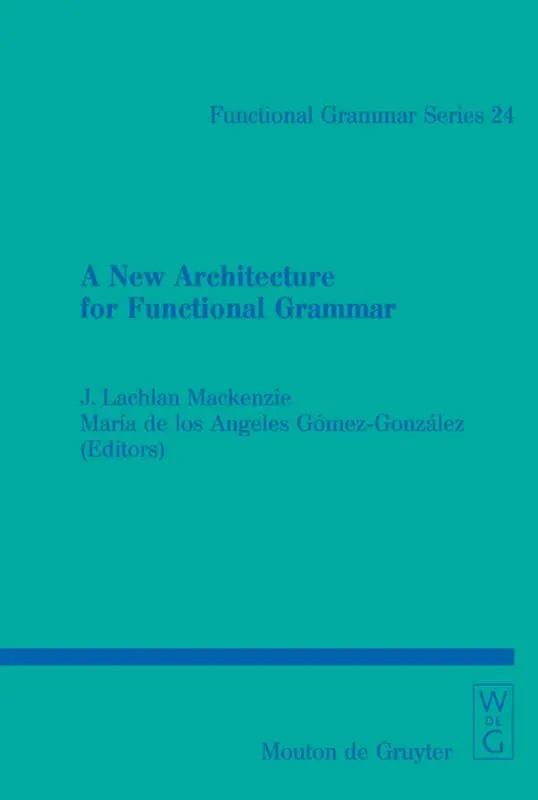
New Architecture for Functional Grammar
Av J. Lachlan Mackenzie, María de los Ángeles Gómez-González
Häftad, 2004
1014 kr
Lägg i varukorg
This volume, which represents a major advance on Simon Dik's final statement of the theory (1997), lays the foundation for the future evolution of FG towards a Functional Discourse Grammar. It rises to the double challenge of specifying the interface between discourse and grammar and of detailing …
New Architecture for Functional Grammar
Av Maria de los Angeles Gomez-Gonzalez, J. Lachlan Mackenzie
E-bok, 2008
1200 kr
Lägg i varukorg
This volume, which represents a major advance on Simon Dik's final statement of the theory (1997), lays the foundation for the future evolution of FG towards a Functional Discourse Grammar. It rises to the double challenge of specifying the interface between discourse and grammar and of detailing …
English Pronunciation for Speakers of Spanish
From Theory to Practice
Av María de los Ángeles Gómez González, Teresa Sánchez Roura
Häftad, 2027
582 kr
Kommande
This book covers the key concepts of English phonetics and phonology for Spanish-speaking learners of English. It combines theoretical issues (e.g. phonetics and phonological theory, segmentals and suprasegmentals, accent variation, connected speech, or spelling), as well as applications to …