Maria Kontos – författare
Visar alla böcker från författaren Maria Kontos. Handla med fri frakt och snabb leverans.
7 produkter
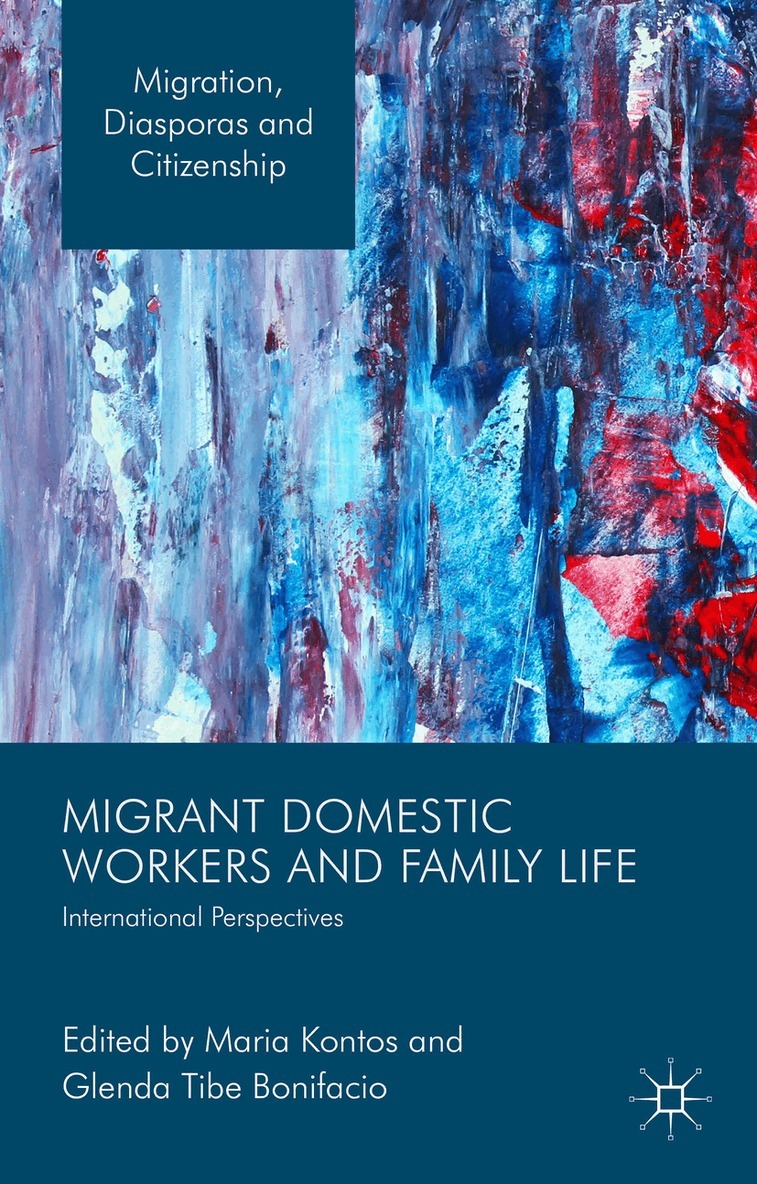
Migrant Domestic Workers and Family Life
International Perspectives
Av Maria Kontos, Glenda Tibe Bonifacio
Inbunden, 2015
552 kr
Lägg i varukorg
This timely and innovative book delivers a comprehensive analysis of the non-recognition of the right to a family life of migrant live-in domestic and care workers in Argentina, Canada, Germany, Italy, Lebanon, Norway, the Philippines, Slovenia, South Korea, Spain, the United Arab Emirates, the …
Migrant Domestic Workers and Family Life
International Perspectives
Av Glenda Tibe Bonifacio, Maria Kontos
E-bok, 2016
763 kr
Lägg i varukorg
This timely and innovative book delivers a comprehensive analysis of the non-recognition of the right to a family life of migrant live-in domestic and care workers in Argentina, Canada, Germany, Italy, Lebanon, Norway, the Philippines, Slovenia, South Korea, Spain, the United Arab Emirates, the …
Self-Employment Activities of Women and Minorities
Their Success or Failure in Relation to Social Citizenship Policies
Av Maria Kontos, Ursula Apitzsch
E-bok, 2008
734 kr
Lägg i varukorg
This volume summarizes some results of the trans-national European research project „Self-employment activities concerning women and minorities: their success or failure in relation to social citizenship policies“ that was supported by the Directorate General Research of the European Commission …
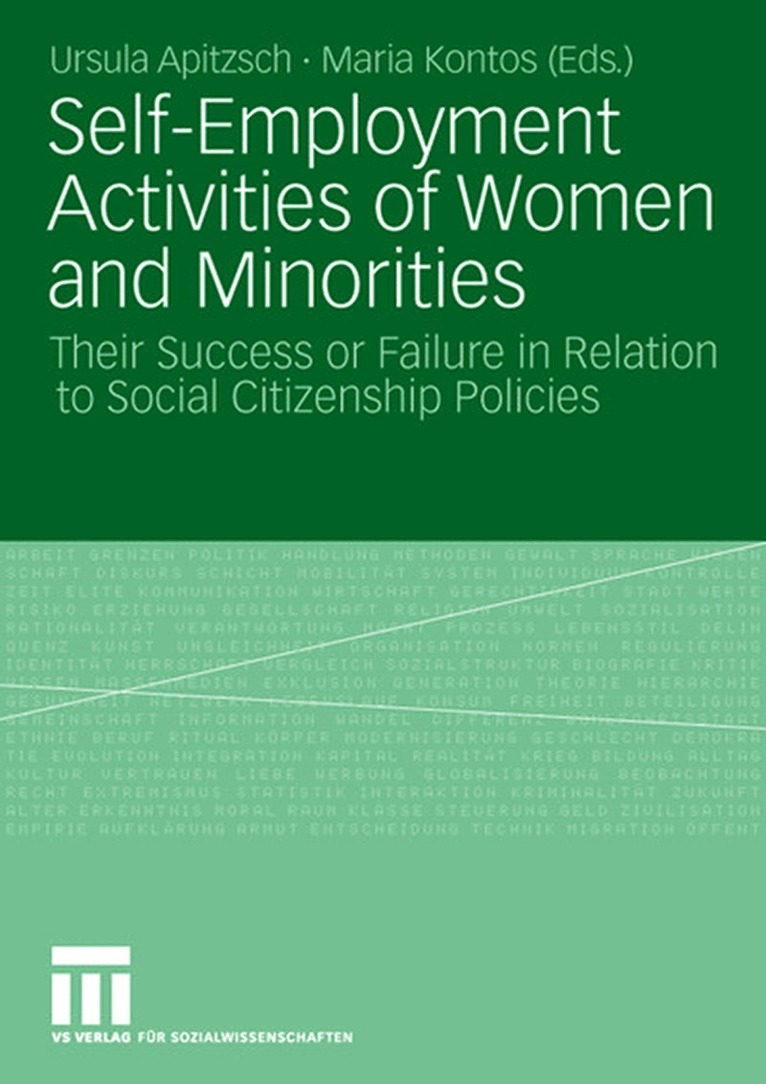
Self-Employment Activities of Women and Minorities
Their Success or Failure in Relation to Social Citizenship Policies
Av Ursula Apitzsch, Maria Kontos
Häftad, 2007
552 kr
Lägg i varukorg
This volume summarizes some results of the trans-national European research project „Self-employment activities concerning women and minorities: their success or failure in relation to social citizenship policies“ that was supported by the Directorate General Research of the European Commission …
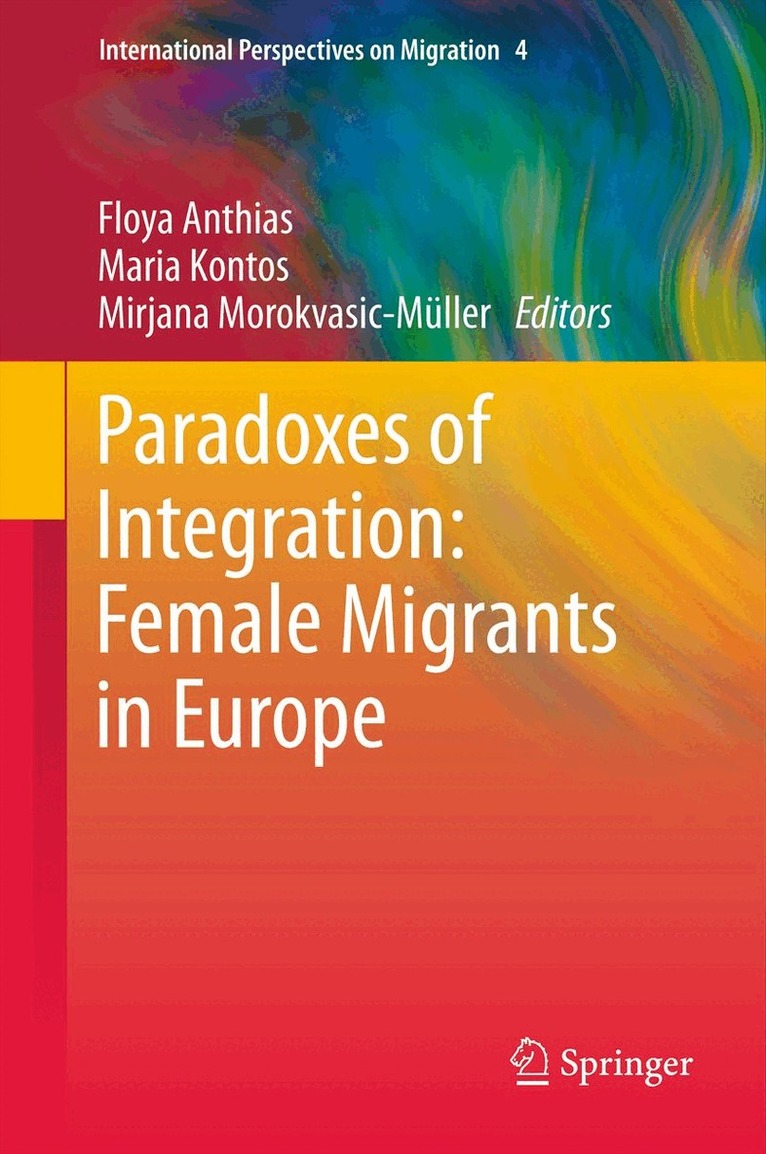
Paradoxes of Integration: Female Migrants in Europe
Av Floya Anthias, Maria Kontos m. fl.
Inbunden, 2012
1534 kr
Lägg i varukorg
This timely and innovative book analyses the lives of new female migrants in the EU with a focus on the labour market, domestic work, care work and prostitution in particular. It provides a comparative analysis embracing eleven European countries from Northern (UK, Germany, Sweden, France), …
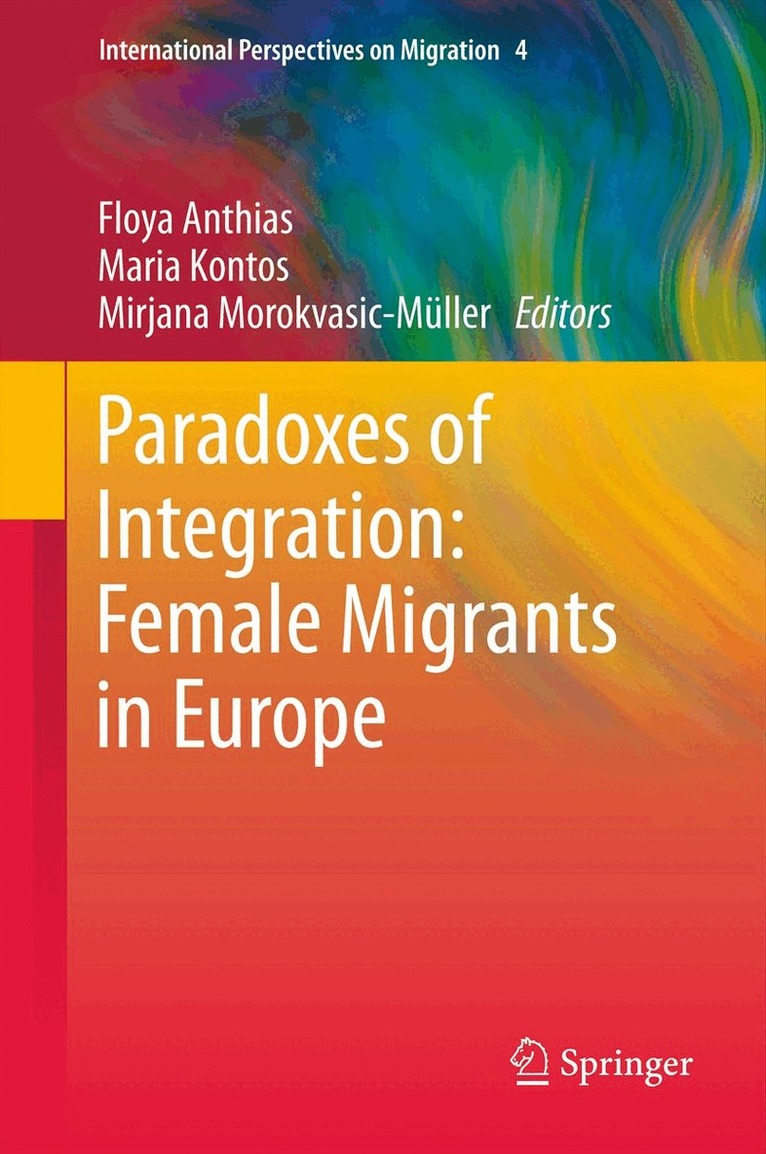
Paradoxes of Integration: Female Migrants in Europe
Av Mirjana Morokvasic-Muller, Maria Kontos m. fl.
E-bok, 2012
1948 kr
Lägg i varukorg
This timely and innovative book analyses the lives of new female migrants in the EU with a focus on the labour market, domestic work, care work and prostitution in particular. It provides a comparative analysis embracing eleven European countries from Northern (UK, Germany, Sweden, France), …
Paradoxes of Integration: Female Migrants in Europe
Av Floya Anthias, Maria Kontos m. fl.
Häftad, 2014
1534 kr
Lägg i varukorg
This timely and innovative book analyses the lives of new female migrants in the EU with a focus on the labour market, domestic work, care work and prostitution in particular. It provides a comparative analysis embracing eleven European countries from Northern (UK, Germany, Sweden, France), …