Maria Stopfner - Böcker
Visar alla böcker från författaren Maria Stopfner. Handla med fri frakt och snabb leverans.
2 produkter
2 produkter
Del 71 - Educational Linguistics
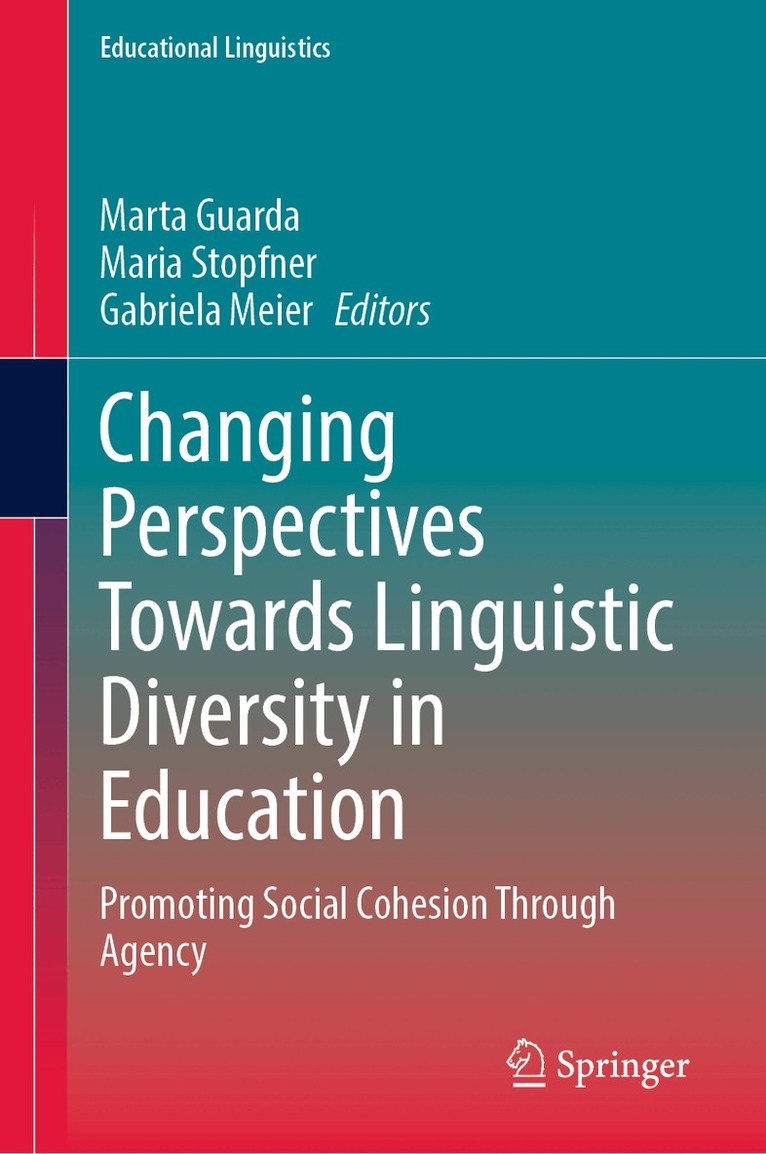
Changing Perspectives Towards Linguistic Diversity in Education
Promoting Social Cohesion Through Agency
Inbunden, Engelska, 2026
1 634 kr
Skickas inom 10-15 vardagar
This book explores the need for a change in perspectives towards linguistic diversity and pluri/multilingual education, and highlights the role of teachers, students, caregivers, and researchers, as agents of social cohesion in today’s complex societies. The book examines how a change in perspectives on the part of these social actors can challenge dominant language ideologies and trigger more equitable, just and cohesive educational environments and social communities that honour and leverage the linguistic repertoire of each individual. While the agency of students and teachers has been brought to the fore by a number of publications on pluri/multilingual education, this dimension is particularly relevant for researchers themselves, whose agency and epistemic stance are paramount in the construction and interpretation of observed phenomena. In this respect, this book tackles this aspect by means of autobiographical narratives, in which each author/researcher provides insights into experiences in their professional and/or personal life that had an impact on the way they see their agentive role in society. This book is intended for researchers, practitioners, language policy makers and graduate students with an interest in the link between pluri/multilingual education and cohesion in educational communities and the broader society.
Del 101 - Discourse Approaches to Politics, Society and Culture
Voices of Supporters
Populist parties, social media and the 2019 European elections
Inbunden, Engelska, 2023
1 367 kr
Skickas
This book addresses an under-researched area within populism studies: the discourse of supporters of populist parties. Taking the 2019 European elections as their case study, the authors analyse how supporters in eleven different countries construct identities and voting motivations on social media. The individual chapters comprise a range of methods to investigate data from different social media platforms, defining populism as a political strategy and/or practice, realised in discourse, that is based on a dichotomy between “the people”, who are unified by their will, and an out-group whose actions are not in the interest of the people, with a leader safeguarding the interests of the people against the out-group. The book identifies what motivates people to vote for populist parties, what role national identities and values play in those motivations, and how the social media postings of populist parties are recontextualised in supporters’ comments to serve as a voting motivation.