Marianne Hem Eriksen – författare
Visar alla böcker från författaren Marianne Hem Eriksen. Handla med fri frakt och snabb leverans.
4 produkter
4 produkter
Inbunden, Engelska, 2019
1 330 kr
Skickas inom 7-10 vardagar
In this book, Marianne Hem Eriksen explores the social organization of Viking Age Scandinavia through a study of domestic architecture, and in particular, the doorway. A highly charged architectural element, the door is not merely a practical, constructional solution. Doors control access, generate movement, and demark boundaries, yet also serve as potent ritual objects. For this study, Eriksen analyzes and interprets the archaeological data of house remains from Viking Age Norway, which are here synthesized for the first time. Using social approaches to architecture, she demonstrates how the domestic space of the Viking household, which could include masters and slaves, wives and mistresses, children and cattle, was not neutral. Quotidian and ritual interactions with, through, and orchestrated by doorways prove to be central to the production of a social world in the Viking Age. Eriksen's book challenges the male-dominated focus of research on the Vikings and expands research questions beyond topics of seaborne warriors, trade, and craft.
E-bok
Engelska, 20191 571 kr
Läs direkt efter köp
In this book, Marianne Hem Eriksen explores the social organization of Viking Age Scandinavia through a study of domestic architecture, and in particular, the doorway. A highly charged architectural element, the door is not merely a practical, constructional solution. Doors control access, generate movement, and demark boundaries, yet also serve as potent ritual objects. For this study, Eriksen analyzes and interprets the archaeological data of house remains from Viking Age Norway, which are here synthesized for the first time. Using social approaches to architecture, she demonstrates how the domestic space of the Viking household, which could include masters and slaves, wives and mistresses, children and cattle, was not neutral. Quotidian and ritual interactions with, through, and orchestrated by doorways prove to be central to the production of a social world in the Viking Age. Eriksen''s book challenges the male-dominated focus of research on the Vikings and expands research questions beyond topics of seaborne warriors, trade, and craft.
E-bok
PDF, Engelska, 20191 557 kr
Läs direkt efter köp
In this book, Marianne Hem Eriksen explores the social organization of Viking Age Scandinavia through a study of domestic architecture, and in particular, the doorway. A highly charged architectural element, the door is not merely a practical, constructional solution. Doors control access, generate movement, and demark boundaries, yet also serve as potent ritual objects. For this study, Eriksen analyzes and interprets the archaeological data of house remains from Viking Age Norway, which are here synthesized for the first time. Using social approaches to architecture, she demonstrates how the domestic space of the Viking household, which could include masters and slaves, wives and mistresses, children and cattle, was not neutral. Quotidian and ritual interactions with, through, and orchestrated by doorways prove to be central to the production of a social world in the Viking Age. Eriksen''s book challenges the male-dominated focus of research on the Vikings and expands research questions beyond topics of seaborne warriors, trade, and craft.
E-bok
Engelska, 2021123 kr
Läs direkt efter köp
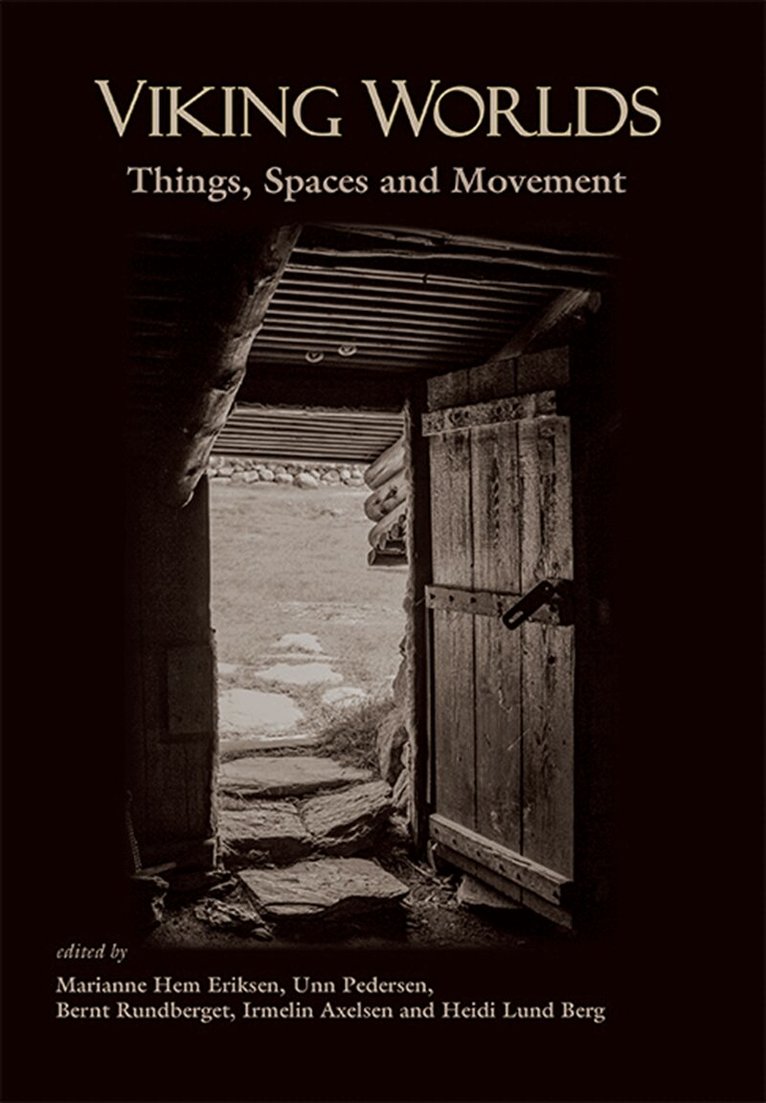
Fourteen papers explore a variety of inter-disciplinary approaches to understanding the Viking past, both in Scandinavia and in the Viking diaspora. Contributions employ both traditional inter- or multi-disciplinarian perspectives such as using historical sources, Icelandic sagas and Eddic poetry and also specialised methodologies and/or empirical studies, place-name research, the history of religion and technological advancements, such as isotope analysis. Together these generate new insights into the technology, social organisation and mentality of the worlds of the Vikings.Geographically, contributions range from Iceland through Scandinavia to the Continent. Scandinavian, British and Continental Viking scholars come together to challenge established truths, present new definitions and discuss old themes from new angles. Topics discussed include personal and communal identity; gender relations between people, artefacts, and places/spaces; rules and regulations within different social arenas; processes of production, trade and exchange, and transmission of knowledge within both past Viking-age societies and present-day research. Displaying thematic breadth as well as geographic and academic diversity, the articles may foreshadow up-and-coming themes for Viking Age research. Rooted in different traditions, using diverse methods and exploring eclectic material – Viking Worlds will provide the reader with a sense of current and forthcoming issues, debates and topics in Viking studies, and give insight into a new generation of ideas and approaches which will mark the years to come.