Maricio Janue i Miret – författare
Visar alla böcker från författaren . Handla med fri frakt och snabb leverans.
7 produkter
7 produkter
E-bok
PDF, Engelska, 2026797 kr
Läs direkt efter köp
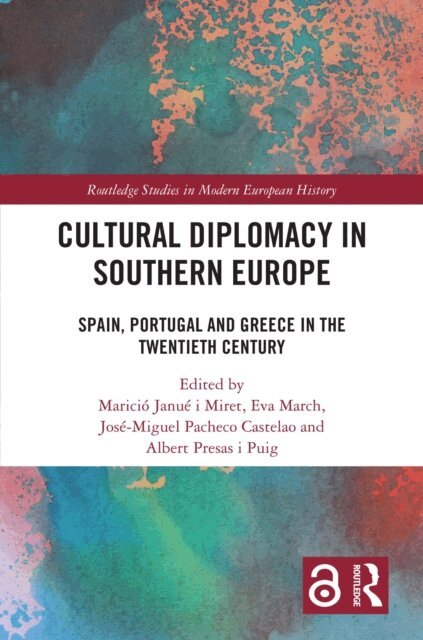
This book offers a comprehensive overview of how culture, science, technology and academic activity functioned as instruments of cultural diplomacy and soft power in Spain, Portugal and Greece during the interwar and Cold War periods.Cultural Diplomacy in Southern Europe is particularly timely due to the growing academic focus on the role of culture and science as relevant actors in countries' diplomatic strategies, even as the current geopolitical climate appears to be altering the roles of traditional international actors. The idea of a common Europe as an area of freedom and progress has been founded on Europe's reputation as a centre of culture and knowledge. At a time when social tensions are fuelling attempts to redefine the European identity, this book explores the potential at both the national and international levels for science and culture to serve as political tools, drivers of economic and social modernisation and sources of power.This volume will interest scholars and students of the History of Cultural and Scientific Diplomacy, 20th-Century European History and International Relations.Chapter 1 of this book is freely available as a downloadable Open Access PDF at http://www.taylorfrancis.com under a Creative Commons Attribution-ShareAlike 4.0 International (CC BY-SA) license.
E-bok
Engelska, 2026769 kr
Läs direkt efter köp
This book offers a comprehensive overview of how culture, science, technology and academic activity functioned as instruments of cultural diplomacy and soft power in Spain, Portugal and Greece during the interwar and Cold War periods.Cultural Diplomacy in Southern Europe is particularly timely due to the growing academic focus on the role of culture and science as relevant actors in countries' diplomatic strategies, even as the current geopolitical climate appears to be altering the roles of traditional international actors. The idea of a common Europe as an area of freedom and progress has been founded on Europe's reputation as a centre of culture and knowledge. At a time when social tensions are fuelling attempts to redefine the European identity, this book explores the potential at both the national and international levels for science and culture to serve as political tools, drivers of economic and social modernisation and sources of power.This volume will interest scholars and students of the History of Cultural and Scientific Diplomacy, 20th-Century European History and International Relations.Chapter 1 of this book is freely available as a downloadable Open Access PDF at http://www.taylorfrancis.com under a Creative Commons Attribution-ShareAlike 4.0 International (CC BY-SA) license.
Inbunden, Engelska, 2026
2 474 kr
Skickas inom 10-15 vardagar
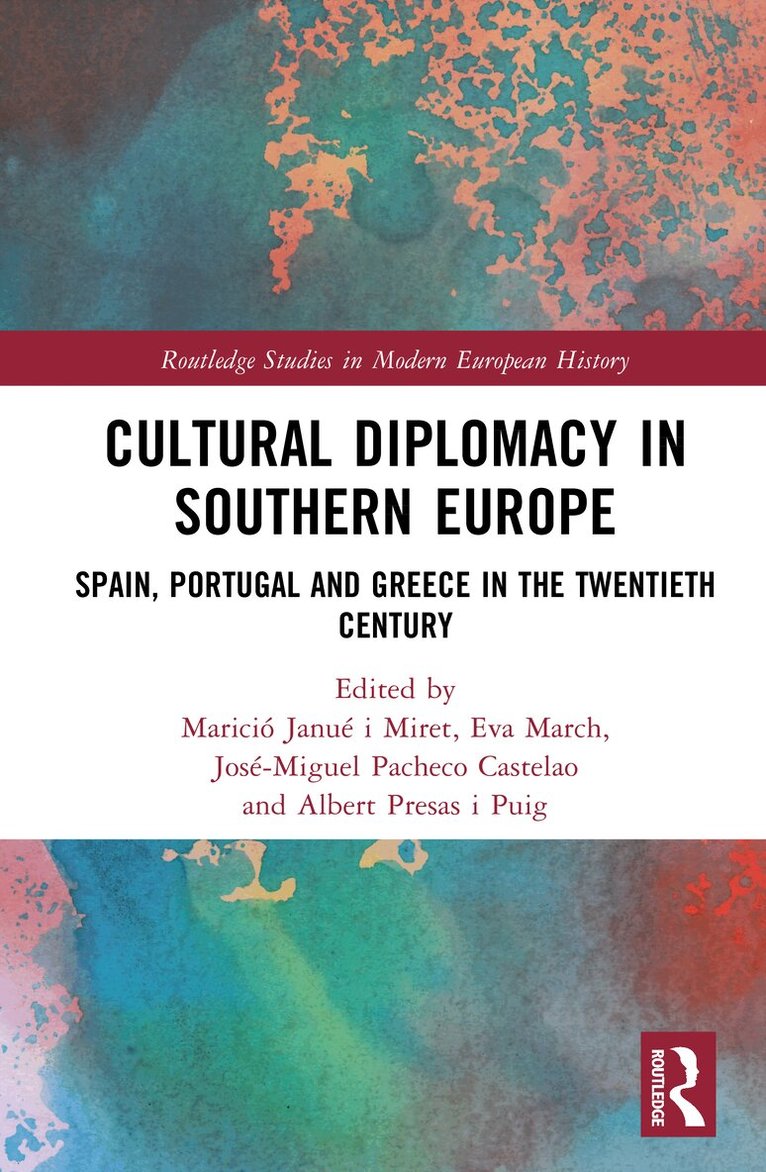
This book offers a comprehensive overview of how culture, science, technology and academic activity functioned as instruments of cultural diplomacy and soft power in Spain, Portugal and Greece during the interwar and Cold War periods.Cultural Diplomacy in Southern Europe is particularly timely due to the growing academic focus on the role of culture and science as relevant actors in countries’ diplomatic strategies, even as the current geopolitical climate appears to be altering the roles of traditional international actors. The idea of a common Europe as an area of freedom and progress has been founded on Europe’s reputation as a centre of culture and knowledge. At a time when social tensions are fuelling attempts to redefine the European identity, this book explores the potential at both the national and international levels for science and culture to serve as political tools, drivers of economic and social modernisation and sources of power.This volume will interest scholars and students of the History of Cultural and Scientific Diplomacy, 20th-Century European History and International Relations.Chapter 1 of this book is freely available as a downloadable Open Access PDF at http://www.taylorfrancis.com under a Creative Commons Attribution-ShareAlike 4.0 International (CC BY-SA) license.
Inbunden, Engelska, 2021
1 439 kr
Skickas inom 10-15 vardagar
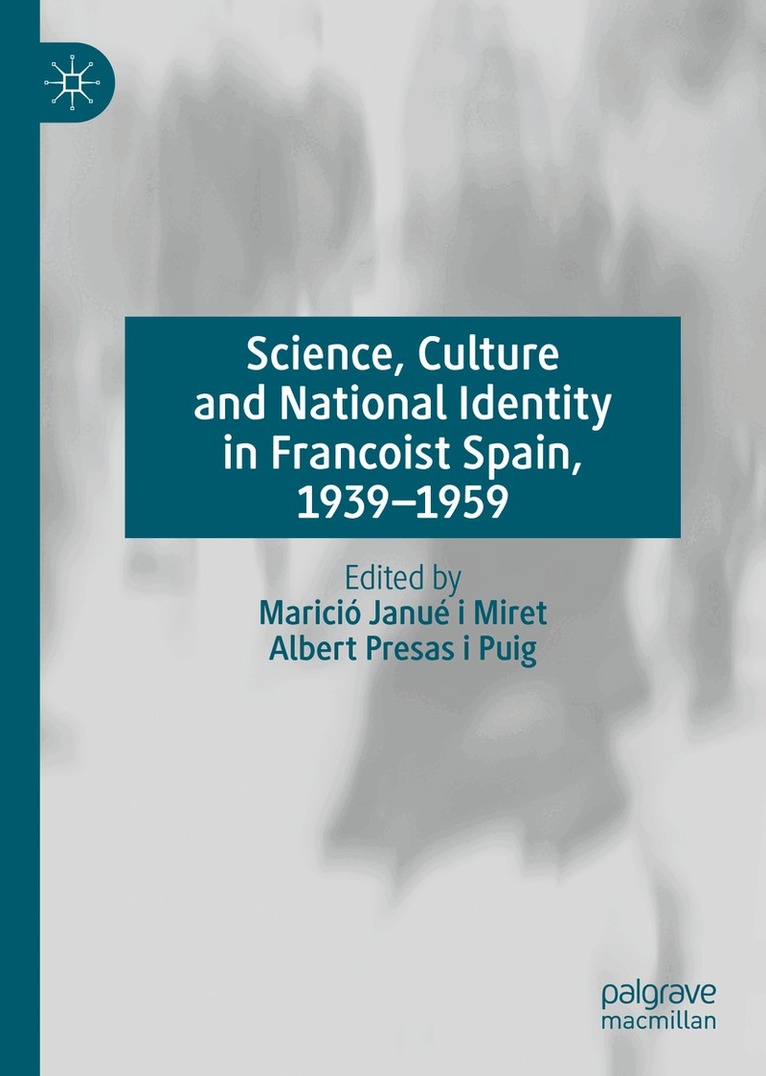
This book examines the role that science and culture held as instruments of nationalization policies during the first phase of the Franco regime in Spain. It considers the reciprocal relationship between political legitimacy and developments in science and culture, and explores the ‘nationalization’ efforts in Spain in the 1940s and 1950s, via the complex process of transmitting narratives of national identity, through ideas, representations and homogenizing practices. Taking an interdisciplinary approach, the volume features insights into how scientific and cultural language and symbols were used to formulate national identity, through institutions, resource distribution and specific national policies. Split into five parts, the collection considers policies in the Francoist ‘New State’, the role of women in these debates, and perspectives on the nationalization and internationalization efforts that made use of scientific and cultural spheres. Chapters also feature insights into cinema, literature, cultural diplomacy, mathematics and technology in debates on Catalonia, the Nuclear Energy Board, the Spanish National Research Council, and how scientific tools in Spain in this era fed into wider geopolitics with America and onto the UNESCO stage.
E-bok
Engelska, 20211 785 kr
Läs direkt efter köp
This book examines the role that science and culture held as instruments of nationalization policies during the first phase of the Franco regime in Spain. It considers the reciprocal relationship between political legitimacy and developments in science and culture, and explores the ‘nationalization’ efforts in Spain in the 1940s and 1950s, via the complex process of transmitting narratives of national identity, through ideas, representations and homogenizing practices. Taking an interdisciplinary approach, the volume features insights into how scientific and cultural language and symbols were used to formulate national identity, through institutions, resource distribution and specific national policies. Split into five parts, the collection considers policies in the Francoist ‘New State’, the role of women in these debates, and perspectives on the nationalization and internationalization efforts that made use of scientific and cultural spheres. Chapters also feature insights into cinema, literature, cultural diplomacy, mathematics and technology in debates on Catalonia, the Nuclear Energy Board, the Spanish National Research Council, and how scientific tools in Spain in this era fed into wider geopolitics with America and onto the UNESCO stage.
Häftad, Engelska, 2022
1 439 kr
Skickas inom 10-15 vardagar
This book examines the role that science and culture held as instruments of nationalization policies during the first phase of the Franco regime in Spain. It considers the reciprocal relationship between political legitimacy and developments in science and culture, and explores the ‘nationalization’ efforts in Spain in the 1940s and 1950s, via the complex process of transmitting narratives of national identity, through ideas, representations and homogenizing practices. Taking an interdisciplinary approach, the volume features insights into how scientific and cultural language and symbols were used to formulate national identity, through institutions, resource distribution and specific national policies. Split into five parts, the collection considers policies in the Francoist ‘New State’, the role of women in these debates, and perspectives on the nationalization and internationalization efforts that made use of scientific and cultural spheres. Chapters also feature insights into cinema, literature, cultural diplomacy, mathematics and technology in debates on Catalonia, the Nuclear Energy Board, the Spanish National Research Council, and how scientific tools in Spain in this era fed into wider geopolitics with America and onto the UNESCO stage.
E-bok
Katalanska, 2011102 kr
Läs direkt efter köp
A partir d'una reflexió col·lectiva, en aquesta obra es tracten aspectes decisius sobre la necessitat de rigor de l'anàlisi històrica i les implicacions cíviques de la tasca de l'historiador. El vincle innegable entre el treball històric i el poder s'aborda des d'una doble direcció, la de l'historiador que vol transformar-lo a través del seu discurs, i la dels polítics que cerquen en el discurs històric una raó per a les seves interpretacions. Així, les diverses intervencions coincideixen a remarcar que l'historiador no ha de defugir el compromís cívic amb els desafavorits de la societat i amb una democràcia encara en construcció. Però sense obviar la demanda de «memòria històrica» de la societat contemporània, cal diferenciar entre memòria i història, entesa aquesta com una anàlisi de les raons dels processos de canvi sotmesa a les exigències metodològiques.