Marie-Aude Fouéré – författare
Visar alla böcker från författaren Marie-Aude Fouéré. Handla med fri frakt och snabb leverans.
8 produkter
8 produkter
Häftad, Engelska, 2025
549 kr
Skickas inom 5-8 vardagar
Häftad, Engelska, 2015
679 kr
Skickas inom 5-8 vardagar
E-bok
PDF, Engelska, 2015841 kr
Läs direkt efter köp
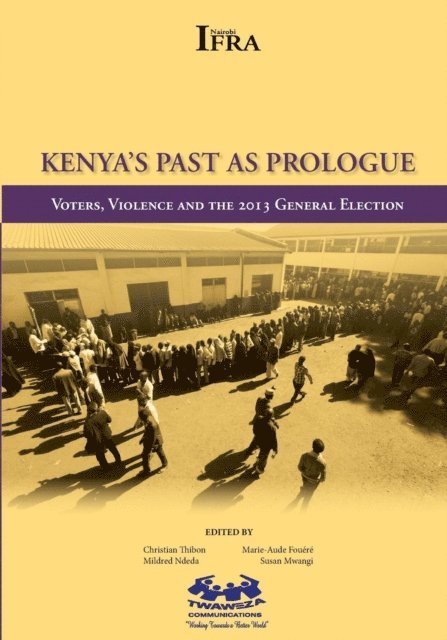
During the run-up to Kenya,s 2013 general elections, crucial political and civic questions were raised. Could past mistakes, especially political and ethnic-related violence, be avoided this time round? Would the spectre of the 2007 post-electoral violence positively or negatively affect debates and voting? How would politicians, electoral bodies such as the IEBC, the Kenyan civil society, and the international community weigh in on the elections? More generally, would the 2013 elections bear witness to the building up of an electoral culture in Kenya, characterized by free and fair elections, or would it show that voting is still weakened by political malpractices, partisan opinions and emotional reactions? Would Kenya,s past be inescapable or would it prepare the scene for a new political order? Kenya,s Past as Prologue adopts a multidisciplinary perspective , mainly built upon field-based ethnography and a selection of case studies , to answer these questions. Under the leadership of the French Institute for Research in Africa (Institut franc,ais de recherche en Afrique, IFRA), political scientists, historians and anthropologists explore various aspects of the electoral process to contribute in-depth analyses of the last elections. They highlight the structural factors underlying election and voting in Kenya including the political system, culture and political transition. They also interrogate the short-term trends and issues that influence the new political order. The book provides insight into specific case studies, situations and contexts, thus bringing nuances and diversity into focus to better assess Kenya,s evolving electoral democracy.
Häftad, Engelska, 2025
303 kr
Skickas inom 5-8 vardagar
Häftad, Engelska, 2018
566 kr
Skickas inom 5-8 vardagar
E-bok
PDF, Engelska, 2018649 kr
Läs direkt efter köp
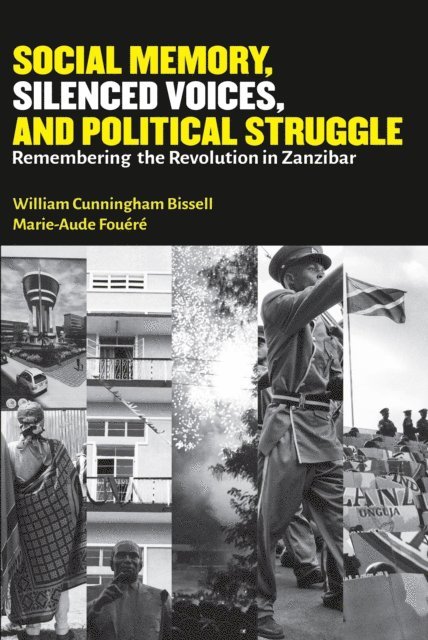
This volume focuses on the cultural memory and mediation of the 1964 Zanzibar revolution, analyzing it’s continuing reverberations in everyday life. The revolution constructed new conceptions of community and identity, race and cultural belonging, as well as instituting different ideals of nationhood, citizenship, sovereignty. As the commemoration of the 50th anniversary of the revolution revealed, the official versions of events have shifted significantly over time and the legacy of the uprising is still deeply contested. In these debates, the question of Zanzibari identity remains very much at stake: Who exactly belongs in the islands and what historical processes brought them there? What are the boundaries of the nation, and who can claim to be an essential part of this imagined and embodied community?Political belonging and power are closely intertwined with these issues of identity and history—raising intense debates and divisions over precisely where Zanzibar should be situated within the national order of things in a postcolonial and interconnected world. Attending to narratives that have been overlooked, ignored, or relegated to the margins, the authors of these essays do not seek to simply define the revolution or to establish its ultimate meaning. Instead, they seek to explore the continuing echoes and traces of the revolution fifty years on, reflected in memories, media, and monuments. Inspired by interdisciplinary perspectives from anthropology, history, cultural studies, and geography, these essays foreground critical debates about the revolution, often conducted sotto voce and located well off the official stage—attending to long silenced questions, submerged doubts, rumors and secrets, or things that cannot be said.
Häftad, Engelska, 2015
599 kr
Skickas inom 5-8 vardagar
E-bok
PDF, Engelska, 2015718 kr
Läs direkt efter köp
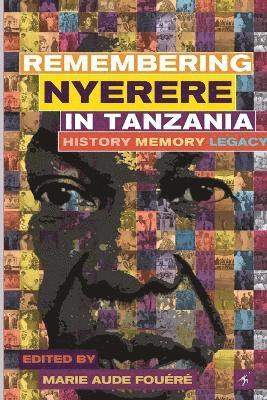
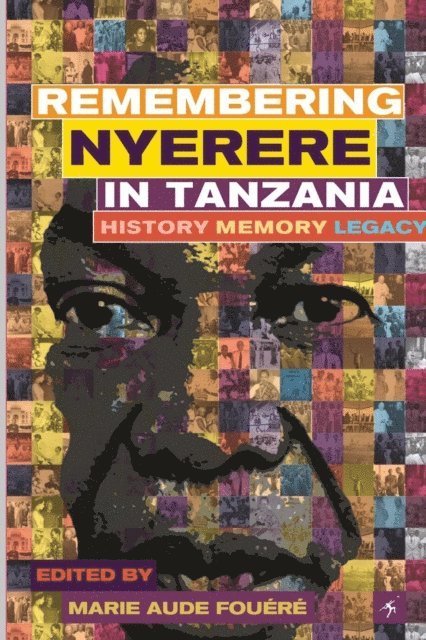
This edited volume is about the rekindled investment in the figure of the first president Julius K. Nyerere in contemporary Tanzania. It explores how Nyerere is remembered by Tanzanians from different levels of society, in what ways and for what purposes. Looking into what Nyerere means and stands for today, it provides insight into the media, the political arena, poetry, the education sector, or street-corner talks. The main argument of this book is that Nyerere has become a widely shared political metaphor used to debate and contest conceptions of the Tanzanian nation and Tanzanian-ness. The state-citizens relationship, the moral standards for the exercise of power, and the contours of national sentiment are under scrutiny when the figure of Nyerere is mobilized today. The contributions gathered here come from a generation of budding or renowned scholars in varied disciplines - history, anthropology and political science. Drawing upon materials collected through extensive fieldwork and archival research, they all critically engage the existing literature about Tanzania and prevailing political narratives to explore how nationhood is (re)imagined in Tanzania today through assent and contest.