Marie Friedmann Marquardt – författare
Visar alla böcker från författaren Marie Friedmann Marquardt. Handla med fri frakt och snabb leverans.
2 produkter
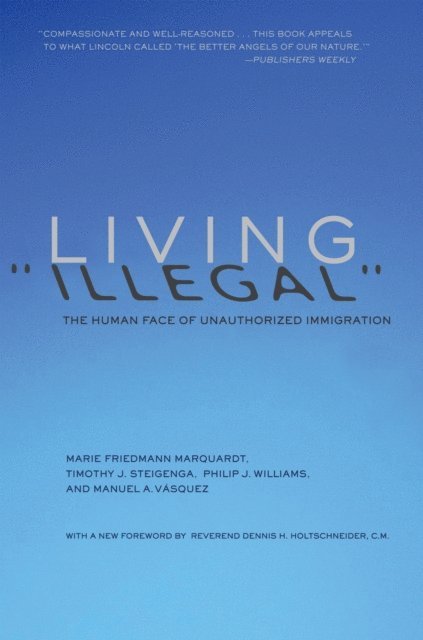
Living "e;Illegal"e;
The Human Face of Unauthorized Immigration
Av Manuel A. Vasquez, Philip J. Williams m. fl.
E-bok, 2013
214 kr
Lägg i varukorg
A myth-busting account of the tragedies, trials, and successes of undocumented immigration in the United States. For decades now, America''s polarizing debate over immigration revolved around a set of one-dimensional characters and unchallenged stereotypes. The resulting policies—from the creation …
Living Illegal
The Human Face of Unauthorized Immigration
Av Manuel Vasquez, Marie Friedmann Marquardt m. fl.
Häftad, 2013
179 kr
Tillfälligt slut
Immigration has been a long-time frontrunner of political debate, especially with new draconian laws at the US-Mexico border and David Cameron's conservative attempts at reducing entry clearances into the UK. Based on oral histories, individual testimonies and years, Living Illegal' offers textured …