Marie Lall – författare
519 kr
Skickas inom 10-15 vardagar
2 158 kr
Skickas inom 10-15 vardagar
665 kr
Skickas inom 10-15 vardagar
2 090 kr
Skickas inom 10-15 vardagar
860 kr
Läs direkt efter köp
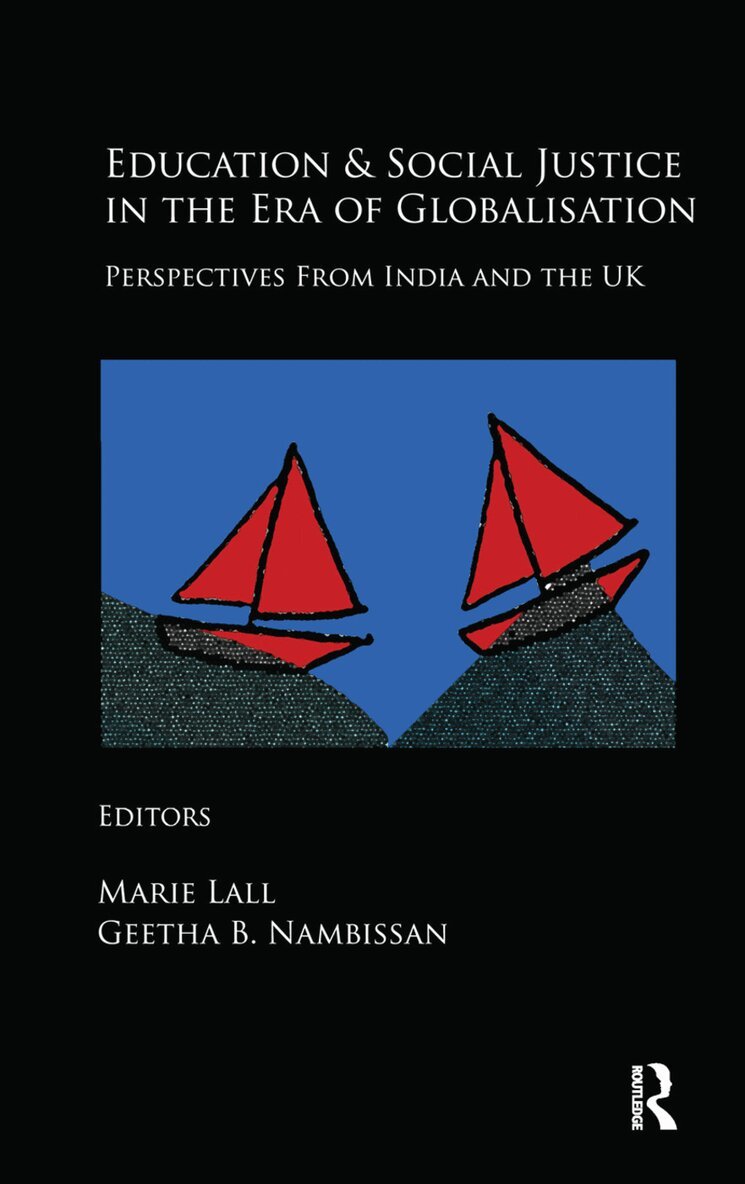
The book discusses the implications of globalization on education from the perspective of social justice. It looks at two countries — India and the UK — to look at how global economic and cultural processes are mediated through nation states, institutional structures and the aspirations of different social groups. It seeks to resituate the debates around education and social justice in policy, research and public discourse by highlighting the need for a more nuanced understanding of globalization and education.
It also demonstrates the effects of economic dimensions — the politics of neoliberalism, and how this has shifted the understanding of state responsibilities and marginalized issues pertaining to the agenda of social justice.
860 kr
Läs direkt efter köp
The book discusses the implications of globalization on education from the perspective of social justice. It looks at two countries — India and the UK — to look at how global economic and cultural processes are mediated through nation states, institutional structures and the aspirations of different social groups. It seeks to resituate the debates around education and social justice in policy, research and public discourse by highlighting the need for a more nuanced understanding of globalization and education.
It also demonstrates the effects of economic dimensions — the politics of neoliberalism, and how this has shifted the understanding of state responsibilities and marginalized issues pertaining to the agenda of social justice.
773 kr
Läs direkt efter köp
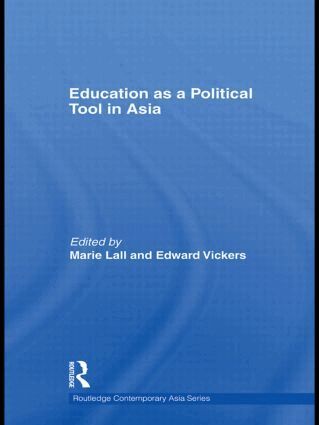
This book offers a fresh and comparative approach in questioning what education is being used for and what the effects of the politicisation of education are on Asian societies in the era of globalisation. Education has been used as a political tool throughout the ages and across the whole world to define national identity and underlie the political rationale of regimes. In the contemporary, globalising world there are particularly interesting examples of this throughout Asia, ranging from the new definition of Indian national identity as a Hindu identity (to contrast with Pakistan''s Islamic identity), to particular versions of nationalism in China, Japan, Singapore and Vietnam. In Asia education systems have their origins in processes of state formation aimed either at bolstering ''self-strengthening'' resistance to the encroachments of Western and/or Asian imperialism, or at furthering projects of post-colonial nation-building. State elites have sought to popularise powerful visions of nationhood, to equip these visions with a historical ''back-story'', and to endow them with the maximum sentimental charge. This book explores all of these developments, emphasising that education is seen by nations across Asia, as elsewhere, as more than simply a tool for economic development, and that issues of national identity and the tolerance - or lack of it - of ethnic, cultural or religious diversity can be at least as important as issues of literacy and access. Interdisciplinary and unique in its analysis, this book will be of interest to scholars of political science, research in education and Asian Studies.
773 kr
Läs direkt efter köp
This book offers a fresh and comparative approach in questioning what education is being used for and what the effects of the politicisation of education are on Asian societies in the era of globalisation. Education has been used as a political tool throughout the ages and across the whole world to define national identity and underlie the political rationale of regimes. In the contemporary, globalising world there are particularly interesting examples of this throughout Asia, ranging from the new definition of Indian national identity as a Hindu identity (to contrast with Pakistan''s Islamic identity), to particular versions of nationalism in China, Japan, Singapore and Vietnam. In Asia education systems have their origins in processes of state formation aimed either at bolstering ''self-strengthening'' resistance to the encroachments of Western and/or Asian imperialism, or at furthering projects of post-colonial nation-building. State elites have sought to popularise powerful visions of nationhood, to equip these visions with a historical ''back-story'', and to endow them with the maximum sentimental charge. This book explores all of these developments, emphasising that education is seen by nations across Asia, as elsewhere, as more than simply a tool for economic development, and that issues of national identity and the tolerance - or lack of it - of ethnic, cultural or religious diversity can be at least as important as issues of literacy and access. Interdisciplinary and unique in its analysis, this book will be of interest to scholars of political science, research in education and Asian Studies.
1 667 kr
Skickas inom 10-15 vardagar
719 kr
Skickas inom 10-15 vardagar
1 726 kr
Skickas inom 10-15 vardagar
426 kr
Läs direkt efter köp
426 kr
Läs direkt efter köp
568 kr
Läs direkt efter köp
568 kr
Läs direkt efter köp
404 kr
Skickas inom 10-15 vardagar
1 180 kr
Skickas inom 5-8 vardagar
252 kr
Skickas
232 kr
Skickas
1 037 kr
Kommande
595 kr
Kommande
327 kr
Skickas inom 7-10 vardagar
548 kr
Skickas inom 10-15 vardagar
332 kr
Skickas inom 10-15 vardagar