Marie Weil – författare
Visar alla böcker från författaren Marie Weil. Handla med fri frakt och snabb leverans.
7 produkter
7 produkter
3 005 kr
Skickas inom 3-6 vardagar
Dorothy N. Gamble and Marie Weil differentiate among a range of intervention methods to provide a comprehensive and effective guide to working with communities. Presenting eight distinct models grounded in current practice and targeted toward specific goals, Gamble and Weil take an unusually inclusive step, combining their own extensive experience with numerous case and practice examples from talented practitioners in international and domestic settings. The authors open with a discussion of the theories for community work and the values of social justice and human rights, concerns that have guided the work of activists from Jane Addams and Martin Luther King Jr. to Cesar Chavez, Wangari Maathai, and Vandana Shiva. They survey the concepts, knowledge, and perspectives influencing community practice and evaluation strategies. Descriptions of eight practice models follow, incorporating real-life case examples from many parts of the world and demonstrating multiple applications for each model as well as the primary roles, competencies, and skills used by the practitioner.Complexities and variations encourage readers to determine, through comparative analysis, which model at which time best fits the goals of a community group or organization, given the context, culture, social, economic, and environmental issues and opportunities for change. An accompanying workbook stressing empowerment strategies and skills development is also available from Columbia University Press.
482 kr
Skickas inom 7-10 vardagar
Dorothy N. Gamble and Marie Weil differentiate among a range of intervention methods to provide a comprehensive and effective guide to working with communities. Presenting eight distinct models grounded in current practice and targeted toward specific goals, Gamble and Weil take an unusually inclusive step, combining their own extensive experience with numerous case and practice examples from talented practitioners in international and domestic settings. The authors open with a discussion of the theories for community work and the values of social justice and human rights, concerns that have guided the work of activists from Jane Addams and Martin Luther King Jr. to Cesar Chavez, Wangari Maathai, and Vandana Shiva. They survey the concepts, knowledge, and perspectives influencing community practice and evaluation strategies. Descriptions of eight practice models follow, incorporating real-life case examples from many parts of the world and demonstrating multiple applications for each model as well as the primary roles, competencies, and skills used by the practitioner.Complexities and variations encourage readers to determine, through comparative analysis, which model at which time best fits the goals of a community group or organization, given the context, culture, social, economic, and environmental issues and opportunities for change. An accompanying workbook stressing empowerment strategies and skills development is also available from Columbia University Press.
181 kr
Skickas
Designed to accompany the comprehensive and exceptional Community Practice Skills: Local to Global Perspectives, this workbook enhances the discussion of skills and competencies for community practice. Featuring direct exercises, project ideas, and role plays, this workbook contains a range of activities that focus on a host of practice and theory issues designed for use in class groups, field settings, and career practice. Crafted by leading social work practitioners and informed by the student perspective, the Community Practice Skills Workbook shows how to analyze and synthesize new knowledge and effectively incorporate new skills into ongoing practice. The workbook is intended for a variety of MSW/DSW graduate courses and higher level undergraduate (BSW) courses, especially those that focus on community practice and development. It also applies to programs specializing in more general methods of macro social work.
2 724 kr
Skickas inom 10-15 vardagar
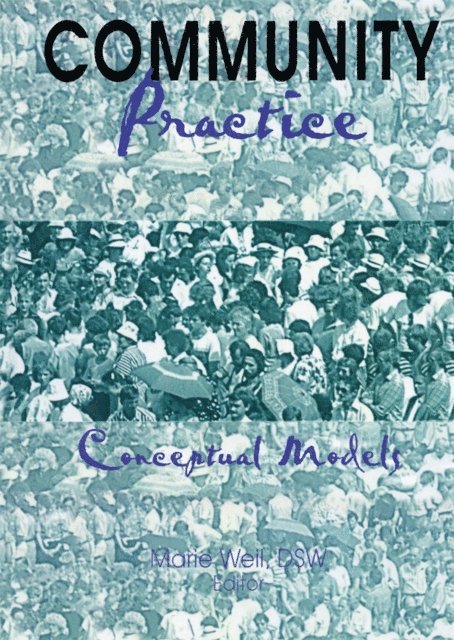
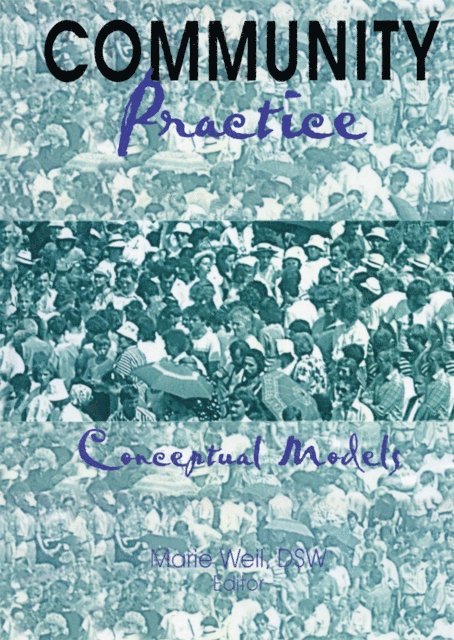
Here is the only book that gives you a comparison of model frameworks and a critique of multiple perspectives. Community Practice: Conceptual Models (along with its companion volume, Community Practice: Models in Action) illustrates the diverse ways that community practice is conceived and delineates both the central and subtle differences among models to guide community assessment, action planning, and practice. By knitting together the complex ideas from the social sciences and community practice, this book shows how to combine these ideas to improve teaching, practice, analysis, and research for social work faculty; social work students; practitioners in community work, administration, and social planning; and faculty of related disciplines.The scope of Community Practice: Conceptual Models is broad, providing the first historical report on model development and implementation since 1965. Its chapters present diverse views on community practice approaches and provide the compilation, critique, and analysis of current models --while illustrating how these approaches developed over time. Included is Rothman’s long-awaited revision and elaboration of his 1970s classic, three models conceptual framework. Other vital topics you learn about include:collaborative community development social planning, reform movements, and social action ecological theory in community practice a feminist response and critique to Rothman’s approaches to community intervention a comparison of community practice in the U.S. and U.K., with an emphasis on nonracist practice and community-based service developmentCommunity Practice: Conceptual Models offers challenges and indicates directions for practice, theory elaboration, testing, and research and shows community practice in relation to characteristics such as goals and desired outcomes, change strategies, targets of change, primary constituencies, and focus or scope of concern. This book provides the strongest perspectives on community practice to help you improve your practice, assessments, action plans, and research.
550 kr
Skickas inom 10-15 vardagar
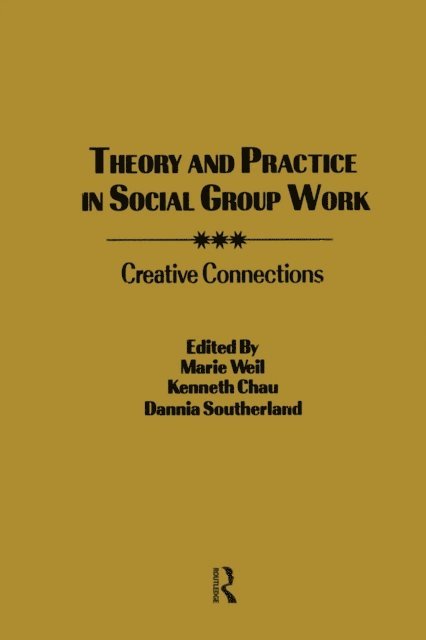
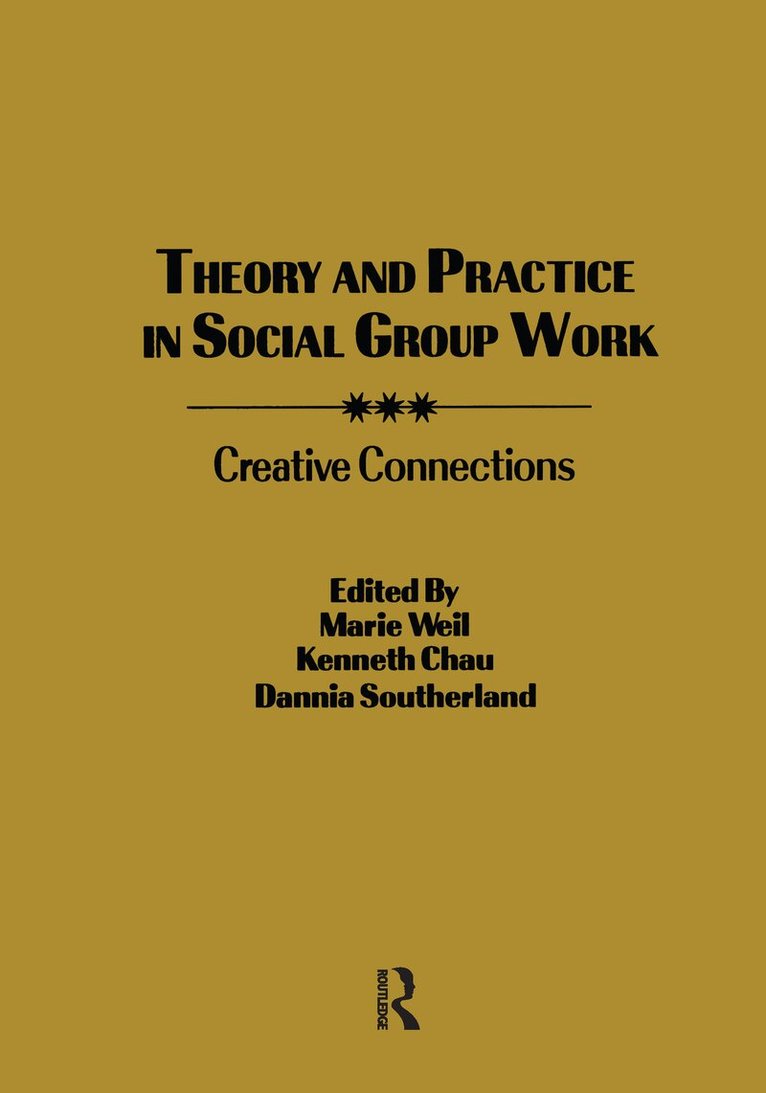
Here is an important look at creative ways to successfully blend theoretical knowledge with skillful intervention in social group work. Theory and Practice in Social Group Work represents leading works in conceptual development that creatively connect practice with theory and also reflect the current diversity of interventions in group work practice. The book calls for more carefully articulated connections between knowledge and action and maps a strategy for strengthening social work curriculum and expanding group work practice. Some of the areas discussed include group work in medical and health settings, group work with people undergoing life cycle transitions, and group work interventions with vulnerable populations. A wide range of possibilities for applying theories in group work situations are presented in this thought-provoking volume. Some specific examples discussed include group work interventions with persons affected by the AIDS crisis and persons at high risk of contracting HIV, a group model for the management of chronic pain, group intervention services for the homeless mentally ill delivered through a mobile outreach team, a bingo group in an SRO hotel, group work with adults molested as children, and a model of practice for work with minority populations and communities.
1 616 kr
Skickas inom 3-6 vardagar
The Second Edition of The Handbook of Community Practice is expanded and updated with a major global focus and serves as a comprehensive guidebook of community practice grounded in social justice and human rights. It utilizes community and practice theories and encompasses community development, organizing, planning, social change, policy practice, program development, service coordination, organizational cultural competency, and community-based research in relation to global poverty and community empowerment. This is also the first community practice text to provide combined and in-depth treatment of globalization and international development practice issues—including impacts on communities in the United States and on international development work. The Handbook is grounded in participatory and empowerment practices, including social change, social and economic development, feminist practice, community-collaborative, and engagement in diverse communities. It utilizes the social development perspective and employs analyses of persistent poverty, asset development, policy practice, and community research approaches as well as providing strategies for advocacy and social and legislative action.The handbook consists of forty chapters which challenge readers to examine and assess practice, theory, and research methods. As it expands on models and approaches, delineates emerging issues, and connects policy and practice, the book provides vision and strategies for local to global community practice in the coming decades.The handbook will continue to stand as the central text and reference for comprehensive community practice, and will be useful for years to come as it emphasizes direction for positive change, new developments in community approaches, and focuses attention on globalization, human rights, and social justice. It will continue to be used as a core text for multiple courses within programs, will have long term application for students of community practice, and will provide practitioners with new grounding for development, planning, organizing, and empowerment and social change work.
600 kr
Tillfälligt slut
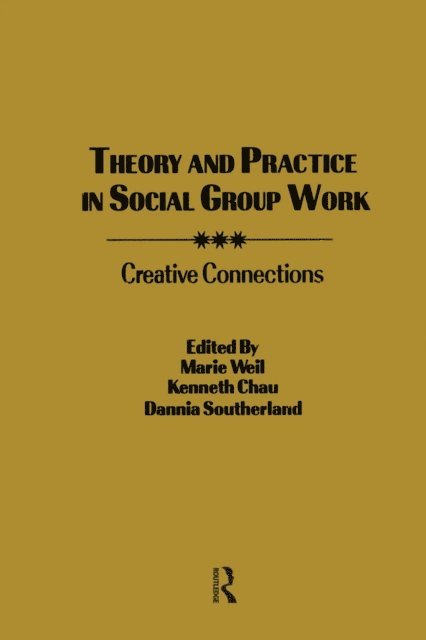
Here is an important look at creative ways to successfully blend theoretical knowledge with skillful intervention in social group work. Theory and Practice in Social Group Work represents leading works in conceptual development that creatively connect practice with theory and also reflect the current diversity of interventions in group work practice. The book calls for more carefully articulated connections between knowledge and action and maps a strategy for strengthening social work curriculum and expanding group work practice. Some of the areas discussed include group work in medical and health settings, group work with people undergoing life cycle transitions, and group work interventions with vulnerable populations. A wide range of possibilities for applying theories in group work situations are presented in this thought-provoking volume. Some specific examples discussed include group work interventions with persons affected by the AIDS crisis and persons at high risk of contracting HIV, a group model for the management of chronic pain, group intervention services for the homeless mentally ill delivered through a mobile outreach team, a bingo group in an SRO hotel, group work with adults molested as children, and a model of practice for work with minority populations and communities.